Amazing prime rib recipe: 1 perfect result
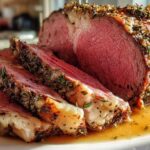
This is the foolproof recipe for a Herb-Crusted Prime Rib Roast. You will achieve a perfectly cooked, juicy, and tender roast every time using this simple oven method, complete with a savory garlic butter rub and a quick Au Jus.
- Prep Time: 30 minutes
- Cook Time: 2 hours 30 minutes (varies by weight)
- Total Time: 3 hours 15 minutes (includes resting)
- Yield: 6-8 servings
- Category: Main Course
- Method: Oven Roasting
- Cuisine: American
- Diet: Low Carb
Ingredients
Scale
- 1 (5-7 lb) bone-in Prime Rib Roast
- 2 tablespoons kosher salt
- 1 tablespoon black pepper
- 1 tablespoon dried thyme
- 1 tablespoon dried rosemary
- 4 cloves garlic, minced
- 4 tablespoons unsalted butter, softened
- 2 tablespoons olive oil
- 1 cup beef broth (for Au Jus)
- 1 tablespoon cornstarch mixed with 2 tablespoons cold water (for Au Jus slurry)
Instructions
- Remove the prime rib from the refrigerator at least 3 hours before cooking to let it come to room temperature.
- Preheat your oven to 500 degrees Fahrenheit.
- In a small bowl, combine the softened butter, minced garlic, olive oil, salt, pepper, thyme, and rosemary to create the herb crust paste.
- Rub the entire surface of the prime rib evenly with the herb paste.
- Place the roast, fat side up, in a roasting pan with a rack.
- Place the roast in the 500°F oven for 15 minutes. This provides an initial high-heat sear.
- Reduce the oven temperature to 325°F without opening the door. Continue roasting until the internal temperature reaches 125°F for medium-rare. This typically takes about 13-15 minutes per pound after the initial sear.
- Remove the roast from the oven when it hits the target temperature. Immediately tent it loosely with foil.
- Let the roast rest for 20 to 30 minutes. The internal temperature will rise to about 130-135°F.
- To make the Au Jus, pour the pan drippings into a saucepan. Add the beef broth and bring to a simmer over medium heat.
- Whisk in the cornstarch slurry gradually until the sauce thickens slightly. Serve immediately alongside the sliced roast.
Notes
- Always use a reliable meat thermometer inserted into the thickest part of the roast, avoiding the bone, for accuracy.
- Resting the meat is critical; do not skip this step for maximum juiciness.
- If you prefer your roast more done, aim for 130°F before resting for a final temperature around 135-140°F.
Nutrition
- Serving Size: 8 ounces (cooked)
- Calories: 450
- Sugar: 1g
- Sodium: 450mg
- Fat: 35g
- Saturated Fat: 15g
- Unsaturated Fat: 20g
- Trans Fat: 0g
- Carbohydrates: 2g
- Fiber: 0g
- Protein: 35g
- Cholesterol: 130mg
