

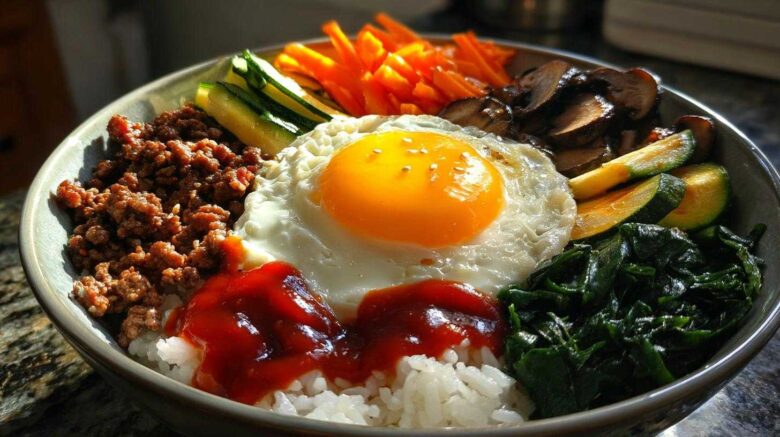
Create Your Perfect Korean Bibimbap Bowl for Family Lunch
Making a satisfying Korean Bibimbap Bowl is truly special.
I think this dish is perfect for a fun family lunch. It hits all the right notes.
It has bright colors and great textures too. Chef Tariq always said food should tell a story.
This recipe uses that idea well. We layer fresh veggies, savory beef, and chili sauce.
It’s wholesome and truly delicious for everyone eating.
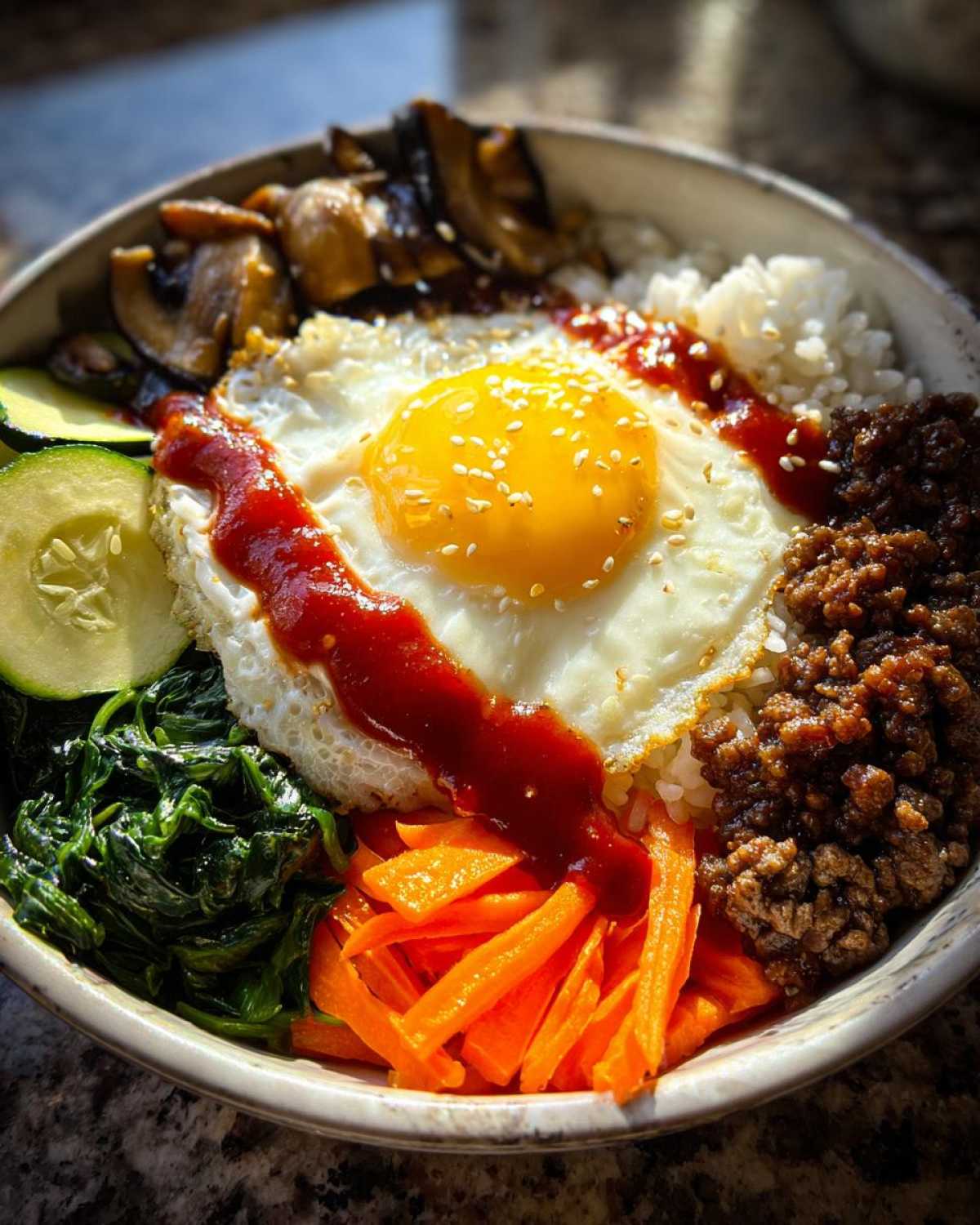
Why You’ll Love This Korean Bibimbap Bowl Recipe
This simple Korean food is a weeknight win. It brings big flavor fast.
- It is easy to put together quickly.
- The flavors are super fresh and bright.
- Everyone can choose their favorite toppings.
- It feels like a special meal, honestly.
Quick Assembly for Busy Weekdays
The total time is under an hour, which is great.
We prep ingredients while things cook down. This keeps things moving along nicely.
Flavorful Layers for Everyone
The separate components mean picky eaters win.
You control the spice level easily too. That is a huge plus for families.
Essential Components for the Korean Bibimbap Bowl
Success starts with good prep work here.
Getting your ingredients ready makes assembly smooth.
We need fresh, crisp vegetables and quality beef.
Follow the ingredient list closely for the best results.
Gathering Ingredients for Your Korean Bibimbap Bowl
Getting ready for this amazing Korean Bibimbap Bowl starts here.
Quality ingredients truly make all the difference in Asian meal prep.
We aim for fresh produce and well-seasoned meat for depth.
Having everything ready makes assembly a breeze later on.
Rice and Protein Base
Start with one cup of cooked short-grain white rice.
We use half a pound of ground beef for our protein.
Marinating the beef builds a solid flavor foundation first.
Beef Marinade Details
Mix the beef with soy sauce and sesame oil.
Add minced garlic and a bit of brown sugar too.
Let this mixture sit while you prep other things.
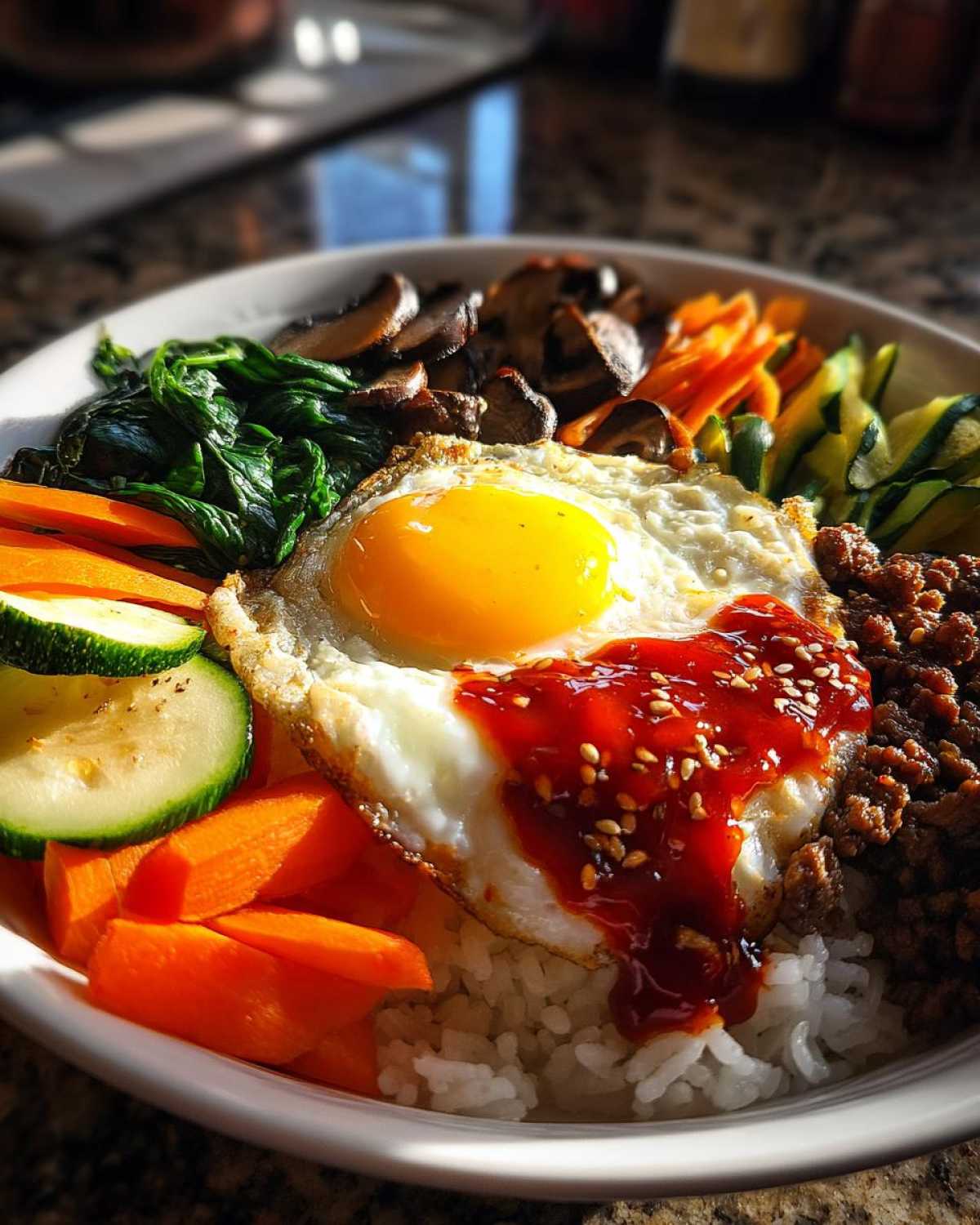
Preparing the Colorful Vegetable Medley
Carrots and zucchini need to be julienned thinly.
Spinach and bean sprouts need a quick blanching bath.
Remember to squeeze all excess water out after chilling.
Sliced shiitake mushrooms are next on our list.
Crafting the Signature Gochujang Sauce
This sauce brings the heat and tang we need.
Combine Gochujang, sesame oil, and rice vinegar now.
Add sugar and a touch more minced garlic for balance.
Whisk everything until that sauce becomes perfectly smooth.
Step-by-Step Instructions for the Korean Bibimbap Bowl
Now we move to the fun part of making this fantastic Korean Bibimbap Bowl.
Active cooking keeps the process engaging and fast.
Marinating and Prepping Components
First, let that beef marinate for a few minutes.
While it rests, blanch your spinach and sprouts quickly.
Ice water stops the cooking right away after blanching.
Squeeze out all the water from those greens thoroughly.
Sautéing Vegetables to Perfection
Heat vegetable oil in your skillet for the veggies.
Sauté the carrots until they are tender-crisp first.
Next, cook the zucchini until it is just tender.
Cook the mushrooms until they get a nice light brown color.
Chef Tariq suggests seasoning each vegetable lightly now.
This builds those deep flavor layers we want.
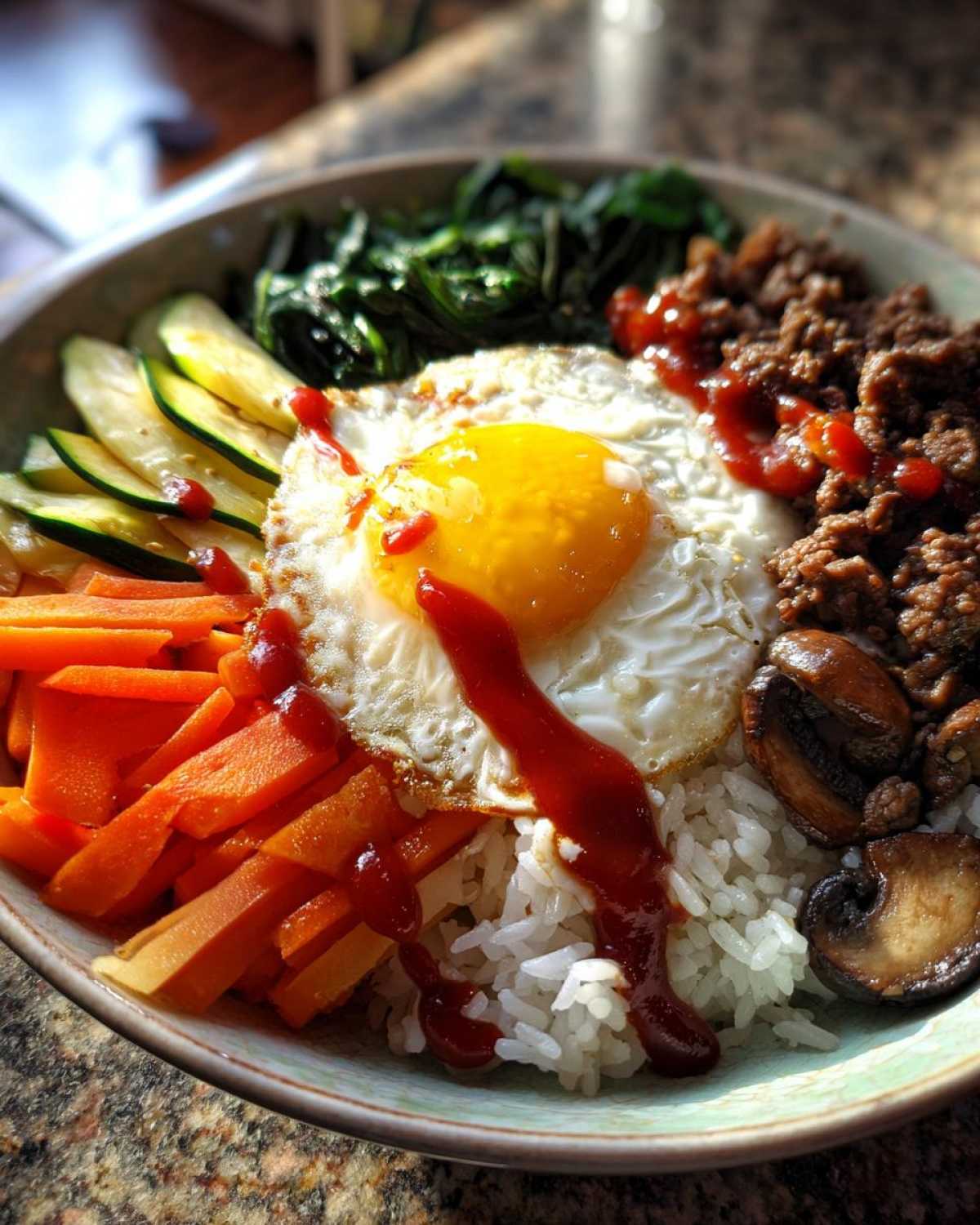
Cooking the Meat and Finishing the Sauce
Cook the marinated beef until it is browned completely.
Set the cooked meat aside once it is done.
Whisk the Gochujang sauce ingredients until smooth.
It should look glossy and well combined now.
Assembling and Serving Your Korean Bibimbap Bowl
Divide the warm rice into your serving bowls.
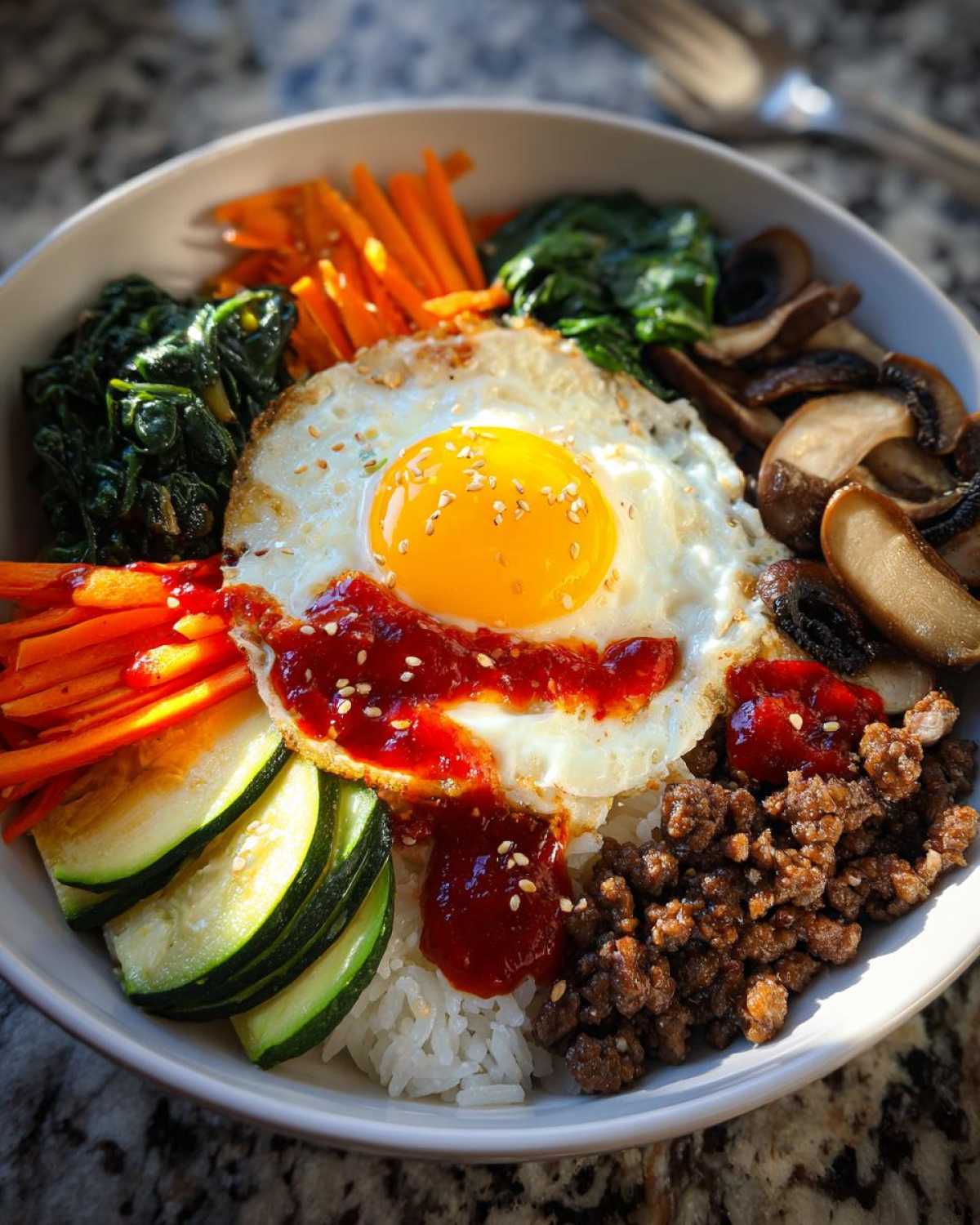
Arrange all your colorful toppings neatly over the rice.
Place one sunny-side-up egg right on top.
Drizzle that spicy sauce generously over everything.
Serve this beautiful Korean Bibimbap Bowl right away.
Tips for Achieving the Best Korean Bibimbap Bowl
We all want our Korean Bibimbap Bowl to look amazing.
A few simple tricks really step up the final dish.
These tips come directly from our kitchen discussions.
They make a big difference in the final outcome.
Amara’s Advice on Presentation
Amara believes how it looks matters so much.
Arrange your ingredients in tight, defined sections.
Think of it like painting a colorful plate.
The visual appeal makes the meal feel special.
Leo’s Secret for Added Texture
I love adding things for that crunch factor.
Sprinkle toasted sesame seeds right on top.
Or try adding some crumbled toasted seaweed (gim).
This adds a fantastic savory texture contrast.
Ingredient Swaps for Your Korean Bibimbap Bowl
Don’t worry if you don’t eat beef.
You can easily swap it for chicken or tofu.
Just marinate non-meat items similarly.
The flavor profile stays true to the dish.
Frequently Asked Questions About Your Rice Bowl
Let’s talk about a few common questions I hear.
Making an Easy Korean Food meal is simple.
These tips help if you are planning ahead.
We want your experience making this Rice Bowl to be great.
Can I prepare some elements of the Korean Bibimbap Bowl ahead of time?
Yes, absolutely you can prep ahead.
Cook your rice a day before if needed.
The marinated beef stores well for a day.
Keep cooked veggies separate in airtight containers.
What if I do not have Gochujang for my Korean Bibimbap Bowl?
Gochujang is the heart of the flavor profile.
If you lack it, try mixing sriracha with a bit of miso.
It won’t be identical, but it will add heat.
Try to find Gochujang next time for the best taste.
How runny should the egg yolk be in a proper Korean Bibimbap Bowl?
The yolk needs to stay wonderfully runny.
This runny yolk acts like a rich sauce element.
When you break it, it coats the rice perfectly.
It adds creaminess to the whole Healthy Asian Meal.
Storing Leftovers of Your Korean Bibimbap Bowl
Leftover Korean Bibimbap Bowl tastes great too.
Just remember to keep things separated first.
Mixing everything makes reheating tricky later on.
Store the rice, meat, and cooked veggies apart.
Reheating Instructions
Gently reheat only the rice and beef.
The fresh or blanched vegetables stay cold.
Reassemble with cold veggies and a fresh egg.
Estimated Nutritional Snapshot for One Korean Bibimbap Bowl
Let’s talk about the numbers for this great meal.
Remember these figures are just estimates for one serving.
Ingredient brands can change the final count slightly.
This recipe offers a balanced Healthy Asian Meal.
It is good to know what you are eating, right?
Key Estimated Macronutrients
Here is a quick look at the main macros.
We aimed for a satisfying protein amount here.
- Calories: Around 550 per bowl.
- Protein: Approximately 28 grams total.
- Fat: About 22 grams listed.
- Carbohydrates: Roughly 65 grams total.
- Sugar: Near 12 grams estimate.
This information helps plan your day better.
Share Your Savory Skies Cooking Experience
I really hope you enjoyed making this dish.
How did your family love the Korean Bibimbap Bowl?
Tell us about it in the comments below.
Did you try Leo’s texture additions?
Rate this recipe and share your thoughts with us.
PrintAmazing Korean Bibimbap Bowl: 580 Calories Joy
Make a delicious and satisfying Korean Bibimbap Bowl, perfect for a fun and wholesome family lunch. This recipe brings together colorful vegetables, savory meat, and a flavorful sauce for everyone to enjoy.
- Prep Time: 20 minutes
- Cook Time: 25 minutes
- Total Time: 45 minutes
- Yield: 2 servings
- Category: Main Course
- Method: Stovetop/Sautéing
- Cuisine: Korean
- Diet: Vegetarian
Ingredients
- 1 cup short-grain white rice, cooked
- 1/2 lb ground beef or thinly sliced sirloin
- 1 tablespoon soy sauce
- 1 teaspoon sesame oil
- 1 clove garlic, minced
- 1/2 teaspoon brown sugar
- 1 cup spinach
- 1 cup bean sprouts
- 1 medium carrot, julienned
- 1 medium zucchini, julienned
- 1/2 cup shiitake mushrooms, sliced
- 1 tablespoon vegetable oil (for sautéing vegetables)
- 2 large eggs (one per serving)
- For the Gochujang Sauce: 2 tablespoons Gochujang (Korean chili paste), 1 tablespoon sesame oil, 1 tablespoon rice vinegar, 1 teaspoon sugar, 1/2 teaspoon minced garlic
Instructions
- Prepare the beef: In a bowl, mix the ground beef with soy sauce, sesame oil, minced garlic, and brown sugar. Set aside to marinate briefly.
- Prepare the vegetables: Blanch the spinach and bean sprouts separately in boiling water for 30 seconds, then immediately transfer to an ice bath. Squeeze out excess water.
- Sauté the vegetables: Heat vegetable oil in a skillet. Sauté the carrots until tender-crisp. Remove and set aside. Sauté the zucchini next until tender-crisp. Remove and set aside. Sauté the mushrooms until lightly browned. Remove and set aside. Lightly season all vegetables with a tiny pinch of salt and sesame oil if desired.
- Cook the beef: Cook the marinated beef in the same skillet until fully browned and cooked through.
- Make the sauce: Whisk together all Gochujang sauce ingredients until smooth.
- Fry the eggs: Fry two eggs sunny-side up, ensuring the yolk remains runny.
- Assemble the bowls: Divide the cooked rice among four bowls. Arrange the prepared spinach, bean sprouts, carrots, zucchini, mushrooms, and cooked beef neatly over the rice, creating sections of color.
- Serve immediately: Top each bowl with a fried egg and drizzle generously with the Gochujang sauce.
Notes
- Chef Tariq suggests seasoning each vegetable component lightly before assembling to build deeper flavor layers.
- Amara recommends adding a sprinkle of toasted sesame seeds on top for texture.
- Leo likes to add a dash of toasted seaweed (gim) for an extra savory note.
- If you prefer, you can substitute the beef with tofu or chicken.
Nutrition
- Serving Size: 1 Bowl
- Calories: Approx. 550
- Sugar: Approx. 12g
- Sodium: Approx. 700mg
- Fat: Approx. 22g
- Saturated Fat: Approx. 5g
- Unsaturated Fat: N/A
- Trans Fat: 0g
- Carbohydrates: Approx. 65g
- Fiber: Approx. 6g
- Protein: Approx. 28g
- Cholesterol: Approx. 180mg
