

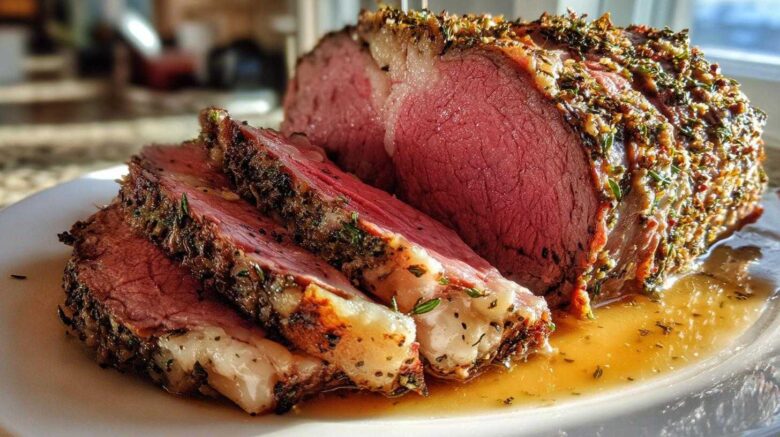
The Ultimate Prime Rib Recipe: Achieve Restaurant-Quality Results At Home
Cooking a huge roast feels scary, right? I get it. Back at Savory Skies, Chef Tariq always said the best meals come from respecting the basics. This prime rib recipe is our answer to that challenge. We took his foundational knowledge.
This method is absolutely foolproof. You will get juicy, tender results every single time. Forget dry edges or raw centers. We cracked the code for perfect medium-rare flavor. This is the only prime rib recipe you’ll ever need.
No heading needs to be written for the introduction.
It’s all about simple steps yielding huge flavor. Get ready for applause at your next dinner.
Why This Prime Rib Recipe Works Every Time
I know you want a reliable prime rib recipe. That’s where our experience shines through. Chef Tariq taught us that great cooking follows clear rules. This roast uses a two-stage temperature trick. It’s pure cooking science in action.
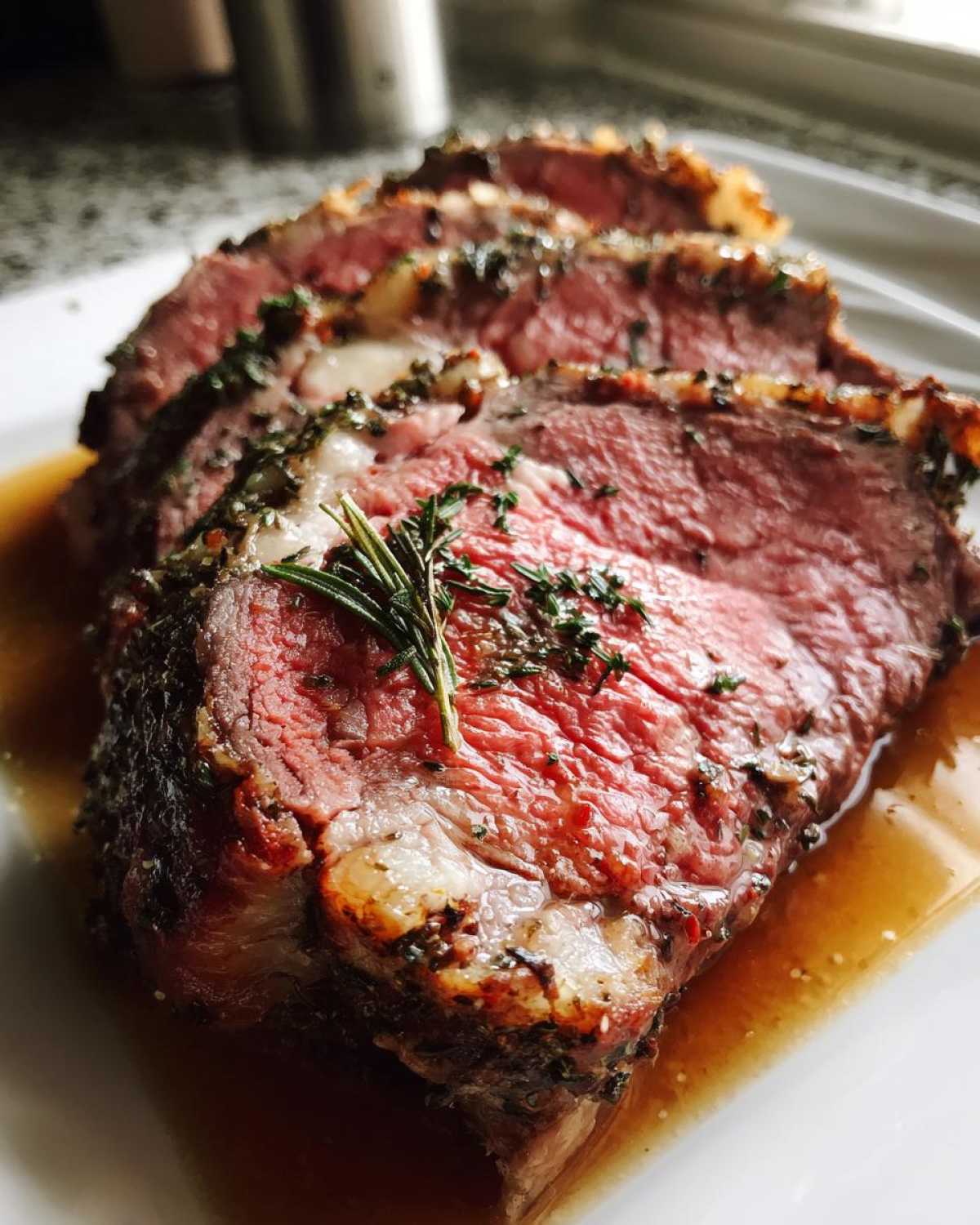
We start hot at 500 degrees Fahrenheit. That blast of heat creates a gorgeous crust fast. This sear locks flavor right in. Then, we drop the heat way down low. This lets the inside cook gently. It means tender meat all the way through.
Resting is not optional; it is law. Resting lets the juices redistribute. Skip it, and those juices run onto your cutting board. I learned this the hard way early on! That’s why this technique guarantees a moist roast.
Essential Equipment for Your Prime Rib Recipe
You need the right tools for success. Don’t guess on the cook time here. Accuracy matters most for this big cut.
- A sturdy roasting pan with a rack. This keeps the roast off the bottom.
- A reliable instant-read meat thermometer. This is your best friend.
- Sharp carving knife set. For slicing thin after resting.
- Heavy-duty aluminum foil. For that crucial resting tent.
I always check my thermometer twice. It’s the secret to perfect medium-rare every time!
Ingredients for the Perfect Herb-Crusted Prime Rib Recipe
Getting the ingredients right sets the stage. For this amazing prime rib recipe, quality counts. We use a bone-in roast for extra flavor. Always buy the best cut you can afford here. This centerpiece deserves it.
The final dish relies on simple, fresh components. Don’t substitute the basics for this roast. We want clear, strong flavors to shine through the beef.
Preparing the Garlic Butter Herb Crust
This crust is what makes the roast smell incredible. You need four cloves of minced garlic. Mix that with four tablespoons of softened butter. Softened butter spreads like silk. Add your dried thyme and rosemary here. Don’t forget the salt and pepper too. Rub this paste all over the surface evenly.
Components for the Simple Au Jus
The Au Jus is quick but delicious. You only need a few things for this. Grab one cup of good beef broth. We also need a slurry to thicken it slightly. That slurry is cornstarch mixed with cold water. Keep these separate until the roast is resting.
Step-by-Step Instructions for Your Prime Rib Recipe
Follow these steps closely for success. This prime rib recipe is easy when broken down. I find that writing the steps down helps me focus. Let’s get this beautiful roast ready for the oven.
Bringing the Prime Rib to Temperature
This first step is crucial for even cooking. Take the roast out early. I mean three hours before you plan to cook it. Let it sit on the counter. This lets the meat come up to room temperature slowly. Cold meat cooks unevenly inside. This step helps avoid raw spots later on.
While it rests, mix your herb crust paste. Rub that lovely mixture all over the beef. Make sure every bit is covered well. I love the smell while this happens!
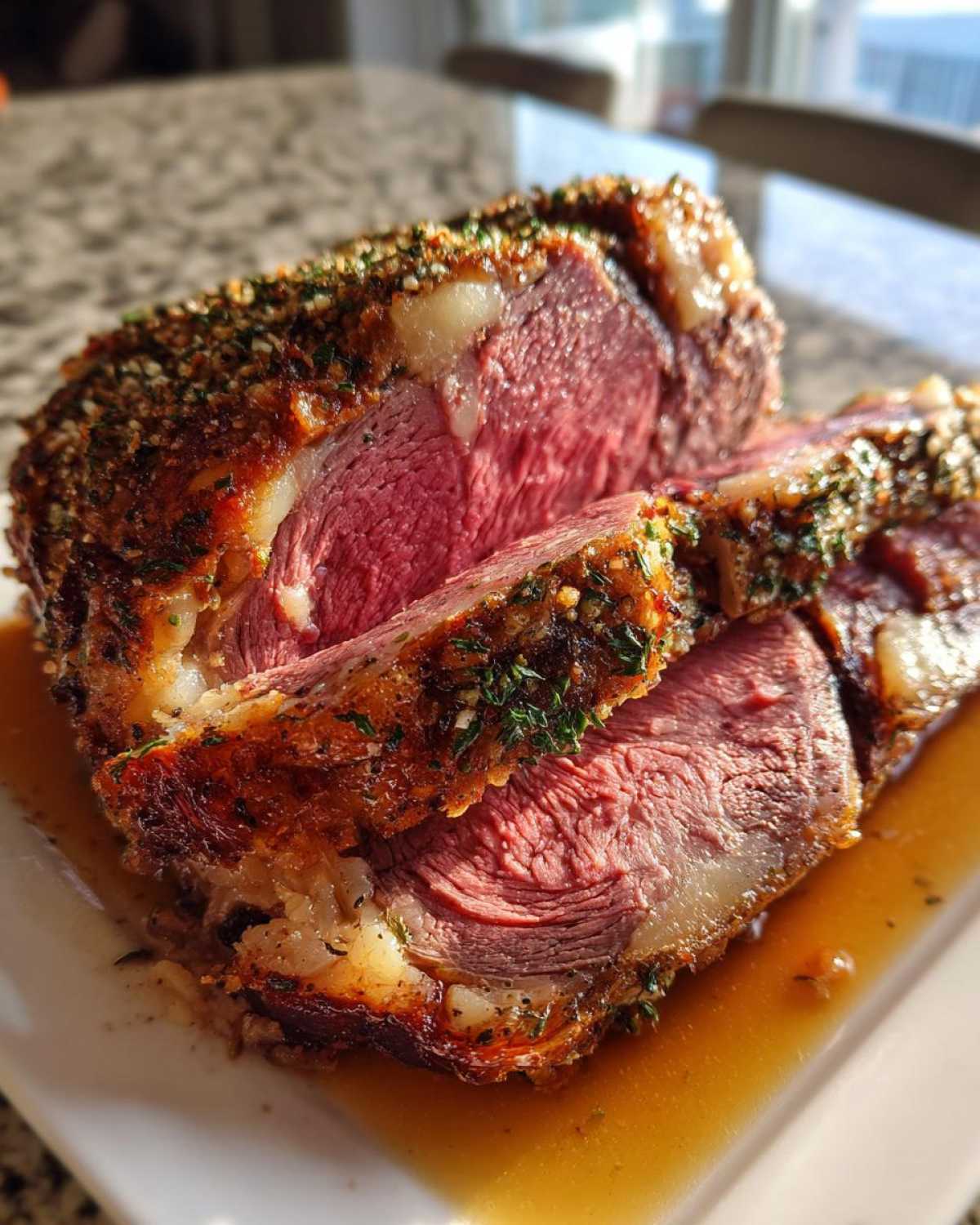
The High-Heat Sear and Low-Temperature Roast
Now, preheat your oven to 500 degrees Fahrenheit. Place the roast fat side up in the pan. Put it in that very hot oven. Roast it hard for exactly 15 minutes. This gives us that amazing outer crust. Do not open the oven door during this time.
After 15 minutes, drop the heat fast. Set the oven down to 325 degrees Fahrenheit. Keep roasting it low and slow now. Keep checking the internal temperature carefully. Pull the roast out at 125 degrees Fahrenheit. This is for a perfect medium-rare center.
Critical Resting Time for the Prime Rib Recipe
This next part feels hard, but you must wait. Take the roast out right at 125 degrees. Tent it loosely with foil right away. Let it rest for a full 20 to 30 minutes. This resting period is non-negotiable. It keeps your final roast wonderfully juicy.
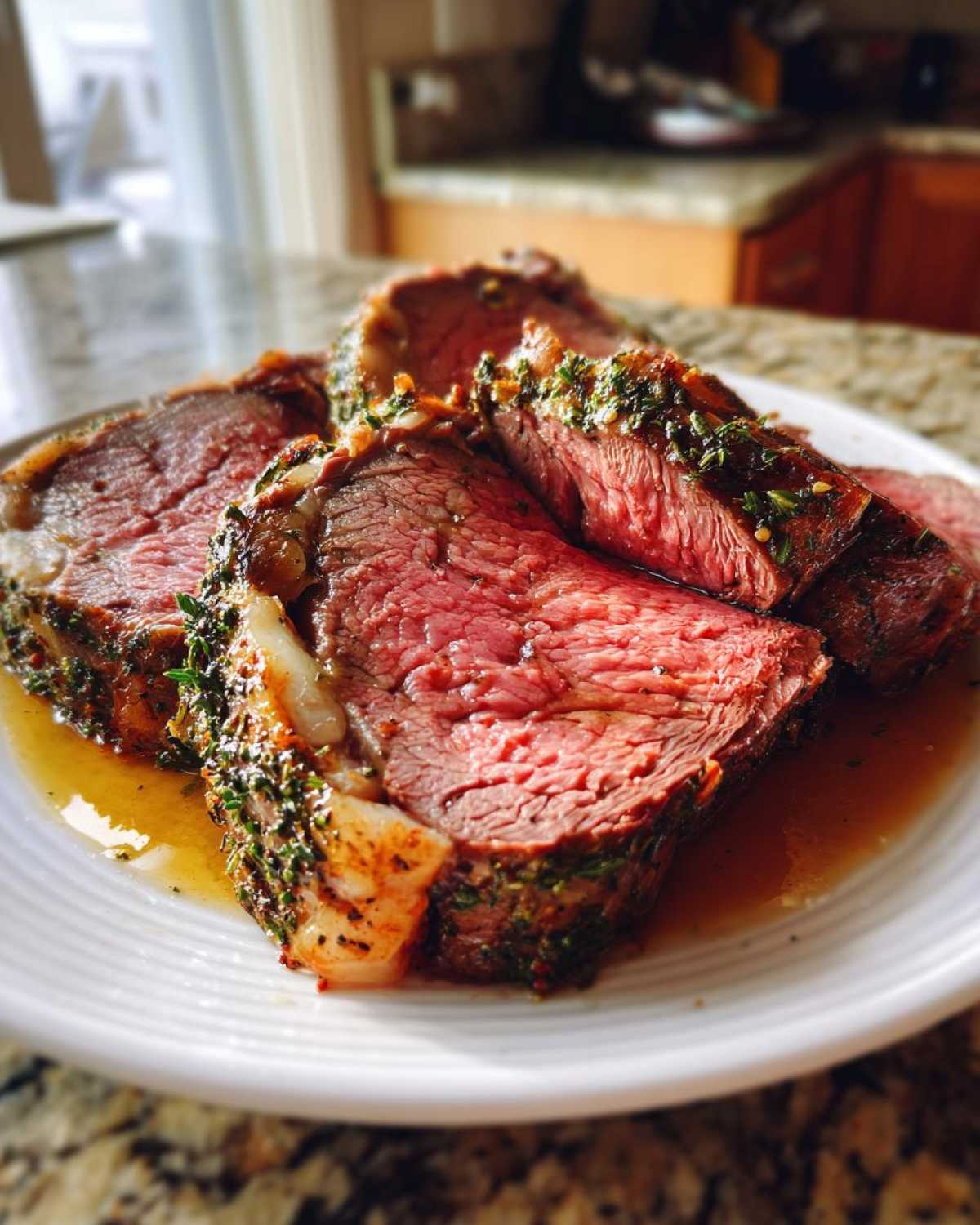
During this rest, the temperature climbs a bit more. It rises to that perfect 130 to 135 degrees. If you cut it early, the juices spill out. Nobody wants dry prime rib, right? Patience rewards you greatly here.
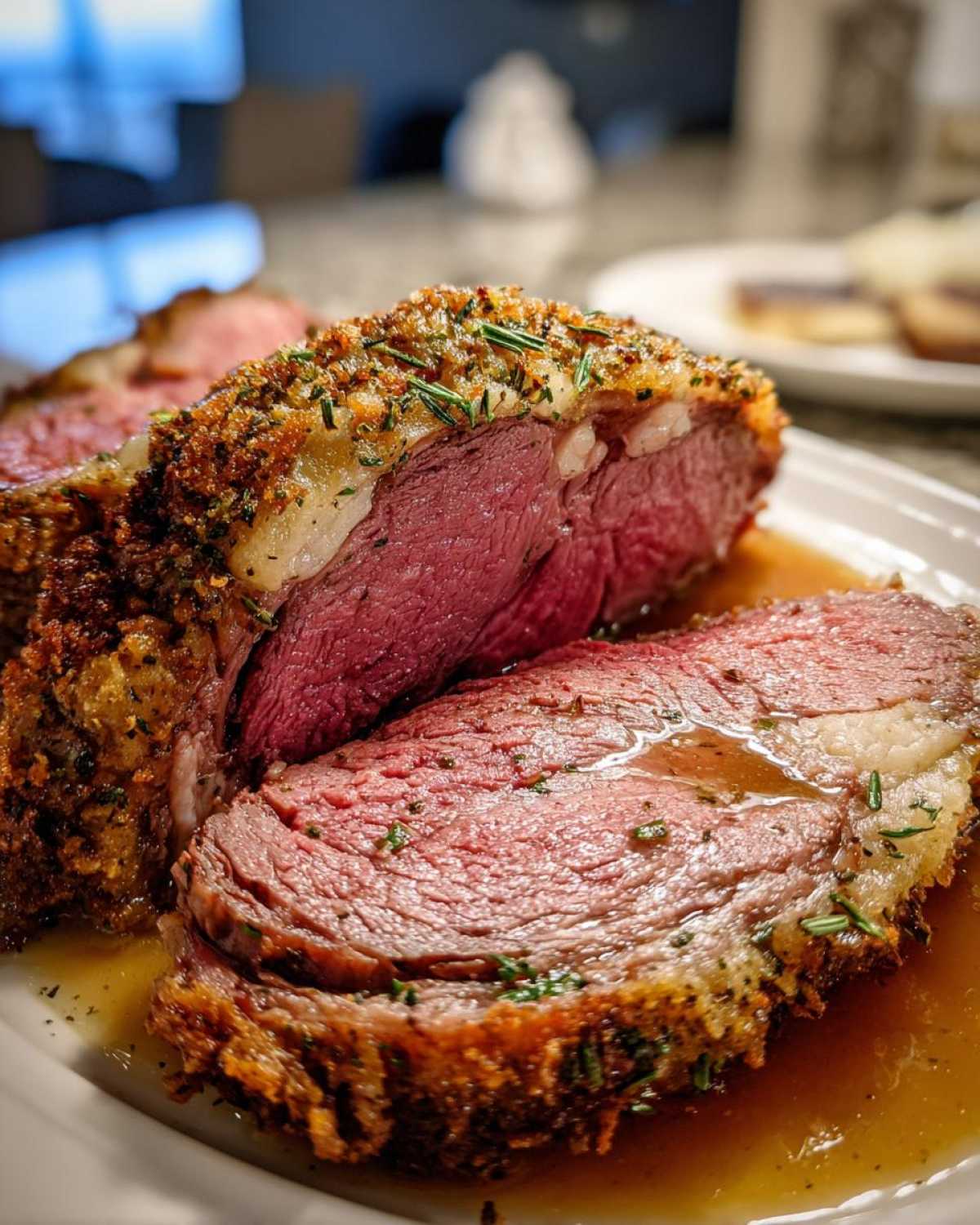
While it rests, make your simple Au Jus. Use those drippings in the pan. Add the beef broth and thicken it slightly. Then, slice and serve your masterpiece!
Tips for Success with Your Prime Rib Recipe
Even with a great prime rib recipe, little things matter. I’m always tinkering, always curious, you know?
Always use a good meat thermometer, please! Insert it into the thickest part. Make sure you miss hitting the bone completely. Hitting bone gives a false high reading quickly. That’s the fastest way to overcook your roast.
Remember that resting time I stressed? It’s truly critical for the juiciness. Don’t get tempted to slice early. My curiosity sometimes makes me want to peek. But resisting pays off big time!
- Trust the thermometer over the clock always.
- If you like it more done, shoot for 130 degrees F initially.
- The bone-in cut adds so much flavor.
Keep experimenting with flavors next time. Maybe add smoked paprika next time? For more general cooking advice, check out our latest blog posts.
Frequently Asked Questions About This Prime Rib Recipe
What is the best internal temperature for a perfect medium-rare roast?
For that ideal medium-rare finish, pull your roast at 125 degrees Fahrenheit. This is key to this prime rib recipe. Remember the resting period carries it up nicely. It settles around 130 to 135 degrees F after resting.
Do I have to use a bone-in roast for this recipe?
While bone-in is preferred, boneless works too. Bone-in roasts insulate the meat better. This helps keep things juicy. If you use boneless, cooking time might be slightly shorter. Watch that thermometer closely.
How accurate is the suggested cooking time per pound?
The time estimates are just starting points. I highly suggest ignoring the clock. Your oven might run hot or cool. Always rely on your meat thermometer reading. That is the only way to guarantee success.
Can I use a dry rub instead of the garlic butter herb crust?
You absolutely can try a dry rub here. That garlic butter herb crust adds amazing flavor though. It helps keep the surface moist during the sear. Feel free to customize your rub next time!
How do I reheat leftover prime rib without drying it out?
Reheating leftovers requires care. Slice the remaining roast thinly first. Place slices in a baking dish. Add a little beef broth to the bottom. Cover tightly with foil. Warm it slowly in a 300-degree oven.
Serving Suggestions for Your Incredible Prime Rib Recipe
Now that you’ve mastered this prime rib recipe, what goes best beside it? This roast is the star, truly. We need sides that complement it, not compete with it.
Keep things simple for your first go-around. Let that perfectly cooked beef shine. Amara always suggests classic pairings for big roasts. They just work perfectly together.
Think about creamy textures next to the tender meat. Roasted root vegetables are always a winner here. They roast up beautifully alongside the meat.
- Creamy Mashed Potatoes: Fluffy potatoes soak up that extra Au Jus wonderfully.
- Roasted Asparagus: A little lemon zest brightens the whole plate up.
- Yorkshire Puddings: Tariq insists on these for a traditional feel.
- Simple Green Beans: Sautéed quickly with a touch of garlic.
A light, acidic salad cuts through the richness nicely. Serve it all warm. Enjoy the moment you carve that beautiful roast!
Storing Leftover Prime Rib Recipe Portions
Don’t let those amazing leftovers go to waste! Storing prime rib correctly keeps it tasting great. This is important for enjoying the roast later.
For refrigeration, slice the remaining roast first. Thinner slices reheat much better overall. Place the slices in an airtight container quickly. You can also wrap them tightly in plastic wrap.
I like to add a tiny splash of broth. This little bit of liquid helps prevent drying out. Store the meat in the fridge for three to four days maximum. Use it up while it’s fresh.
Reheating needs a gentle touch. High heat ruins perfect meat fast. Warm it slowly in a 300 degree oven. Cover the dish well with foil. This traps the moisture in nicely.
You want the meat warmed, not cooked again. This slow warming keeps your second meal tender. Enjoy those delicious bites later on!
Estimated Nutritional Data for This Prime Rib Recipe
I want to be super clear here. This section shows estimates only. Cooking always changes the final numbers. This data reflects one serving size.
We base these figures on the ingredients listed above. They are not exact nutritional facts. Always remember context matters greatly when eating! For more information on general food safety and nutrition guidelines, consult resources like the U.S. Food and Drug Administration.
This roast is high in protein, as expected. It is also higher in fat content. That fat carries so much flavor, though.
- Serving Size: 8 ounces (cooked meat).
- Estimated Calories: Around 450 per serving.
- Protein Power: Roughly 35 grams of protein.
- Fat Content: About 35 grams of total fat.
- Carbohydrates: Very low, near 2 grams total.
The sodium level depends on your salt use. Taste before you add extra salt later. This is just a guide for your planning.
Share Your Prime Rib Recipe Success
Now that you’ve made this incredible prime rib recipe, I want to hear from you! Did it turn out perfectly tender? Did your guests rave about the herb crust?
We put a lot of heart into sharing this method. Chef Tariq’s wisdom guides it. Amara’s care inspires it. My curiosity guides the tweaks.
Tell us what you thought of the results. Head down to the comments section below now. Rate this recipe for us.
Did you try any new spices on your roast? We love seeing your kitchen adventures. Snap a photo of your masterpiece. Share it with the Savory Skies family!
Your feedback helps us keep making great recipes. We are here to help you cook with confidence. Happy cooking, friends!
PrintAmazing prime rib recipe: 1 perfect result
This is the foolproof recipe for a Herb-Crusted Prime Rib Roast. You will achieve a perfectly cooked, juicy, and tender roast every time using this simple oven method, complete with a savory garlic butter rub and a quick Au Jus.
- Prep Time: 30 minutes
- Cook Time: 2 hours 30 minutes (varies by weight)
- Total Time: 3 hours 15 minutes (includes resting)
- Yield: 6-8 servings
- Category: Main Course
- Method: Oven Roasting
- Cuisine: American
- Diet: Low Carb
Ingredients
- 1 (5-7 lb) bone-in Prime Rib Roast
- 2 tablespoons kosher salt
- 1 tablespoon black pepper
- 1 tablespoon dried thyme
- 1 tablespoon dried rosemary
- 4 cloves garlic, minced
- 4 tablespoons unsalted butter, softened
- 2 tablespoons olive oil
- 1 cup beef broth (for Au Jus)
- 1 tablespoon cornstarch mixed with 2 tablespoons cold water (for Au Jus slurry)
Instructions
- Remove the prime rib from the refrigerator at least 3 hours before cooking to let it come to room temperature.
- Preheat your oven to 500 degrees Fahrenheit.
- In a small bowl, combine the softened butter, minced garlic, olive oil, salt, pepper, thyme, and rosemary to create the herb crust paste.
- Rub the entire surface of the prime rib evenly with the herb paste.
- Place the roast, fat side up, in a roasting pan with a rack.
- Place the roast in the 500°F oven for 15 minutes. This provides an initial high-heat sear.
- Reduce the oven temperature to 325°F without opening the door. Continue roasting until the internal temperature reaches 125°F for medium-rare. This typically takes about 13-15 minutes per pound after the initial sear.
- Remove the roast from the oven when it hits the target temperature. Immediately tent it loosely with foil.
- Let the roast rest for 20 to 30 minutes. The internal temperature will rise to about 130-135°F.
- To make the Au Jus, pour the pan drippings into a saucepan. Add the beef broth and bring to a simmer over medium heat.
- Whisk in the cornstarch slurry gradually until the sauce thickens slightly. Serve immediately alongside the sliced roast.
Notes
- Always use a reliable meat thermometer inserted into the thickest part of the roast, avoiding the bone, for accuracy.
- Resting the meat is critical; do not skip this step for maximum juiciness.
- If you prefer your roast more done, aim for 130°F before resting for a final temperature around 135-140°F.
Nutrition
- Serving Size: 8 ounces (cooked)
- Calories: 450
- Sugar: 1g
- Sodium: 450mg
- Fat: 35g
- Saturated Fat: 15g
- Unsaturated Fat: 20g
- Trans Fat: 0g
- Carbohydrates: 2g
- Fiber: 0g
- Protein: 35g
- Cholesterol: 130mg
