

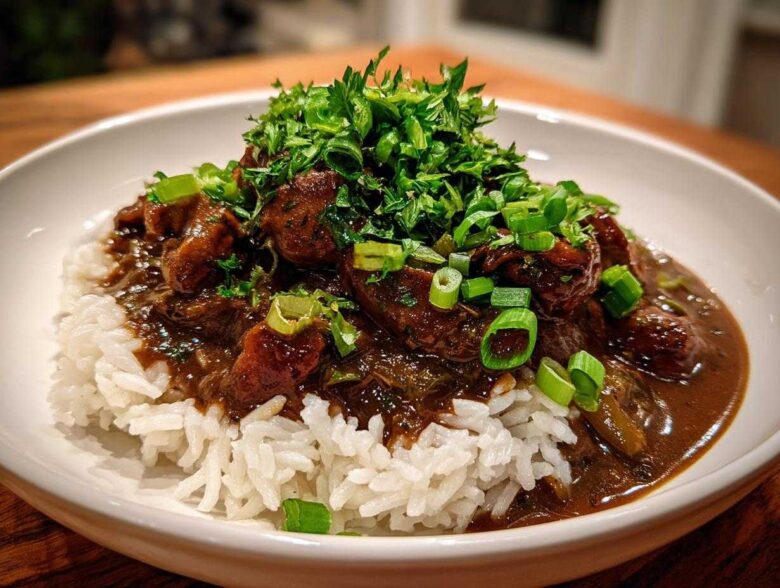
Oh, honey, let me tell you something. When you taste real Louisiana cooking, it just settles deep down in your soul, you know? It’s rich, it’s warm, and it just tastes like home, even if you’re a thousand miles away from the bayou. I spent years trying to nail that deep, almost smoky flavor profile, especially in something as iconic as Chicken Étouffée. I swear, my first few pots tasted like gritty, lukewarm soup!
But don’t you worry your sweet head about that now. I finally cracked the code. This recipe right here? This is the one I bring out when folks ask for the absolute best, most straightforward way to make authentic Chicken Étouffée from scratch. Forget all those complicated recipes that scare you off; we’re going to walk through the roux together, step by step, until it’s the perfect shade of gorgeous brown. Once that roux is right, the rest is pure, comforting Southern magic. Trust me, you’ve got this!
Why This Authentic Chicken Étouffée Recipe Works (E-E-A-T Focused)
If you’ve ever been intimidated by classic Cajun cooking, I promise this recipe is your new best friend. We have stripped away the fuss without sacrificing even a single ounce of authentic Louisiana flavor. This version of Chicken Étouffée is designed to give you restaurant-quality results every single time you stand over the stove. It’s all about respecting the process, especially that foundation!
- It cuts down on the anxiety of making a dark roux while ensuring you hit that beautiful ‘milk chocolate’ color for depth.
- We use the traditional 2:1:1 ratio of the Holy Trinity—onion, celery, and bell pepper—which is non-negotiable for true flavor.
- The slow simmer time (a full hour!) lets the chicken become tender and allows the spices to truly marry the broth.
Mastering the Perfect Roux for Chicken Étouffée
Listen closely, because this is where ninety percent of people mess up: the roux. You cannot rush this. If you want that deep, nutty, slightly earthy flavor that makes Chicken Étouffée sing, you have to commit 20 to 30 minutes of constant stirring. You are looking for the color of dark milk chocolate, maybe a bit deeper, but never burnt! If you smell burning, toss it and start over—it’s the only way to guarantee success. This patience is why my approach to the Perfect Roux for Étouffée makes all the difference.
Stir constantly, scraping the bottom and sides of your heavy pot. If you take your eyes off it for two minutes, you’ll end up with scorched flour, and nobody wants that bitter taste creeping into their stew. Think of it as your meditative moment for the day!
The Holy Trinity and Flavor Depth in Chicken Étouffée
A true flavor base in Louisiana cooking relies on the Holy Trinity: onion, celery, and bell pepper. We use equal parts of each because that specific balance is what gives Chicken Étouffée its signature taste—it’s earthier than a Creole seasoning blend often suggests. As soon as that roux is done, you drop those veggies right in to stop the cooking and seal in that fantastic, slow-cooked aroma. Don’t skip the peppers; they add necessary freshness!
Ingredients You Need for Classic Chicken Étouffée
Okay, gathering your supplies is super important, especially since we’re relying on the roux for richness, not heavy cream! For the roux itself, you’ll need equal parts flour and oil—a half cup of each is perfect for six servings. That balance is what makes the texture sublime. When you look at the rest of the ingredients, you’ll see we stick to the basics for my Classic Cajun Cooking standard.
Make sure your chicken thighs are cut into nice, bite-sized 1-inch pieces. And please, don’t forget the dried herbs like thyme and oregano; they wake up those foundational flavors beautifully. The cayenne is adjustable, but I like that little kick! Here’s the full lineup:
- 1/2 cup all-purpose flour
- 1/2 cup vegetable oil
- 2 cups chopped yellow onion
- 1 cup chopped celery
- 1 cup chopped green bell pepper
- 4 cloves garlic, minced
- 1 pound boneless, skinless chicken thighs, cut into 1-inch pieces
- 6 cups chicken broth
- 1 (14.5 ounce) can diced tomatoes, undrained
- 1 teaspoon dried thyme
- 1 teaspoon dried oregano
- 1/2 teaspoon cayenne pepper (adjust to taste)
- 1 bay leaf
- Salt and black pepper to taste
- 1/4 cup chopped fresh parsley, for garnish
- 1/4 cup chopped green onions, for garnish
- Cooked white rice, for serving
How to Prepare Chicken Étouffée Step-by-Step
Now, for the actual cooking part! I know this feels like a big production, but if you break down the process for making Chicken Étouffée, it becomes super manageable. Remember, the long simmer is what develops that deep, savory taste we’re after. Don’t rush the beginning, and don’t cut the simmering short at the end!
Building the Flavor Base: Roux and Vegetables
First thing’s first: you absolutely must make the roux. Grab your heaviest pot or a Dutch oven—the bottoms need to be thick so the heat is even. Mix that half cup of flour and half cup of oil over medium heat. Now, this is where dedication comes in. You whisk or stir constantly, and I mean constantly, for about 20 to 30 minutes until that mixture gets dark brown, like rich milk chocolate. Seriously, watch it like a hawk! As soon as you hit that color, immediately drop in your Holy Trinity: the onion, celery, and bell pepper. That sizzle stops the roux from burning, and the veggies start softening right away. Cook that mixture down until the vegetables soften nicely, which takes maybe 8 or 10 minutes. Then, stir in your minced garlic for just one minute until it smells heavenly.
Simmering the Chicken Étouffée to Perfection
Once your base is built, toss in your cut-up chicken pieces and brown them up gently on all sides. Then comes the thickening magic! Slowly, and I mean slowly, whisk in your six cups of chicken broth, a little at a time. This prevents lumps! If you dump it all in at once, your beautiful effort on the Chicken Étouffée will be lumpy, and we can’t have that. Once it’s smooth, stir in your canned tomatoes, thyme, oregano, cayenne, and that bay leaf. Give it salt and pepper, bring it to a gentle bubble, and then knock the heat way down. Cover it loosely and let it just murmur away for at least 45 minutes, but honestly, an hour is better. This long, slow simmer is what turns simple ingredients into the velvety stew you dream about.
Ingredient Notes and Substitutions for Your Chicken Étouffée
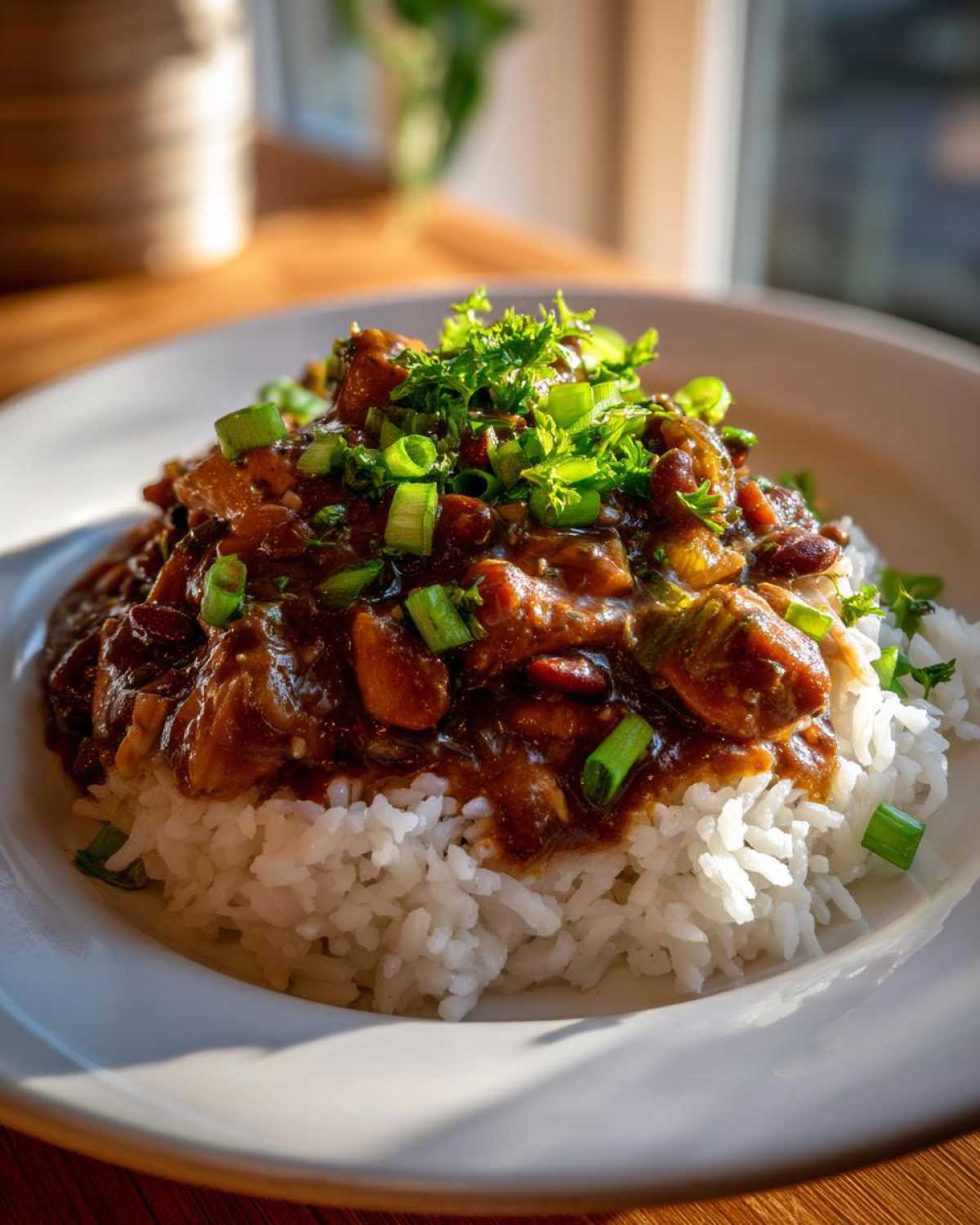
The ingredients list is intentionally simple because the flavor comes from technique, but I always get questions about swapping things out! If you want to go next level on the base flavor for your Chicken Étouffée, seriously consider swapping out the standard broth for actual chicken stock—it just adds a richer backbone to the gravy. That’s a trick I picked up from a chef down in Lafayette!
If you’re worried about the spice, remember that cayenne is totally optional for your taste. Start with a tiny pinch or leave it out completely if you prefer milder Southern comfort food dinner vibes. Also, if your stew finishes and seems a little thin, don’t panic! Just let it simmer uncovered for a few more minutes; that evaporation does the trick. For all my spice chatter, make sure you check out my guide on Flavorful Cajun Seasoning Blends for other great ideas!
Serving Suggestions for Hearty Chicken and Vegetable Stew
So you’ve made this gorgeous, velvety Chicken Étouffée—now what? This isn’t a meal you just eat plain, bless its heart! The number one, non-negotiable way to serve it is over a giant mound of fluffy, white rice. That rice soaks up all that rich, brown roux sauce, and that’s truly the perfect bite.
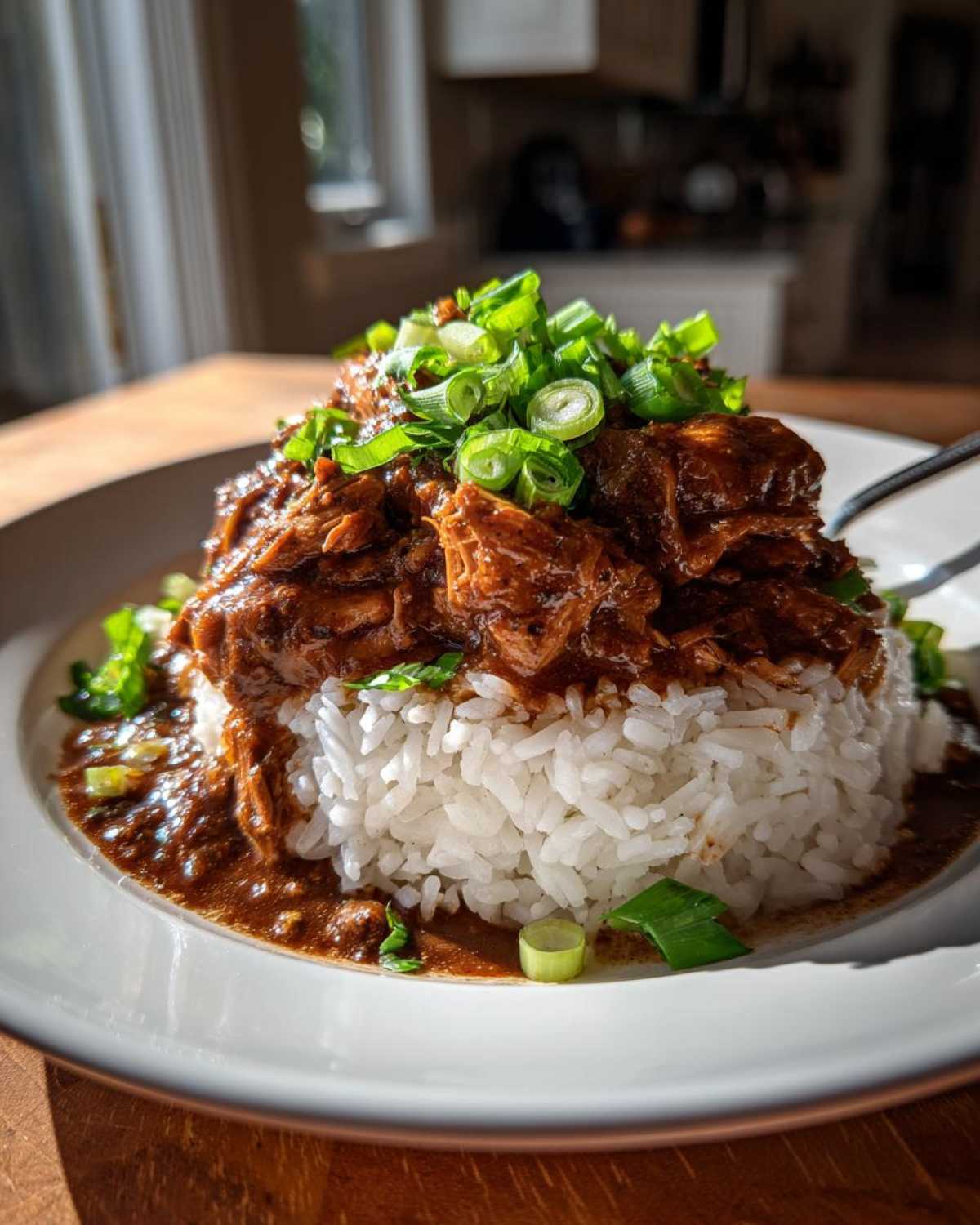
But if you want a real feast, grab some crusty French bread—you need something sturdy to scoop up every last drop of that Hearty Chicken and Vegetable Stew goodness! Simple cornbread works great too, especially if you like a little sweetness playing against the savory spice of the étouffée.
Troubleshooting Common Chicken Étouffée Issues
Even when you follow the directions carefully, sometimes the kitchen throws a little curveball, right? That’s okay! Learning to fix small issues is what separates the okay cooks from the great ones. When it comes to this Chicken Étouffée, most problems start right at the beginning with that roux, or sometimes it’s just a little seasoning tweak needed at the end. If you need more deep-dive tips, check out my main blog!
If your roux is too light—pale yellow instead of chocolate—your stew will taste doughy, not deep. Next time, use lower heat and stir longer! If it’s too dark, it’ll taste bitter, and honestly, you’ll have to scrap it and start over; we can’t fix burnt flavor. If your stew feels too thin after the full hour simmer, just take the lid off and let it reduce over medium-low heat for 10 or 15 minutes. If it’s too thick, add a splash of hot broth until it shimmers perfectly over your rice. Remember, tasting and adjusting at the end is crucial for success!
Storage and Reheating Instructions for Leftover Chicken Étouffée
The best news about making this amazing Chicken Étouffée? It tastes even better the next day! Seriously, the spices get so much cozier overnight. Store any leftovers in an airtight container in the fridge for up to four days. When you’re ready for round two, I strongly suggest reheating it slowly right on the stovetop, not the microwave. Give it a little stir every few minutes to keep that roux smooth and velvety. If it seems too tight, just splash in a bit of hot broth until it’s shimmering perfectly again!
Frequently Asked Questions About Louisiana Inspired Meals
I always get questions when people try this for the first time, and that’s totally fine! Learning the difference between Louisiana Inspired Meals can be tricky, but I’m here to clear things up for you, especially regarding my favorite Chicken Étouffée dish. I even touch on some of this when discussing my approach to a Traditional Creole Kitchen style versus Cajun methods!
What is the difference between Chicken Étouffée and Gumbo?
This is the big one! While both are hearty and delicious stews, the main difference is that classic Gumbo relies on either okra or filé powder (dried sassafras) as its thickening agent, which gives it a different texture. Our Chicken Étouffée, on the other hand, gets its classic thickness entirely from that dark, rich roux we talked about. Étouffée is generally a bit thicker and features the Holy Trinity more heavily as the main vegetable base, while Gumbo is often thinner and soupier.
Can I make this Chicken Étouffée Recipe using shrimp instead?
Oh, absolutely you can! If you swap out the chicken thighs for shrimp, you’ve just made Seafood Étouffée, which is just as popular. Just make sure you don’t overcook the shrimp! Shrimp only needs about 5 to 7 minutes total in the simmering stew, right at the end, so they stay tender and don’t turn rubbery. You’ll have a fantastic, Savory Seafood Alternative Recipe ready to go!
Is the cayenne pepper essential for an authentic flavor?
If you want that authentic, underlying heat that Louisiana food is known for, yes, that little bit of cayenne pepper is important! However, remember I said earlier: you are the boss of your spice level. If you are sensitive to heat, start with just 1/8th of a teaspoon, or skip it entirely if you are serving little ones. The flavor depth still comes from your roux and the vegetables!
Share Your Best Louisiana Chicken Étouffée Experience
Okay, home cooks, now it’s your turn to tell me everything! I’ve given you all my hard-won secrets, especially about that tricky roux. I really want to know how your Chicken Étouffée turned out. Did you manage to hit that perfect milk chocolate color on your first try? Don’t be shy—we’re all learning together here in the kitchen!
Please take a moment to rate this recipe down below. If you tried it, let me know! Drop a comment telling me if you served it with plain rice or if you went for the crusty bread option. If you snapped a picture of that beautiful, thick stew, I would absolutely love it if you shared it with me over on my contact page. Seeing your success makes all the stirring worthwhile!
PrintAuthentic Chicken Étouffée

A straightforward recipe for classic Louisiana Chicken Étouffée, featuring a rich roux base and the traditional Holy Trinity of vegetables.
- Prep Time: 20 min
- Cook Time: 70 min
- Total Time: 90 min
- Yield: 6 servings
- Category: Dinner
- Method: Stovetop Simmering
- Cuisine: Cajun
- Diet: Low Fat
Ingredients
- 1/2 cup all-purpose flour
- 1/2 cup vegetable oil
- 2 cups chopped yellow onion
- 1 cup chopped celery
- 1 cup chopped green bell pepper
- 4 cloves garlic, minced
- 1 pound boneless, skinless chicken thighs, cut into 1-inch pieces
- 6 cups chicken broth
- 1 (14.5 ounce) can diced tomatoes, undrained
- 1 teaspoon dried thyme
- 1 teaspoon dried oregano
- 1/2 teaspoon cayenne pepper (adjust to taste)
- 1 bay leaf
- Salt and black pepper to taste
- 1/4 cup chopped fresh parsley, for garnish
- 1/4 cup chopped green onions, for garnish
- Cooked white rice, for serving
Instructions
- Make the roux: In a large, heavy-bottomed pot or Dutch oven, combine the flour and oil over medium heat. Stir constantly with a whisk or wooden spoon until the mixture turns a dark brown color, similar to milk chocolate. This takes about 20 to 30 minutes. Watch carefully to prevent burning.
- Add the vegetables: Once the roux reaches the desired color, immediately add the onion, celery, and bell pepper (the Holy Trinity). Stir well to coat the vegetables in the roux. Cook, stirring often, until the vegetables soften, about 8 to 10 minutes.
- Add the garlic and cook for 1 minute until fragrant.
- Add the chicken pieces to the pot and cook until lightly browned on all sides.
- Slowly whisk in the chicken broth, a little at a time, ensuring the roux dissolves smoothly into the liquid without lumps.
- Stir in the diced tomatoes, thyme, oregano, cayenne pepper, and bay leaf. Season with salt and black pepper.
- Bring the mixture to a simmer, then reduce the heat to low, cover the pot partially, and let it cook for at least 45 minutes, or up to 1 hour, stirring occasionally. The stew should thicken slightly.
- Remove the bay leaf before serving. Taste and adjust seasoning as needed.
- Serve the Chicken Étouffée hot over mounds of cooked white rice. Garnish with fresh parsley and green onions.
Notes
- For a deeper flavor, use chicken stock instead of broth.
- If the stew becomes too thick, add a little more broth or water to reach your preferred consistency.
- If you prefer a less spicy dish, reduce the cayenne pepper or omit it entirely.
- Serve with crusty French bread or simple cornbread to soak up the sauce.
Nutrition
- Serving Size: 1 serving (without rice)
- Calories: 450
- Sugar: 5
- Sodium: 650
- Fat: 25
- Saturated Fat: 4
- Unsaturated Fat: 21
- Trans Fat: 0
- Carbohydrates: 25
- Fiber: 3
- Protein: 35
- Cholesterol: 110
