

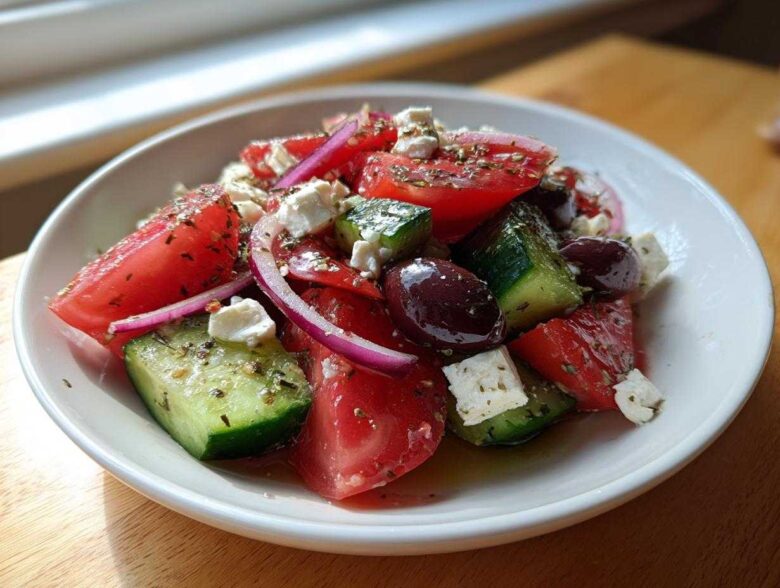
Oh, the instant sunshine this salad brings to the table! Seriously, when the temperatures rise and everything else feels heavy, there’s nothing I crave more than a truly authentic, palate-awakening **Greek salad**. Forget all those flimsy versions swimming in dressing or piled high with lettuce—that’s not how they make it in the tavernas!
This recipe is my go-to standard for everything, from backyard BBQs to quick, healthy lunches when I just need a vibrant crunch. The key, trust me, is letting those few, incredible ingredients shine. We’re talking juicy tomatoes, that sharp pop from the red onion, briny olives, and huge, creamy chunks of feta. It’s so satisfying, and honestly, it’s ready before you even get the grill fired up!
Why This Classic Greek Salad Shines Bright
When I’m looking for that perfect balance between satisfying and incredibly light, this is the dish I turn to every single time. It feels like a vacation in a bowl! You need crunch, you need tang, and you definitely need that perfect salty finish. It’s the definition of a no-fuss, maximum-flavor summer dish.
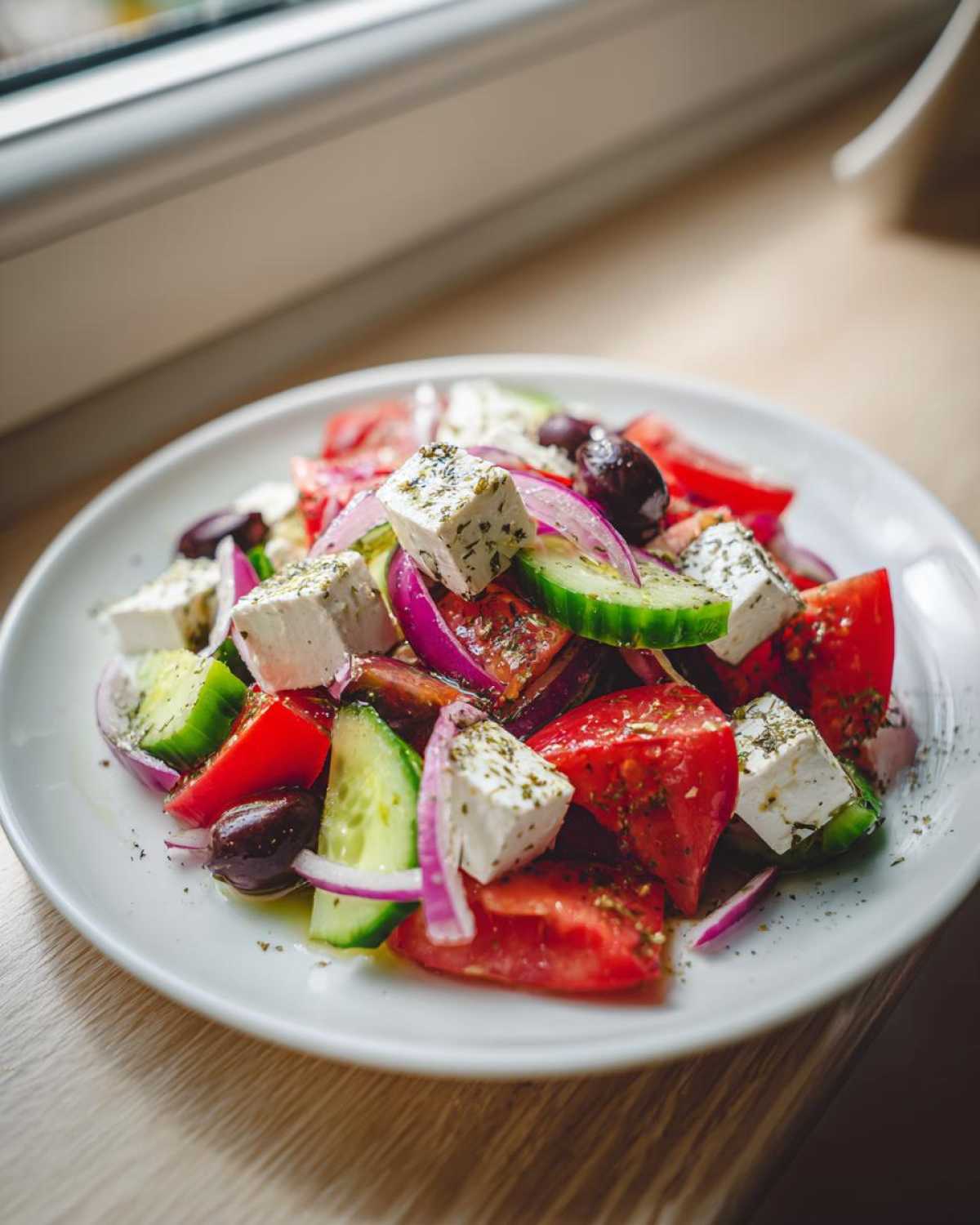
- It’s naturally vegetarian and fits right into that healthy Mediterranean diet plan beautifully.
- The texture is unbeatable—you get that satisfying snap from the cucumber and pepper.
- It’s incredibly fast; we’re talking fifteen minutes start to finish, which is perfect for weeknights.
- The dressing is pure simplicity: just olive oil, vinegar, and that wonderful, heady oregano.
This is a great option if you need a bright side dish that won’t weigh down a heavy main course. If you love vibrant seasonal eating, you might also want to check out my thoughts on fall harvest salad recipes when the seasons change, but right now, we’re focusing on the sun!
Ingredients for the Perfect Greek Salad
Here’s the thing about this traditional Greek salad—it relies completely on the quality of your raw materials. Don’t try to sneak in mediocre stuff! I measure these amounts out because the balance between the acid and the oil is crucial, but I always use generous chunks of the good stuff.
You’ll want your vegetables firm and ripe. Think about how satisfying it is to bite into something that actually has flavor, right? Here’s exactly what you need for about four lovely, side-dish servings:
- 2 big, ripe tomatoes, cut into rustic wedges—don’t dice them too small!
- 1 large cucumber, peeled (I sometimes leave a few stripes of green on for color) and chopped into hearty pieces.
- 1 green bell pepper, seeded out and sliced into nice thin strips.
- 1/2 a red onion, sliced paper-thin. We’ll talk about how to treat these later, but make sure they are thin!
- A very generous cup of Kalamata olives, and yes, try to find them pitted if you’re feeling lazy, but the ones right out of the brine jar are magic.
- 8 ounces of good feta cheese. This is important: get the block feta packed in brine. Cut it yourself into chunky cubes or just crumble big pieces on top. It melts smoother when tossing this way.
For the dressing, simplicity wins! We’re using 1/4 cup of *really* good extra virgin olive oil (it makes a difference here!), 2 tablespoons of red wine vinegar, 1 teaspoon of dried oregano—smell that beautiful herb!—plus just a tiny pinch of salt and pepper to finish it all off.
Expert Tips for an Authentic Greek Salad
Getting that true taverna flavor isn’t just about throwing things in a bowl; it’s about respecting the ingredients a little bit. My grandmother, who traveled extensively in Greece, always insisted on a couple of non-negotiables that take this simple salad from good to unforgettable. Follow these two tricks, and you’ll never look back.
Choosing the Best Feta for Your Greek Salad
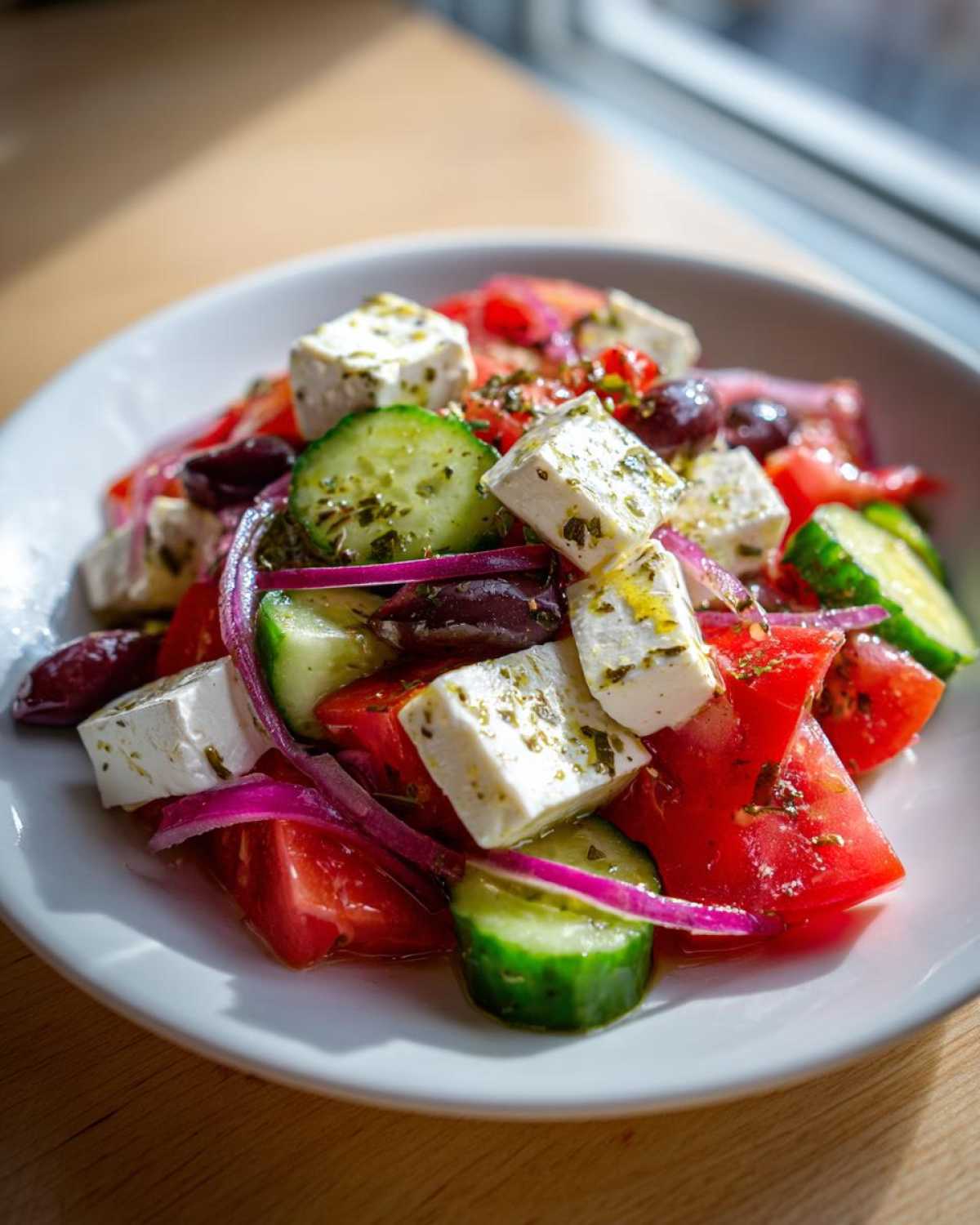
Seriously, ditch the plastic tubs of pre-crumbled feta! That stuff is dry and crumbly before you even buy it. You absolutely must use the block feta that sits swimming in brine. It’s creamier, saltier, and actually softens slightly when you toss it in the dressing. That texture is everything.
Taming the Red Onion Bite
Red onions are fantastic here because of that beautiful purple color, but sometimes they can be so sharp they overpower the tomatoes. If you find your onions too strong, here’s my trick: slice them thinly, pop them into a small bowl of ice-cold water for about ten minutes, and then drain them really well before adding them to the main bowl. They stay crisp but lose that harsh, aggressive edge.
It’s amazing how just soaking them calms them right down! It’s like giving them a little spa treatment before they hit the main event. If you feel like experimenting with onions later, you can check out my whole guide on different onion techniques, but for this salad, the soak is the way to go.
How to Assemble Your Traditional Greek Salad
Okay, now that you have your perfect veggies and your sharp, tangy dressing ready to go, it’s time for assembly—and this is where you need a gentle hand! We want crisp vegetables, not mushy ones. I always use my biggest, widest mixing bowl for this because it gives the ingredients room to move around without crushing each other.
First things first, get all of your prepped vegetables—the tomatoes, cucumber, pepper, and the mellowed red onion—into that big bowl. Next, toss in your Kalamata olives. They just look gorgeous sitting amongst the other colors, don’t they?
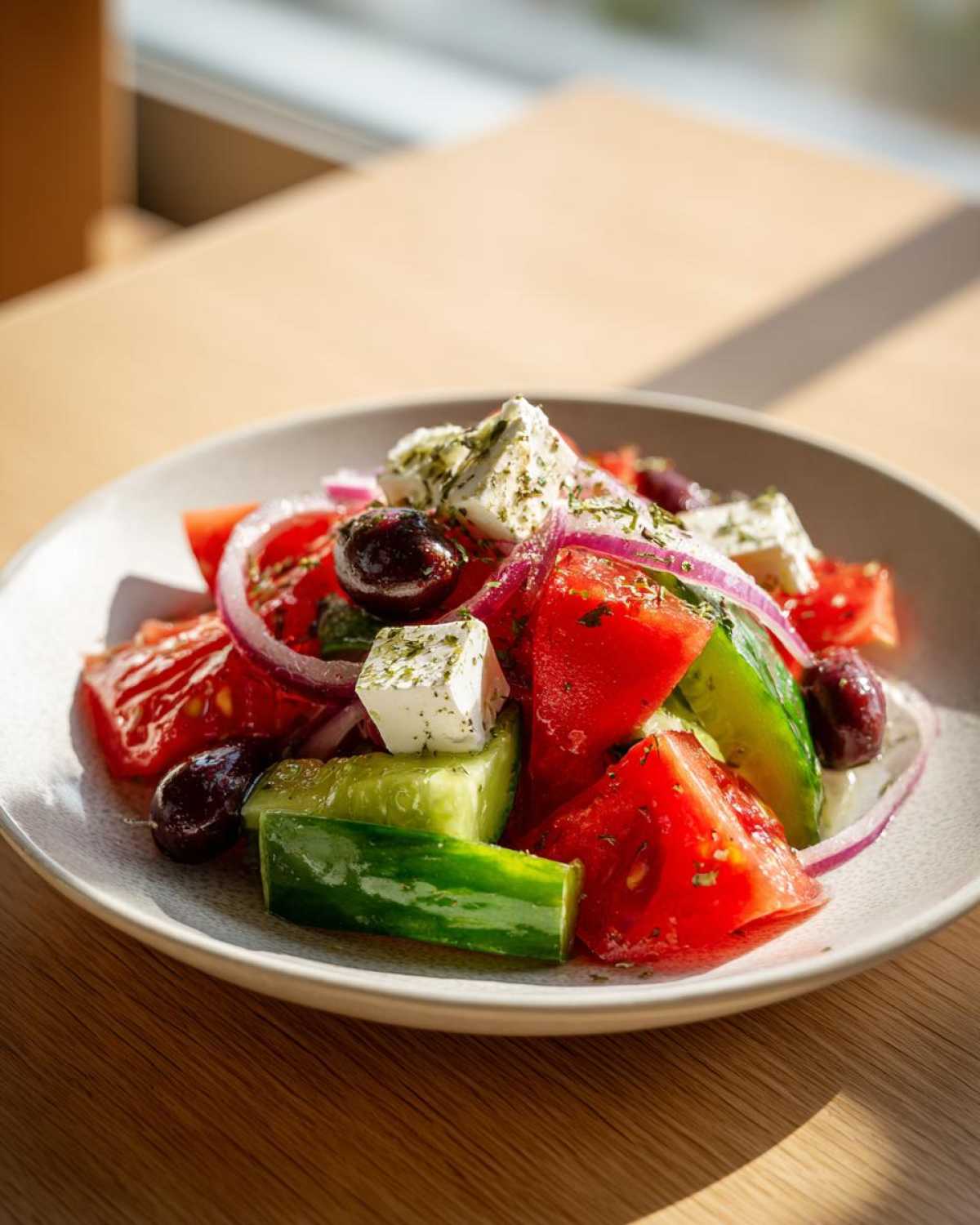
Now, here’s where people usually mess up slightly: they add the feta too soon or toss too vigorously. I like to add the feta cubes or crumbles on top of the vegetables *before* the dressing goes in. This layer acts like a little cushion.
Next, grab that dressing we whipped up! Pour it right over everything. The magic word here is **gently**. Use those big salad tongs or even clean hands (if you’re feeling brave) and just guide the ingredients together. You aren’t stirring cement; you are just lightly coating everything so that every vegetable gets that zing of olive oil and oregano. It shouldn’t take more than a minute or two.
If you have time—and this is optional, especially if you’re serving it right away—let it sit on the counter for fifteen minutes. That little rest time allows the oregano to wake up in the oil and the vegetables to start soaking up the vinaigrette without getting soggy. If you’re rushing, though, go ahead and serve immediately! It’s fantastic either way. If you’re looking for other bright, refreshing drinks to go with this salad, I have a great recipe for easy homemade lemonade that pairs perfectly!
Making the Tangy Vinaigrette for Your Greek Salad
This isn’t complicated, and that’s exactly why it’s so brilliant. The dressing is the backbone of our **Greek salad**, delivering that signature salty, tangy kick that defines the whole dish. Forget those thick, creamy pre-made bottles; we’re making a simple emulsion right in a tiny bowl.
Grab a separate small bowl—no need to dirty the huge mixing one yet! You’re just whisking together that high-quality extra virgin olive oil and the red wine vinegar until they start to look slightly cloudy and combined. Then, you fold in the dried oregano, salt, and pepper. That’s it! Give it a good, strong whisk until it loosens up, and you’re ready to pour that golden liquid right over your cucumbers and tomatoes. So easy, so fresh!
Serving Suggestions for Your Greek Salad
I love how versatile this tangy olive and feta salad is! It’s perfect as a light lunch all on its own when you’re craving something zesty and bright. But honestly, it truly shines as a healthy side dish.
It cuts through the richness of grilled meats like chicken souvlaki or even a hearty steak, making everything feel lighter. If you’re having a big summer get-together, this is the absolute go-to option that people always ask for the recipe for. It’s so much better than standard lettuce salads!
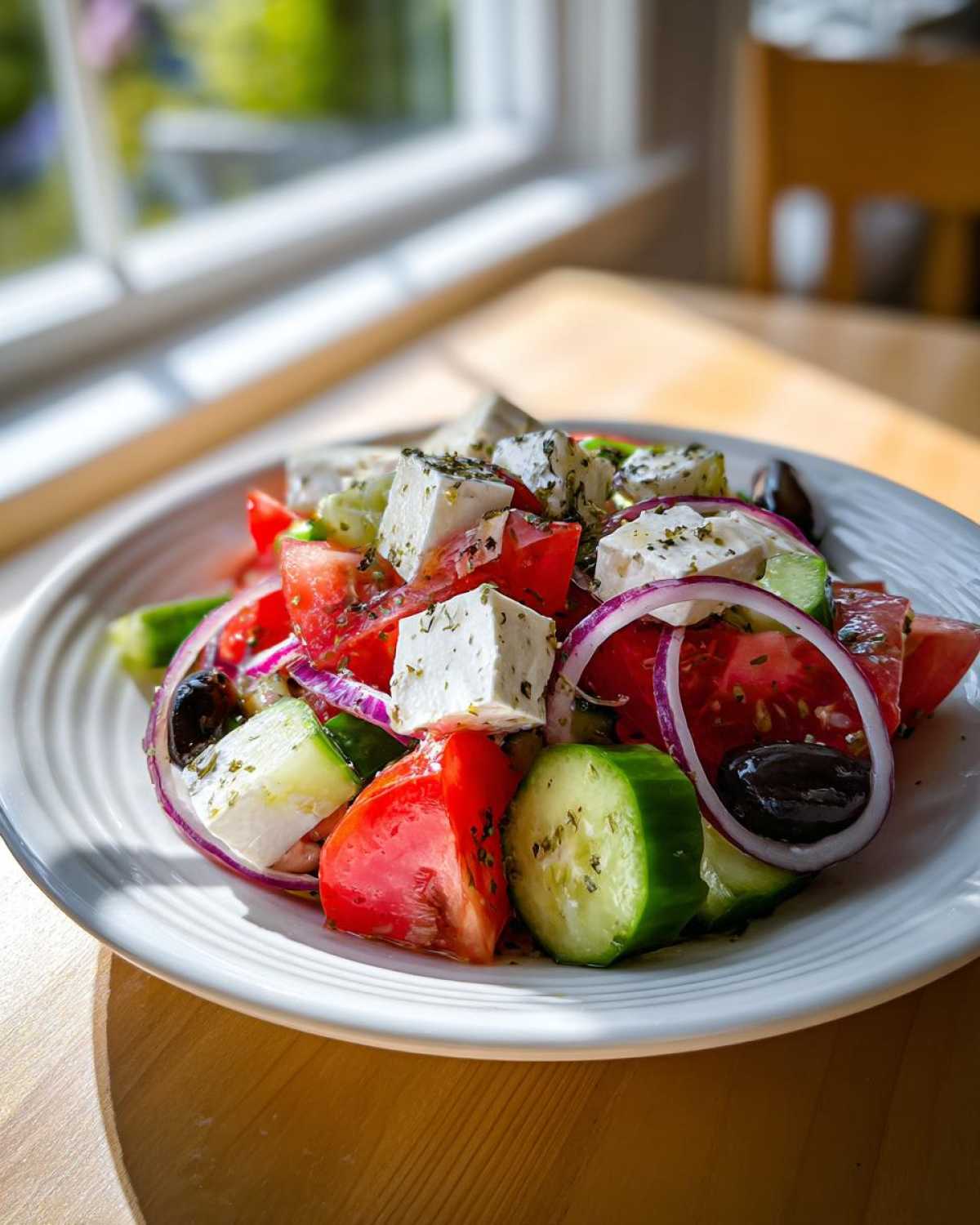
If you’re looking for something different for a lighter mains night, you could also serve this over some simple grilled chicken, similar to how I adapt my flavor profiles for my chicken lettuce wraps, just swapping the base entirely!
Storing Leftovers of This Mediterranean Greek Salad
Honestly, the only way this salad is truly perfect is eaten right after you toss it. Those beautiful, crisp vegetables start relaxing fast once they hit the vinegar! If you absolutely have leftovers of your **Greek salad**, keep them in an airtight container in the fridge.
Just know that the cucumbers and tomatoes will soften up. To try and revive things the next day, drain off any extra liquid pooled at the bottom before you eat it. You could toss a handful of fresh, crisp bell pepper in for texture, or even try adding some quick refrigerator pickled vegetables for a textural lift, just like in my refrigerator pickles guide!
Frequently Asked Questions About Making a Greek Salad
I always get so many questions when I bring this tangy olive and feta salad to parties! It seems simple, but people want to know the secrets to getting that authentic taste right every time. Here are the most common things folks ask me about making the perfect version.
Can I add lettuce to my Greek salad?
Oh, honey, please don’t! If you’re going for the real deal, the answer is a firm no. The traditional Greek salad, or *Horiatiki*, doesn’t contain any lettuce or greens at all. It relies strictly on the chunky tomatoes, cucumber, onion, olives, and feta. Adding lettuce just waters down that beautiful, concentrated vegetable flavor we’re aiming for!
What makes this a traditional Greek salad?
Authenticity comes from simplicity, truly! A traditional Greek salad is defined by what it *doesn’t* have: no lettuce, certainly no lemon juice in the dressing, and no added herbs other than dried oregano. It’s just those huge vegetable chunks, high-quality olives, and the feta—all held together by that sharp red wine vinegar and olive oil mix. It’s robust, not delicate!
How do I keep this summer salad recipe from getting soggy?
This is the biggest hurdle for bringing this salad to a potluck! My golden rule is simple: Dress it right before you serve it. If you need to prep ahead, chop all your veggies and keep them dry in one container, and mix your dressing in another. Don’t bring them together until you are literally sitting down to eat. A quick final toss then, and you’ll avoid those sad, wilted textures!
If you’re interested in other great Mediterranean flavors that hold up well—even when prepped ahead—you have to see my post on my mediterranean chickpea grain salad recipe! It’s built for making ahead.
Nutritional Snapshot of This Tangy Olive and Feta Salad
Now, I’m not a nutritionist or anything, but because this salad is mostly fresh vegetables and good fats, it’s a fabulous choice for a healthy side dish. Just remember that with the feta and the olives, the sodium content is definitely present in this **tangy olive and feta salad**!
Based on my ingredient estimates, you’re looking at around 300 calories per serving, with about 28g of fat—mostly the wonderful unsaturated kind from that olive oil we insisted on! It’s high in protein and fiber too. These numbers are just a guide, of course; your results will change depending on how generous you are with that gorgeous feta block. If you’re looking for other satisfying meals that are packed with flavor without feeling heavy—like my chicken burrito bowl—check that recipe out next!
PrintClassic Greek Salad
Prepare a refreshing, traditional Greek salad featuring crisp vegetables, salty feta, and a simple oregano vinaigrette.
- Prep Time: 15 min
- Cook Time: 0 min
- Total Time: 15 min
- Yield: 4 servings
- Category: Side Dish
- Method: Tossing
- Cuisine: Greek
- Diet: Vegetarian
Ingredients
- 2 large ripe tomatoes, cut into wedges
- 1 large cucumber, peeled and sliced or chopped
- 1 green bell pepper, seeded and sliced
- 1/2 red onion, thinly sliced
- 1 cup Kalamata olives, pitted
- 8 ounces feta cheese, cut into cubes or crumbled
- 1/4 cup extra virgin olive oil
- 2 tablespoons red wine vinegar
- 1 teaspoon dried oregano
- 1/4 teaspoon salt
- 1/8 teaspoon black pepper
Instructions
- Place the tomatoes, cucumber, green bell pepper, red onion, and olives into a large bowl.
- Gently add the feta cheese to the vegetables.
- In a small bowl, whisk together the olive oil, red wine vinegar, dried oregano, salt, and pepper to make the dressing.
- Pour the dressing over the salad ingredients.
- Toss the salad gently to coat everything evenly.
- Serve immediately or chill for 15 minutes before serving to allow flavors to combine.
Notes
- For the most authentic flavor, use block feta stored in brine, rather than pre-crumbled.
- If you prefer a milder onion flavor, soak the sliced red onion in cold water for 10 minutes, then drain before adding to the salad.
Nutrition
- Serving Size: 1 serving
- Calories: 300
- Sugar: 6
- Sodium: 650
- Fat: 28
- Saturated Fat: 9
- Unsaturated Fat: 19
- Trans Fat: 0
- Carbohydrates: 12
- Fiber: 4
- Protein: 10
- Cholesterol: 35
