

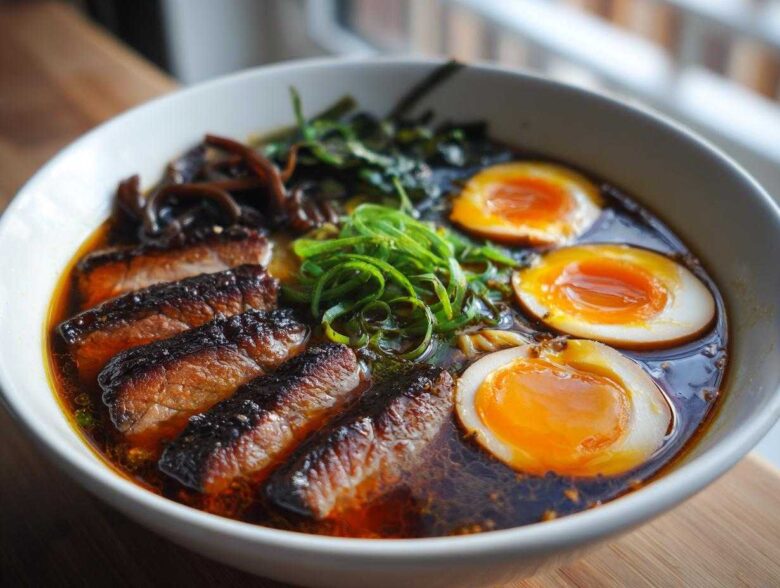
Oh, friends, stop what you’re doing. Forget every cloudy, weak ramen broth you’ve ever tried to make at home because we are finally diving deep into the ultimate culinary Everest: **Tonkotsu Ramen with Chashu and Black Garlic Oil**! For years, I just settled for store-bought packets and instant junk, you know? But I made a promise to myself that I would crack the code to that milky, opaque, Umami Rich Pork Ramen that only comes out of specialty shops. If you need more inspiration while you’re waiting for those bones to boil, check out my main blog page over at my recipe index!
It took me almost a year, buckets of pork bones, and maybe a few kitchen disasters, but I nailed it. This isn’t a quick weeknight meal; this is a weekend project, and I promise you, the results are astounding. We’re going through every single step tonight, from getting those bones screaming hot to brewing up that gorgeous, inky Mayu. Trust me, once you taste this homemade version, you’ll never look back.
Why This Tonkotsu Ramen with Chashu and Black Garlic Oil is Worth the Effort
I know, I know! When you read 18 hours of simmering, you might think, “Why bother?” But making this dish at home is about control, flavor, and pure satisfaction. When you finally master that cloudy broth and pull apart that tender pork, you feel like a culinary legend!
If you’re looking for more deep-dive recipes that nourish the soul, check out my collection of Japanese Comfort Food Classics.
- It’s truly an exercise in patience that pays off in unparalleled depth of flavor.
- You get to control every single element, from the richness of the broth to the spice level of your egg marinade.
Achieving the Rich Pork Bone Broth Guide
This whole project hinges on that broth. No pale, thin soup here! We’re aiming for a milky white consistency because that means the collagen and fat have fully emulsified. Following the **Rich Pork Bone Broth Guide** means creating a base so flavorful, you’ll wonder why you ever ordered delivery. It’s pure liquid gold, trust me.
The Perfect Slow Cooked Pork Ramen Topping (Chashu)
The **Slow Cooked Pork Ramen Topping** is melt-in-your-mouth magic. We’re not just cooking pork belly; we’re turning it into this impossibly tender protein that absorbs the sweet, salty marinade. Once you try this Chashu, regular roast pork just won’t cut it anymore. It adds the perfect salty bite to balance the creamy broth.
Gathering Your Tonkotsu Ramen with Chashu and Black Garlic Oil Ingredients
Okay, since this recipe takes a little longer than popping in a frozen pizza, getting your ingredients stocked up first makes the process so much smoother. I always lay everything out on the counter before I even think about turning on the stove. Remember, for the best **Authentic Tonkotsu Recipe**, the quality of what goes in really dictates what comes out!
For the core broth, you absolutely need about five pounds of pork femurs and trotters, and make sure to ask your butcher to crack those femurs for you—that’s key for getting the marrow out. Don’t forget the pork back fat or skin for an extra richness factor! For aromatics, we just need a big onion, a whole head of garlic (cut in half horizontally, weirdly enough!), and a chunk of ginger.
Then we switch over to the flavor boosters. For your Chashu, you’ll need soy sauce, mirin, sake, and sugar for that beautiful marinade. And for the finishing superstar, the Mayu, you’ll need a cup of neutral oil and a whole head of garlic dedicated just to frying until it turns black! Finally, grab your fresh ramen noodles, those lovely big eggs for marinating, and your finishing touches: plenty of scallions and some wood ear mushrooms.
If you need a deep dive into what makes these specific items crucial, I wrote a whole breakdown on Japanese Ramen Ingredients Explained. Go check it out after you finish shopping!
Step 1: The Foundation – Making the Rich Pork Bone Broth Guide
This is where 90% of home ramen cooks throw in the towel, but you and I? We are going the distance following the **Long Simmer Broth Technique**. You can’t rush this if you want that iconic creamy broth. If you want to know exactly how I get my broth opaque and not sad-looking, I break down the science of How to Make Tonkotsu Broth Cloudy over here!
Blanching and Cleaning Bones for Pure Flavor
Seriously, don’t skip this part; it’s non-negotiable! We need to get rid of all that “gamey” flavor that comes from the marrow and blood residue. Throw those cracked bones and the fat into a big pot, cover it with water, and bring it to a violent, rolling boil for about 15 minutes. All that nasty grey scum rises up, right? Drain everything, rinse those bones under cold water until they look pristine clean. You’re basically giving your bones a scrub-down before the big spa treatment.
Maintaining the Hard Boil for Emulsification
Now, put those clean bones back in your pot and cover them with fresh water—about five quarts to start. The magic of the **Authentic Tonkotsu Recipe** happens here: you must boil it hard for 12 to 18 hours. I mean HARD. It can’t be a gentle simmer; it needs that aggressive rolling to blast the collagen and fat into the water, making it cloudy. Keep adding hot water when the level drops so the bones stay submerged. That agitation is what turns simple stock into glorious Tonkotsu!
Step 2: Preparing the Best Chashu Pork Belly Instructions
While that broth is bubbling away, we’re going to tackle the best part: the pork belly! This **Slow Cooked Pork Ramen Topping** is worth the effort, I promise. You need to take your pork belly and roll it up tight—like a meaty little log—and secure it really well with butcher’s twine. This keeps the shape nice and even when it cooks.
For the braising liquid, we mix up soy sauce, mirin, sake, and sugar—it’s sweet, salty, and perfect. Place the pork roll in a pot and just add enough water or leftover broth so it’s mostly covered. Now, the key here is *gentle* simmering, not boiling! We want it happy and slow for about three to four hours until it’s ridiculously tender. You should be able to poke it with a fork easily.
Once it’s cooked, take the pork out and let it cool down a bit before slicing. But don’t toss that braising liquid! That’s your treasure chest. Set aside at least one cup of that liquid; we need it later for marinating those gorgeous ramen eggs. If you want some extra inspiration for slow-cooked meats, take a peek at my recipe for braised pork with spiced plum sauce.
Step 3: Making Mayu Black Garlic Oil and Perfect Ramen Egg Recipe
While that broth is stubbornly refusing to finish boiling, we sneak in two smaller, but equally important, flavor components. We need that perfectly soft, jammy egg and that intensely smoky black garlic oil. Believe me, getting the timing right here moves you firmly into the realm of **Restaurant Quality Ramen At Home**.
Let’s talk eggs—the Ajitama. If you mess this up, the yolk will be hard, and that’s criminal. You need to boil them for exactly 6.5 minutes. No more, no less! Immediately, shock them in an ice bath so they stop cooking immediately. Then, peel them carefully and drop them right into that reserved Chashu braising liquid we saved earlier. They need at least six hours, but overnight is best to get that gorgeous amber color and flavor infusion.
For the Mayu, it’s all about patience. You heat up your neutral oil, and then drop in a whole head of peeled garlic. You can’t rush the **Flavorful Ramen Oil Preparation**! Keep the heat low-medium and stir constantly. We are frying them slowly until they turn deep, dark brown—almost black—but you have to pull them out *before* they burn to ash. The oil left behind is your black magic: the smoky, intense flavor bomb that cuts through the richness of the broth. Have you tried making homemade caramels? Sometimes I think making this oil requires the same kind of careful attention to the sugar browning step, so if you need a refresher on patience, check out my homemade caramel recipe!
Flavorful Ramen Oil Preparation: Making Mayu Black Garlic Oil
Seriously, if you want that deep, mysterious aroma, you need Mayu. We are frying garlic cloves in oil until they are intensely dark brown. If you burn them black, they turn bitter, so watch them like a hawk! The resulting oil becomes the **Flavorful Ramen Oil Preparation** standard for true Tonkotsu. Once the garlic solids are removed, save both the crispy bits and the smoky oil separately—they both go on top!
Assembling Your Restaurant Quality Ramen At Home: Tonkotsu Ramen with Chashu and Black Garlic Oil
The moment of truth! After all that simmering, we have to treat the broth right. First things first, strain that cloudy Tonkotsu broth through a fine-mesh sieve. You want zero bones or stray bits floating around—just that beautiful, creamy liquid. If you want to adjust the saltiness, now is the time, although many people season the bowl with tare later. While that’s happening, get your fresh noodles cooking; they usually only take a minute or two, so make sure they don’t overcook!
Now we move onto assembling your **Restaurant Quality Ramen At Home**. This layering matters! Put your piping hot noodles into the biggest bowl you have. Ladle that scalding hot broth right over them—you need enough liquid to cover the noodles nicely. Then, take your chilled Chashu, slice it thinly against the grain—it should almost fall apart—and place a few slices gently on top.
Halve those beautiful amber-colored Ajitama eggs and nestle them in. Don’t forget the fresh toppings! Scatter those vibrant scallions and your earthy wood ear mushrooms. For the grand finale of our **Tonkotsu Ramen with Chashu and Black Garlic Oil**, drizzle that intense black garlic oil (Mayu) all over, and sprinkle those crispy fried garlic bits on top for the final crunch. You deserve this masterpiece!
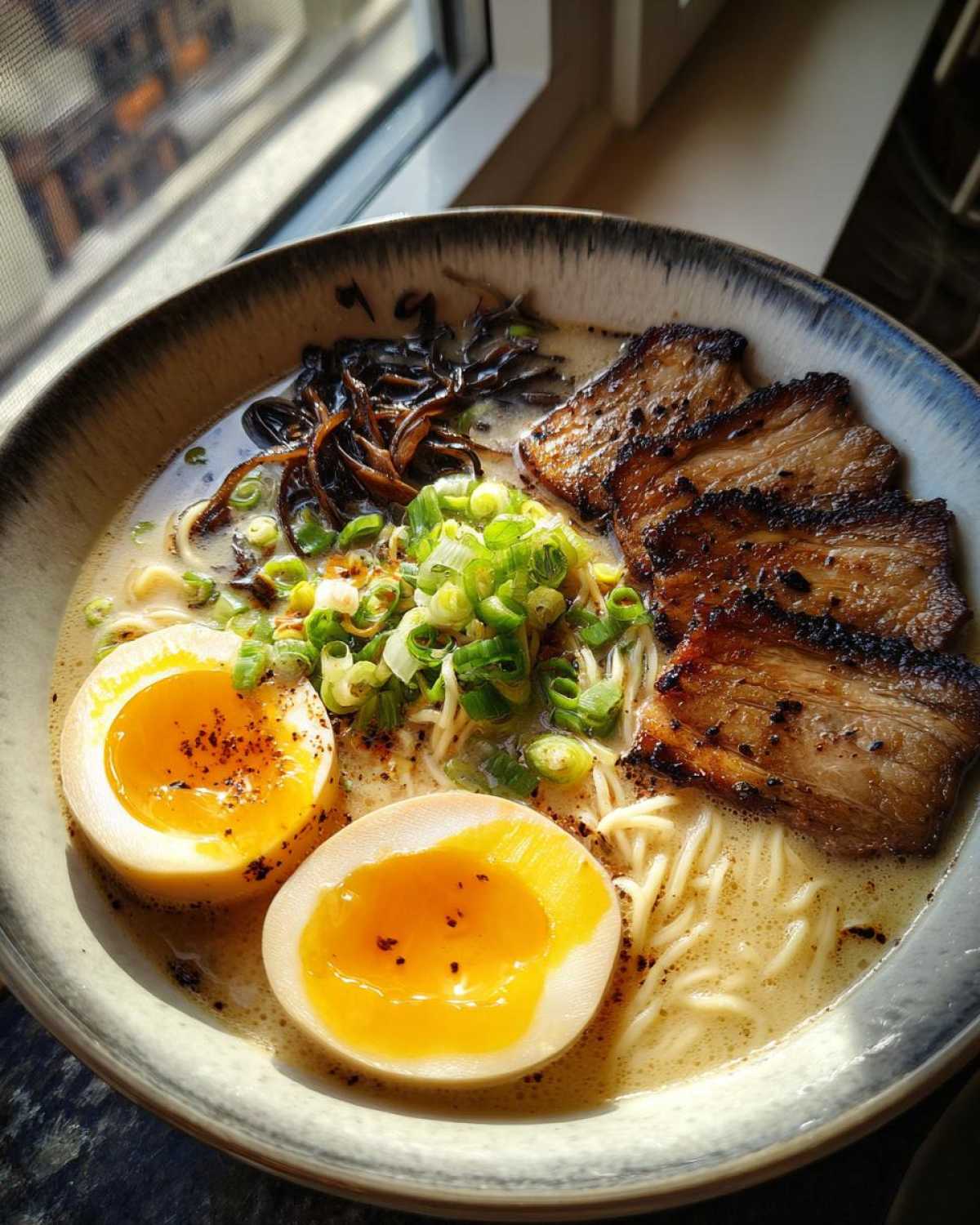
If you want visual guides on the best order for layering everything so it looks professional, I cover that in detail in my guide on Step by Step Ramen Assembly.
Tips for Success with Tonkotsu Ramen with Chashu and Black Garlic Oil
Look, making this level of ramen is a commitment, so let me save you some time. The biggest thing for that cloudy broth—remember—it must maintain a rolling boil for hours. If it stops boiling hard, it won’t emulsify properly, and you’ll end up with clear stock, alas. Also, when you’re slicing the Chashu, let it chill completely first. I usually stick mine in the fridge for an hour or two; it slices so much cleaner, and you get those beautiful, delicate edges.
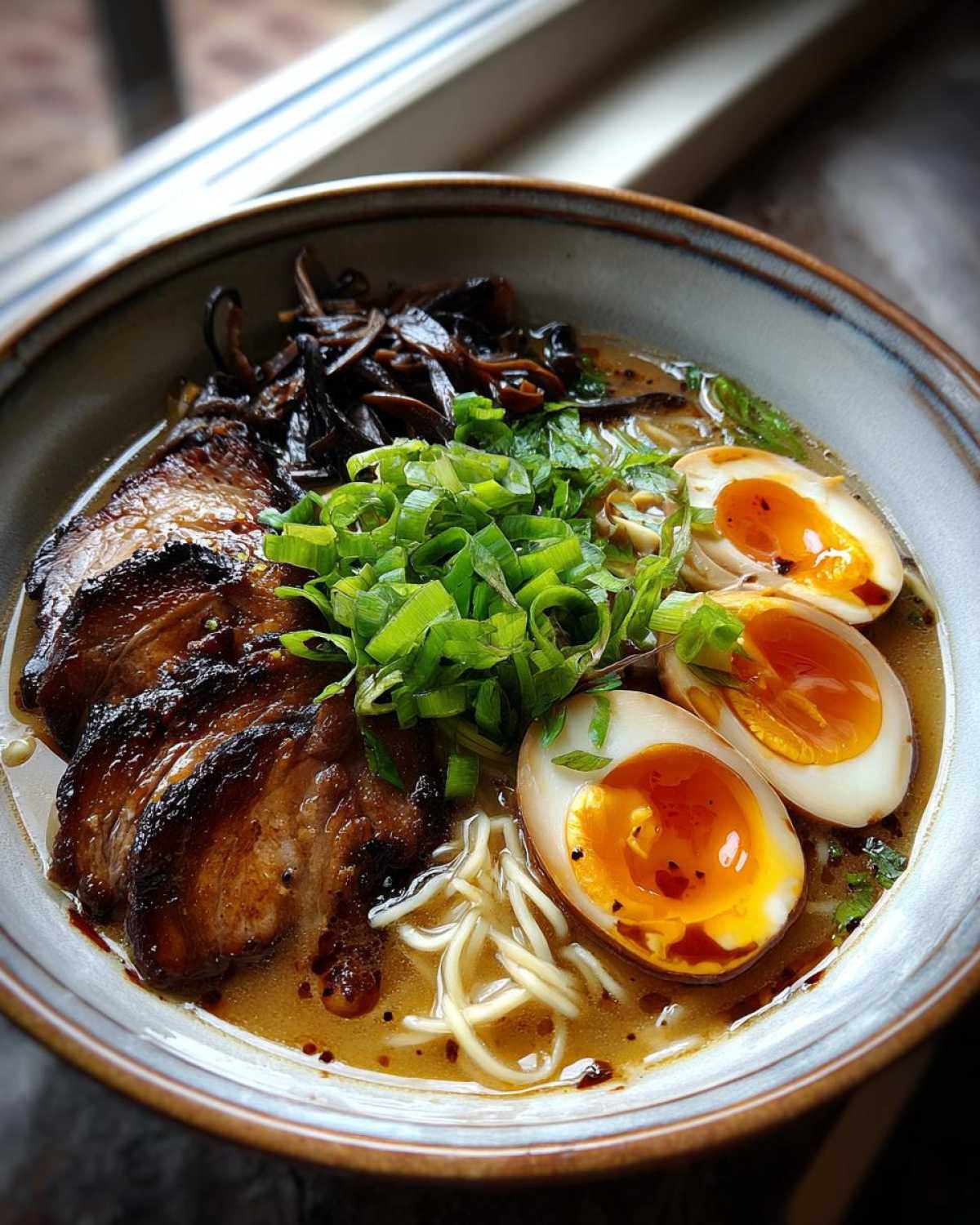
And with the Mayu, please taste as you go! That garlic oil is intense. Start with a light drizzle, taste, and then add more if you need that deep smoky punch. If you want even more tips and tricks straight from my kitchen journal, you can always check out my general recipe index for general wisdom!
Frequently Asked Questions About Making Tonkotsu Ramen with Chashu and Black Garlic Oil
I know this recipe is a big one, so I figured we should cover a few things folks always ask me when they try to achieve that **Home Ramen Shop Style** right in their own kitchen. Don’t worry if you hit a snag; that’s part of the learning curve with this kind of deep cooking! If you’re still looking for general tips and inspiration as you dive into this project, don’t forget to explore my guide on achieving that look.
Can I make the Tonkotsu broth in a slow cooker instead of a stockpot?
That’s a tricky one! You absolutely *can* use a slow cooker, but here’s the catch: slow cookers generally can’t reach that aggressive, hard rolling boil that we need for 18 hours. Remember, we talked about emulsification? That only happens when the fat and collagen are aggressively agitated, which means high heat on the stovetop. A slow cooker will give you a beautiful, clear, flavorful stock, but it won’t give you the traditional cloudy Tonkotsu broth we’re after.
What if I cannot find pork femurs or trotters for the broth?
Don’t panic if the butcher is out of the specific bones! The goal is density and collagen, so look for things that have plenty of cartilage and surface area. Pork neck bones or even meaty knuckles are fantastic substitutes. They break down nicely and contribute heavily to that **Umami Rich Pork Ramen** flavor profile. Just use whatever combination gives you the most bone surface area for that long, hard simmer!
How long do the Ajitama eggs *really* need to marinate?
You could technically eat them after 4 or 5 hours, but honestly, the flavor just won’t penetrate past that thin membrane. For the best taste—where the outside of the yolk has totally absorbed that sweet, savory marinade—you absolutely need to leave them overnight. I always make my eggs the day before I plan on serving the ramen, just so they’re ready to go.
Nutritional Estimates for Your Homemade Ramen Bowl
Now, I know we aren’t making this ramen for a salad, right? This is pure, glorious comfort food, and with 18 hours of pork simmering, the richness comes through in the numbers! But just so you have a ballpark idea of what you’re slurping down in that beautiful creation, here are the rough estimates for one serving of this amazing **Tonkotsu Ramen with Chashu and Black Garlic Oil**.
Please remember, these are just averages based on the ingredients listed. If you use leaner pork for your Chashu, or if you decide to go lighter on that smoky Mayu drizzle, your numbers will definitely shift! It’s always a good idea to check out my general site disclaimer page for more information on how I calculate these figures.
- Serving Size: 1 bowl
- Calories: 950
- Protein: 45g
- Fat: 65g (Be ready for that richness!)
- Saturated Fat: 25g
- Carbohydrates: 55g
- Sugar: 15g
- Sodium: 1800mg (That’s where the flavor is hiding, folks!)
See? It’s a meal! But every single calorie is absolutely worth the work you put in to get that creamy broth and tender pork belly. Go enjoy every last drop!
PrintAuthentic Tonkotsu Ramen with Chashu and Black Garlic Oil
A detailed guide to making rich, opaque Tonkotsu broth, tender Chashu pork belly, and aromatic homemade Black Garlic Oil (Mayu) for restaurant-quality ramen at home.
- Prep Time: 1 hour
- Cook Time: 18 hours
- Total Time: 19 hours
- Yield: 4 servings
- Category: Dinner
- Method: Slow Simmering
- Cuisine: Japanese
- Diet: Low Fat
Ingredients
- 5 lbs pork femurs and trotters, cracked
- 1 lb pork back fat or skin
- 1 large onion, quartered
- 1 head garlic, halved horizontally
- 2 inches ginger, sliced
- 1 cup water (for initial blanching)
- 1/2 cup soy sauce (for Chashu marinade)
- 1/4 cup mirin (for Chashu marinade)
- 1/4 cup sake (for Chashu marinade)
- 1/4 cup sugar (for Chashu marinade)
- 1 cup reserved Chashu braising liquid
- 1 cup neutral oil (for Mayu)
- 1 whole head garlic, peeled and separated (for Mayu)
- 1 package fresh ramen noodles
- 4 large eggs (for Ajitama)
- Scallions, thinly sliced (for topping)
- Wood ear mushrooms, rehydrated and sliced (for topping)
Instructions
- Prepare the Pork Bones: Place bones and fat in a large stockpot, cover with water, and bring to a rolling boil for 15 minutes. Drain, rinse bones thoroughly under cold water to remove scum. Clean the pot.
- Make the Tonkotsu Broth: Return the cleaned bones to the pot. Cover with fresh water (about 5 quarts). Bring to a hard, rolling boil over high heat. Maintain this vigorous boil, skimming any surface impurities for the first hour. Add onion, garlic, and ginger.
- Simmer for 12-18 hours, adding small amounts of hot water as needed to keep bones submerged. The goal is to emulsify the fat and collagen, creating a cloudy, white broth.
- Prepare the Chashu: Roll the pork belly tightly and secure with butcher’s twine. In a separate pot, combine soy sauce, mirin, sake, and sugar with enough water to cover the pork. Bring to a simmer, add the pork, and braise gently for 3-4 hours until tender. Remove pork, cool, and reserve 1 cup of the braising liquid.
- Make the Ajitama (Ramen Eggs): Boil eggs for exactly 6.5 minutes. Immediately transfer to an ice bath. Peel and marinate the peeled eggs in the cooled Chashu braising liquid for at least 6 hours or overnight.
- Make the Black Garlic Oil (Mayu): Peel the garlic cloves for the oil. Heat the neutral oil in a small saucepan over medium heat. Add the garlic cloves. Fry slowly, stirring constantly, until the garlic turns dark brown, then black. This takes patience; do not burn it completely black, but achieve a deep, dark brown color. Remove the garlic solids and set aside. The remaining oil is your Mayu.
- Strain the Tonkotsu broth through a fine-mesh sieve, discarding solids. Season the broth with salt or a light tare (if desired).
- Cook Noodles: Cook fresh ramen noodles according to package directions (usually 1-2 minutes). Drain well.
- Assemble the Bowl: Place cooked noodles in a deep bowl. Ladle 1.5 to 2 cups of hot Tonkotsu broth over the noodles.
- Slice the Chashu thinly and place on top. Halve the Ajitama and add to the bowl. Garnish with sliced scallions and wood ear mushrooms. Drizzle generously with the prepared Mayu and sprinkle the crispy fried garlic solids over the top.
Notes
- For the cloudiest broth, keep the heat high enough to maintain a rolling boil throughout the long simmering period.
- Slice the Chashu thinly against the grain after it has chilled slightly.
- If you prefer a lighter oil, use less Mayu, but the flavor is concentrated in the dark oil.
Nutrition
- Serving Size: 1 bowl
- Calories: 950
- Sugar: 15
- Sodium: 1800
- Fat: 65
- Saturated Fat: 25
- Unsaturated Fat: 30
- Trans Fat: 1
- Carbohydrates: 55
- Fiber: 4
- Protein: 45
- Cholesterol: 250
