

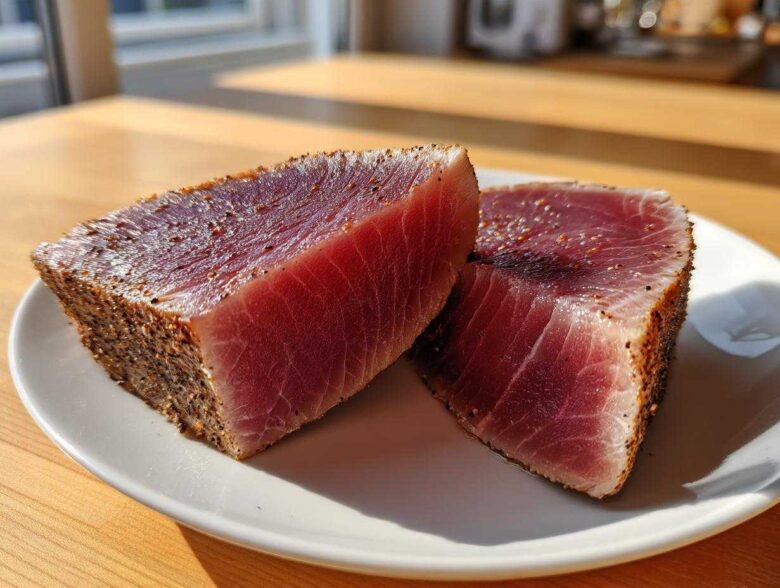
Okay, let’s be honest: when you order tuna steaks at a good steakhouse or a fancy seafood place, that crust they achieve looks impossible to replicate at home, right? I used to think that too! But once I figured out the secret—and trust me, it’s all about the sizzle—I realized achieving that beautiful, savory crust on my tuna steaks cast iron skillet cooked fish was actually super simple.
Seriously, skip dried-out, sad fish forever. The magic is in the combination of a screaming-hot pan and making sure your tuna is bone-dry before it even touches the metal. When you get that sear just right, you get that incredible contrast: that dark, peppery shell protecting the cool, tender, nearly raw center. It’s gorgeous, takes under five minutes total, and once you master this simple technique, you’ll never go back to pan-frying any other way. It’s my go-to when I want something that feels incredibly gourmet but takes almost no effort!
Why You Will Achieve Perfect Tuna Steaks Cast Iron Skillet Results
Honestly, this method is a game-changer, and I wanted to make sure you knew exactly why this recipe works so well every single time. It’s not just about throwing fish in a pan; it’s about precision and speed. If you follow my lead on the drying and the heat, you can’t mess this up!
- You get that incredible, restaurant style tuna crust due to the high heat of the cast iron. It’s beautifully black and savory!
- It’s lightning fast! Total cooking time is less than five minutes, so it’s perfect for a busy weeknight when you still want something special.
- The texture contrast is the best part: super crisp outside, cool, buttery rare inside. This is the definition of perfect tuna steaks.
- The minimal seasoning means the fresh flavor of the high-quality tuna really shines through. If you want more ideas on flavor combos, check out my latest posts over at my main recipe page!
Essential Ingredients for Your Cast Iron Tuna Steaks
Now, listen up, because the beauty of a great cast iron tuna steaks recipe is that it relies on simplicity. You don’t need a spice cabinet explosion here; you just need quality basics handled correctly. I always buy tuna steaks that are about one inch thick—that thickness is crucial for getting that beautifully cooked rare center while still getting a hard sear on the outside!
For the seasoning mix, ditch the fine table salt; we need coarse salt for texture. Mix that with fresh black pepper and just a touch of garlic powder. My rule is about a teaspoon of coarse salt and half a teaspoon of pepper for the two steaks. And for cooking, don’t even think about reaching for butter yet! We need olive oil. It has a higher smoke point, which means it won’t burn up the second it hits that hot skillet. If you’re looking for ways to switch up the flavor profile later, maybe check out my guide on tuna marinades, but for this sear, keep it classic!
Equipment Needed for Perfect Tuna Steaks Cast Iron Skillet
You actually don’t need much fancy gear for this **skillet tuna steak recipe**, which is part of why I love it so much! The absolute non-negotiable item is a heavy-duty cast iron skillet. That’s where that amazing crust comes from! Beyond the pan, make sure you have plenty of paper towels—and I mean lots of them. You must pat those steaks totally dry. Trust me, moisture is the enemy of a good sear. You’ll also need a small bowl for mixing your seasoning blend.
Step-by-Step Instructions for Skillet Tuna Steak Recipe Success
Okay, this is where the magic happens! If you’ve got your ingredients ready and your cast iron skillet nearby, put on your oven mitts because we are going high heat. Remember, the goal here is that crust, and that means no messing around once things start cooking. I’ve broken this down into two crucial stages: getting the fish ready and then slamming it into that hot pan. If you check out my ultimate guide to searing ahi tuna, you’ll see these steps are universal!
Preparing the Tuna Steaks for the Cast Iron Tuna Steaks
Before anything else, you have to deal with the moisture. Grab those beautiful tuna steaks and pat them down with paper towels until they feel almost dry to the touch. Seriously, press hard! Any surface water turns to steam when it hits the pan, and steam prevents that gorgeous brown crust we are after. Once they’re dry, rub that salt, pepper, and garlic powder blend all over them so every surface is coated evenly. That’s it for prep—simple, but critical!
Achieving the Sear on Your Cast Iron Tuna Steaks
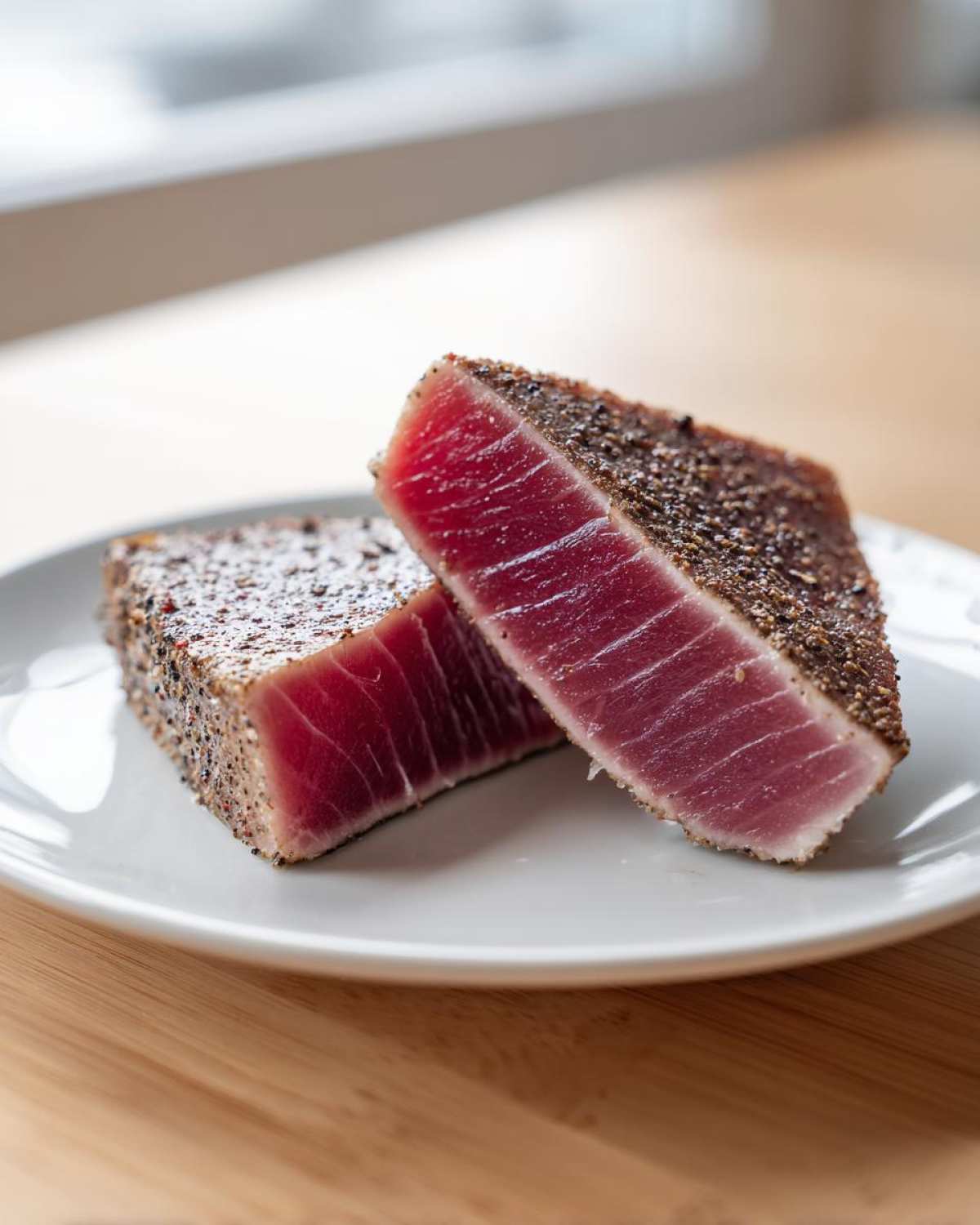
Now, crank your burner to high and let that cast iron skillet preheat for a full five minutes. You want it ripping hot! Add your tablespoon of olive oil; it should shimmer immediately—that’s your cue. Carefully lay the seasoned steaks down; you should hear them sizzle immediately, a loud, angry sound! For a perfect rare center, sear them for just 1.5 to 2 minutes per side. Don’t peek or move them around! Once you flip them, sear the second side for the same amount of time. Take them out right away, put them on a board, and let them rest for five minutes. That resting time is non-negotiable before you slice against the grain!
Tuna Steak Cooking Tips for Restaurant Style Tuna
If you want truly incredible, restaurant style tuna, you need to pay attention to what happens after the heat is off. My best tuna steak cooking tips center around knowing *when* to pull that fish away from the heat. Since we are aiming for rare, you won’t be using a full thermometer reading—you’re watching the edges!
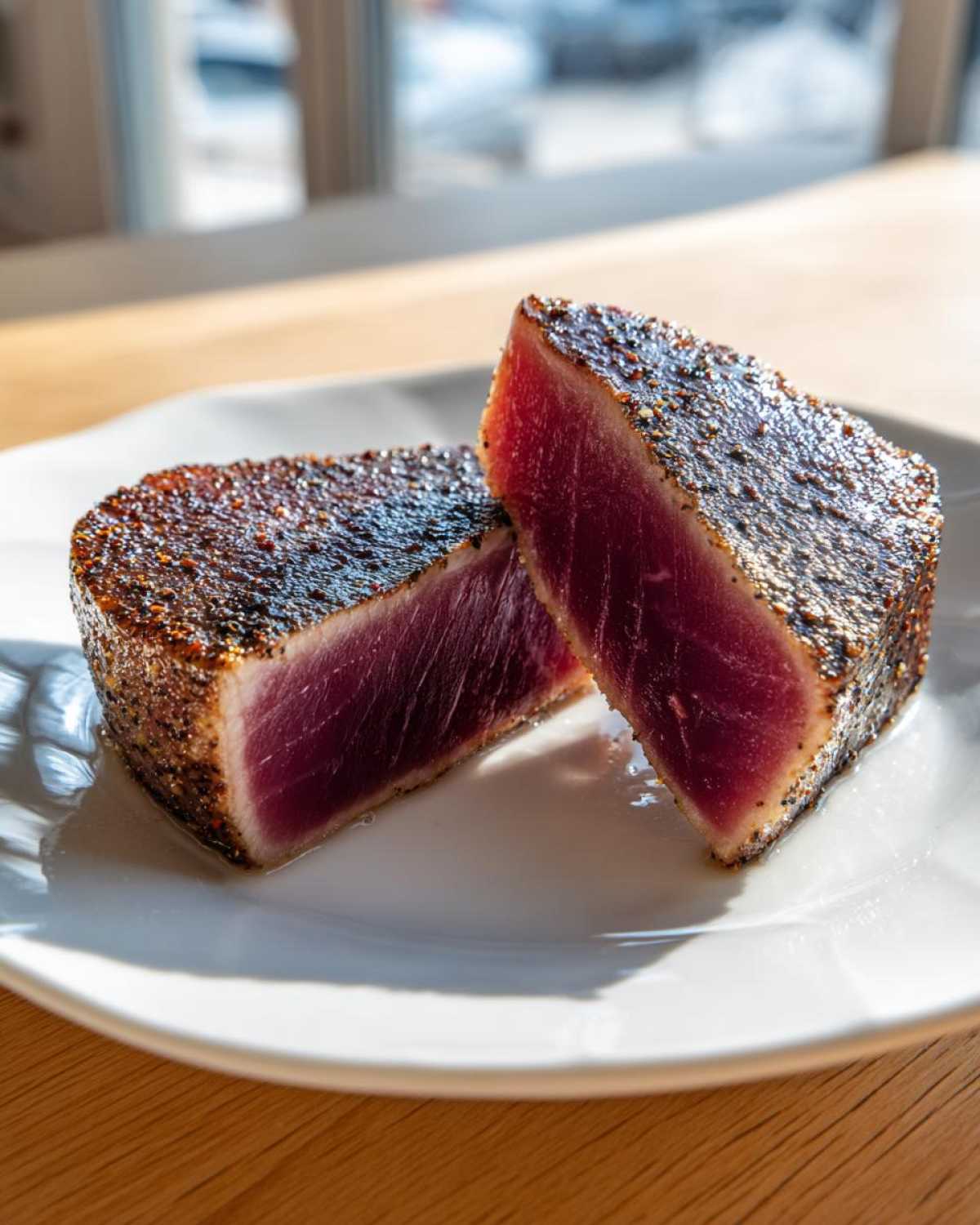
You’ll know it’s done when the gray cooked band around the edge is thin—maybe a quarter of an inch—and the center still looks deeply rosy and cool. Pull it from that hot cast iron skillet immediately. The second most important thing? Resting! Those five minutes I mentioned earlier are crucial for keeping the juices right where they belong. Then, when you slice it, always cut *against* the grain of the muscle fibers. Cutting with the grain gives you chewy fish, but cross-grain slicing makes the steak unbelievably tender. For more fresh ideas, check out how I use tuna in other dishes, like my favorite Tuna Poke Bowl recipe!
Simple Pan Sauce for Your Pan Seared Tuna Steaks
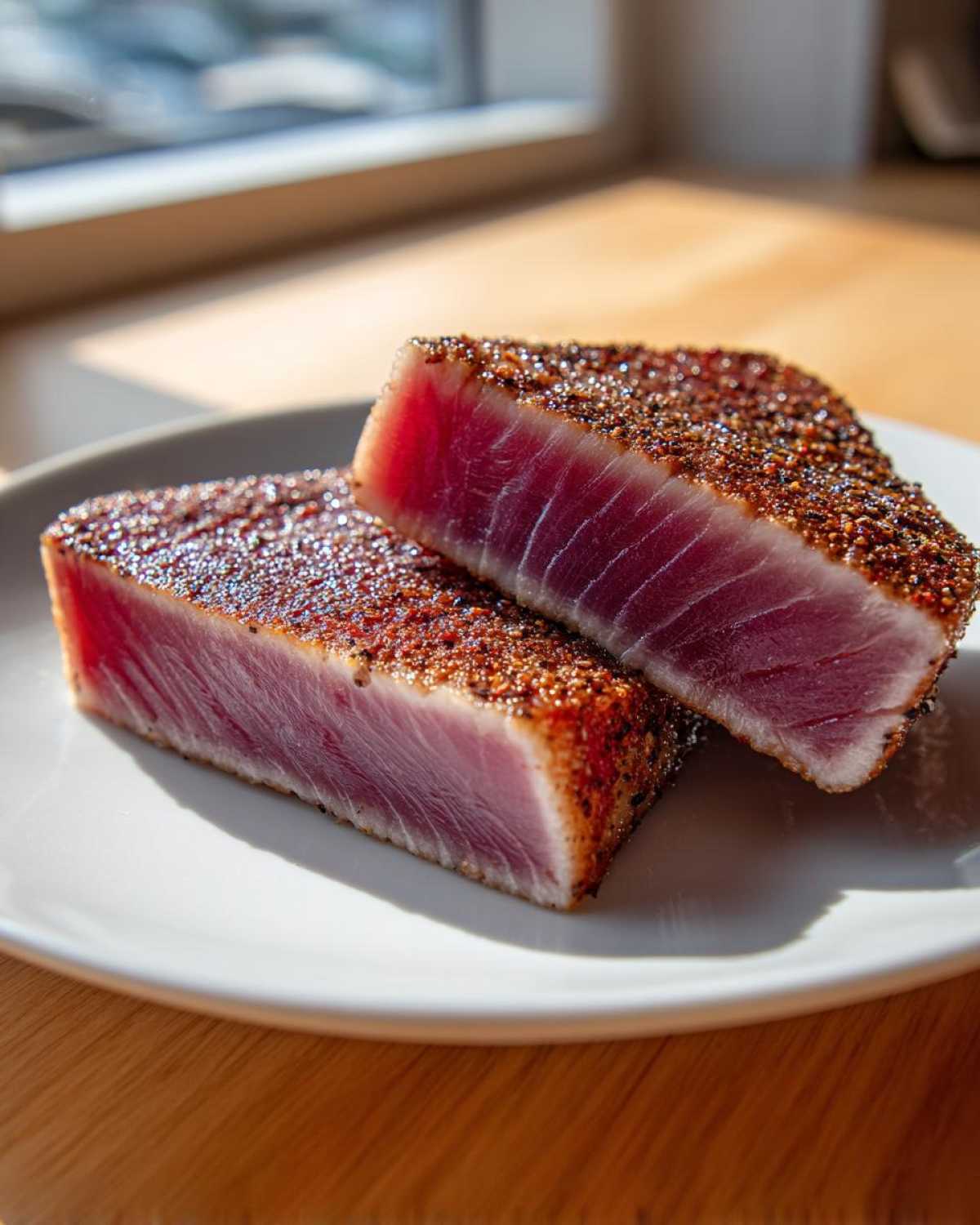
If you want to elevate your beautiful pan seared tuna steaks from “great home cooking” to “I can’t believe this wasn’t $30 on a plate,” you need this simple pan sauce trick.
Seriously, don’t wipe out the skillet! Right after you pull the fish off to rest, turn the heat down or turn it off completely. Toss in two tablespoons of good quality butter—don’t skimp here—and a tablespoon of fresh lemon juice. Grab a wooden spoon or a spatula and immediately scrape up all those little browned, flavorful bits stuck to the bottom of your cast iron. That brown stuff? That’s pure gold!
Whisk it together for just thirty seconds until it emulsifies into a quick, tangy sauce. It coats the tuna steaks perfectly and gives you that bright, rich finish you crave at a fancy restaurant. It takes literally no extra time, but the flavor boost is huge. If you’re looking for other amazing sauces you can whip up quickly, I’ve got a killer creamy garlic mushroom sauce recipe on the site too!
Serving Suggestions to Complete Your Tuna Steaks Cast Iron Skillet Meal
You’ve nailed the sear; now we need the perfect supporting cast, right? The meal isn’t complete until you have something fresh and green on the side to cut through that rich seafood flavor. When I make these tuna steaks cast iron skillet meals, I usually keep it really simple.
My absolute favorite way is to steam some bright green asparagus—just a quick toss with salt and pepper while the tuna rests. If you want something a bit more substantial, a simple rice pilaf is fantastic because it soaks up any extra pan sauce you might have dripped onto your plate. If you’re feeling lazy but want something delicious, you can never go wrong with a big scoop of my creamy garlic mashed potatoes. That’s comfort food meeting elegance!
Storage and Reheating Instructions for Leftover Cast Iron Tuna Steaks
So, what if you actually have leftovers? That’s rare around here, but it happens! You should store your leftover cast iron tuna steaks in an airtight container in the fridge for no more than two days. If you try to reheat them the way you cooked them, you’ll end up with dry, gray hockey pucks, so please don’t reheat them in the pan!
The best method is to eat them cold straight out of the fridge—sliced thinly over a salad is perfect. If you absolutely must warm them up, just warm them in a non-stick pan over very low heat for maybe 30 seconds total, just to take the chill off. If you’d rather transform them, my creamy tuna pasta salad uses up leftover fish beautifully!
Frequently Asked Questions About Cooking Tuna Steaks Cast Iron Skillet
I get so many questions after people see my results, which is great! It just proves how much you all want that perfect sear. I tried to cover the main concerns below so you feel totally confident firing up that skillet tonight.
What is the best type of tuna for this skillet tuna steak recipe?
For this specific technique—getting that deep crust while keeping the inside cool—you absolutely want to use Ahi (Yellowfin) tuna. It’s the most common, thick, meaty steak you’ll find. It has a low fat content which means it can handle the extreme heat without falling apart. If you see Bigeye tuna, that’s fantastic too, but Ahi is easy to find and gives you that perfect, meaty texture for your cast iron tuna steaks.
Can I cook medium or well-done cast iron tuna steaks?
You *can*, but honestly, you’re missing the point of searing tuna! Tuna is best enjoyed rare or maybe medium-rare. If you push it to medium, it starts to get chalky. If you insist on more done-ness, aim for 3 minutes per side for medium, and watch carefully—adding an extra minute risks turning your steak dry. Remember, that high-heat searing works best when you’re leaving the center untouched!
What if I don’t have a cast iron skillet? Can I still make these?
It makes me sad to say this, but I highly recommend a cast iron skillet for the *best* sear. It holds heat like nothing else, which is key. If you absolutely cannot use cast iron, use the heaviest stainless steel skillet you own and let it preheat for twice as long—like 10 minutes—until it’s smoking hot. Just watch that oil like a hawk so it doesn’t burn before you get the tuna in.
How do I tell if my tuna is done without constantly timing it?
Timing is just a guideline! You can rely on feel, especially as you get better at this whole **tuna steak cooking tips** thing. Gently touch the side of the steak with tongs. If it feels soft and squishy, it’s still very rare inside. If it offers just a little bit of gentle resistance but still feels yielding, you’re at that perfect medium-rare center. Bone dry touching the pan yields the crust!
Can I use frozen tuna steaks for this recipe?
Oh, no, please don’t. If you try to sear a frozen or even slightly thawed steak, the outside will scorch long before the insides thaw enough to cook evenly. You’ll end up with hot, rubbery edges and icy centers. Always buy fresh or, if buying frozen, make sure you thaw them completely in the refrigerator overnight before patting them dry.
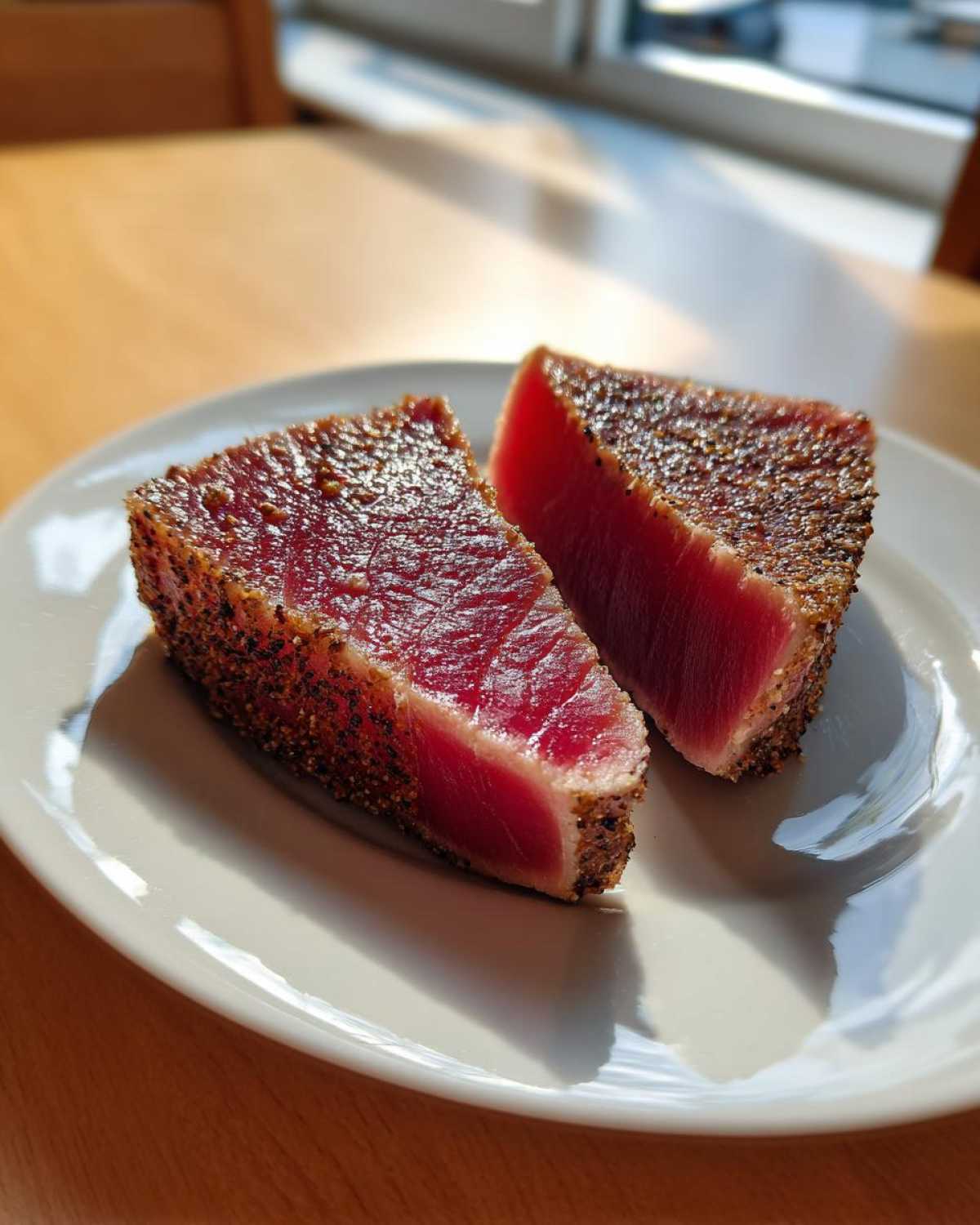
Cast Iron Seared Tuna Steaks
Cook perfect, restaurant-style tuna steaks using a hot cast iron skillet for a good sear.
- Prep Time: 5 min
- Cook Time: 4 min
- Total Time: 14 min
- Yield: 2 servings
- Category: Main Course
- Method: Pan Searing
- Cuisine: American
- Diet: Low Fat
Ingredients
- 2 tuna steaks (about 6 oz each, 1 inch thick)
- 1 tablespoon olive oil
- 1 teaspoon coarse salt
- 1/2 teaspoon black pepper
- 1/2 teaspoon garlic powder
Instructions
- Pat the tuna steaks completely dry with paper towels.
- Mix salt, pepper, and garlic powder together in a small bowl. Rub this mixture evenly over all sides of the tuna steaks.
- Place the cast iron skillet over high heat and let it preheat for 5 minutes until it is very hot.
- Add the olive oil to the hot skillet. It should shimmer immediately.
- Carefully place the seasoned tuna steaks in the hot skillet.
- Sear for 1.5 to 2 minutes per side for rare (cool, red center). Adjust time slightly for your desired doneness.
- Remove the tuna steaks from the skillet and place them on a cutting board.
- Let the tuna rest for 5 minutes before slicing against the grain.
Notes
- For a simple pan sauce, remove the skillet from heat after searing, add 2 tablespoons of butter and 1 tablespoon of lemon juice, and scrape up any browned bits from the bottom of the pan.
- Serve these tuna steaks with steamed asparagus or a simple rice pilaf.
Nutrition
- Serving Size: 1 steak
- Calories: 220
- Sugar: 0
- Sodium: 500
- Fat: 8
- Saturated Fat: 2
- Unsaturated Fat: 6
- Trans Fat: 0
- Carbohydrates: 0
- Fiber: 0
- Protein: 35
- Cholesterol: 70
