

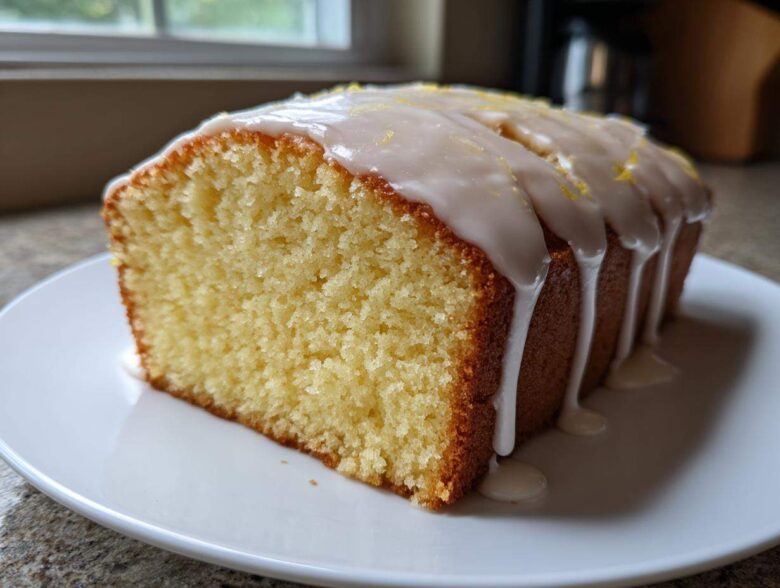
There is truly no better sunshine-in-a-slice than a perfect slice of bright, tangy pound cake. We’ve tested countless variations over the years—Leo even tried infusing his with smoked sea salt once, bless his heart—but we always come back to this one. This, friends, is the ultimate moist lemon pound cake recipe, made rich and tender thanks to a secret weapon: sour cream. Amara’s grandmother perfected the balance of zest and sharp juice by tasting batches for days straight until it was pure citrus gold. Trust me when I say this buttery lemon cake will ruin all other lemon desserts for you!
Why This is the Best Lemon Pound Cake Recipe
Look, I’m not saying every other recipe is bad, but if you want a proper classic southern pound cake that stays beautifully soft for days, you need to pay attention to these details. This lemon pound cake with glaze isn’t just nice; it’s structurally perfect.
- It stays moist for days—no dry edges here!
- The topping is a sharp, tangy lemon icing, not just sweet sugar.
- We use real butter for that essential rich pound cake flavor.
Achieving a Truly Moist Lemon Pound Cake
The secret to a truly moist lemon pound cake is twofold. First, you absolutely must use room-temperature ingredients—butter, eggs, and that sour cream. When they’re all the same temperature, they blend into a smooth emulsion. Second, the sour cream itself is the magic! It tenderizes the crumb way better than plain milk, ensuring that soft, melt-in-your-mouth texture we all chase.
The Secret to Zesty Lemon Flavor
Forget the extract, seriously. Extract tastes nice, sure, but it’s flat. For that wake-you-up, zesty lemon cake experience, we use tons of fresh zest scraped right off the lemons, and then we use tons of fresh juice in both the batter and the icing. You need the oils from the zest to perfume the whole thing. When you smell this baking, you’ll know instantly this is the best lemon pound cake recipe because the aroma fills the whole house!
Gathering Ingredients for Your Lemon Pound Cake with Glaze
Okay, team, let’s get organized before we dive into the mixing bowl. The ingredients list for this lemon pound cake is super straightforward, but I need you to pay attention to my note about temperature! Seriously, if you try to rush this and use cold butter, you’re going to have a tougher time getting that perfectly creamy base for our homemade lemon loaf cake.
The key to a truly stunning texture is letting the dairy and eggs sit out. Having everything at room temperature helps those ingredients bind together beautifully, which is vital for a buttery lemon cake like this one. Here’s what you need for the main cake and the bright, sweet coating!
For the Buttery Lemon Cake:
- 1 cup unsalted butter, softened (must be soft enough to indent slightly!)
- 3 cups granulated sugar
- 4 large eggs, room temperature, please!
- 1 tablespoon fresh lemon zest (that’s about 3 really sunny lemons)
- 1/4 cup fresh lemon juice
- 1 cup sour cream, room temperature (this is our moisture secret weapon!)
- 3 cups all-purpose flour
- 1 teaspoon baking powder
- 1/2 teaspoon salt
- 1 teaspoon vanilla extract
For the Tangy Lemon Icing:
This glaze is ridiculously easy, but it brings the whole zesty profile home.
- 2 cups powdered sugar
- 4 tablespoons fresh lemon juice (start with this amount, you can thin it later!)
Grab everything, let it warm up on the counter while the oven breathes, and we’ll be ready to start creaming!
Step-by-Step Instructions for the Perfect Lemon Pound Cake
Now that we’ve got all our gorgeous ingredients ready, let’s get this beautiful lemon pound cake into the oven. Baking is really just a few controlled steps, and if you follow the order, you simply can’t mess it up. Remember that soft butter? This is where it pays off big time!
Preparing the Batter for Your Buttery Lemon Cake
First things first: crank that oven up to 325°F (160°C) and get your 10-inch tube pan or Bundt pan greased and floured. Next, take your softened butter and sugar and cream them together until they look pale and fluffy—think whipped clouds! Beat in those room-temperature eggs, one by one, making sure each one is fully incorporated before adding the next one. Then, gently stir in your lemon zest, juice, and vanilla. In a separate bowl, whisk your flour, baking powder, and salt until they hang out together nicely. Now, slowly add the dry mix and the sour cream alternately. Start and end with the flour mix. Quick tip from Leo: as soon as you see no more streaks of white flour, STOP mixing! Over mixing creates tough cakes, and we want a tender crumb here.
Baking and Cooling the Lemon Pound Cake
Pour that luxurious batter into your prepared pan and slide it into the 325°F oven. You’re looking at anywhere from 60 to 75 minutes bake time. Test it right around the 60-minute mark: if a wooden skewer poked right into the center comes out clean, it’s done. It should look golden brown on top, too! The cooling process is almost as important as the baking! Let that gorgeous homemade lemon loaf cake cool in the pan on a wire rack for about 15 minutes. After that, carefully flip it out onto the rack so it cools completely. Don’t even think about glazing a warm cake—that icing will just melt right off! For more baking wisdom, you can always check out our main recipe index.

Creating the Tangy Lemon Icing for Your Lemon Pound Cake
Alright, the cake is cooled—and believe me, you have to let it cool completely, or you’ll just end up with a sticky puddle on the counter, not a beautiful, glossy lemon pound cake with glaze. This icing is pure simplicity, but it’s where you dial in that sharp, almost electric lemon punch that cuts through the richness of the butter in the cake base.
You only need two things: powdered sugar and lemon juice. Measure out your 2 cups of powdered sugar into a medium bowl. Now, here’s where you need to be patient. Take those 4 tablespoons of fresh lemon juice and start whisking it in slowly. You might think you need all the juice right away, but trust me, you don’t.
Whisk until it’s completely smooth. If you see it’s still too thick—like heavy paste—add more lemon juice, just one teaspoon at a time. We are aiming for a texture that drizzles nicely off the whisk but is thick enough to leave defined white-yellow ribbons on the cake. That beautiful, tangy lemon icing will set up firm but slightly soft, giving you that wonderful textural contrast when you bite into your zesty lemon cake. Once it’s perfect, just drizzle it right over the top, let it run down the sides, and try not to eat it with a spoon before it even hits the cake!
Tips for Success When Making a Homemade Lemon Loaf Cake
You’ve got the batter mixed, and you’re waiting for that oven timer. How do we ensure that what comes out is truly the best lemon pound cake recipe and not some dense, sad brick? Well, thankfully, we had a lot of trial and error in the kitchen—that’s how Leo ended up with a few kitchen experiments that are now family legends for all the wrong reasons! Seriously though, the small details we learned are what turn this into a reliable, repeatable success every single time you bake this homemade lemon loaf cake.
Ingredient Temperature Matters for a Perfect Lemon Pound Cake
Amara’s grandmother used to tap the measuring cups against the counter whenever someone tried to use butter straight from the fridge. It drives me nuts too, but she was absolutely right! The number one thing we emphasize in the notes is using room-temperature butter, eggs, and sour cream. Why? It’s all about emulsification. When those fats and liquids are the same temperature, they combine properly when beaten with the sugar. This means the batter holds air bubbles much better, which is the secret to achieving that smooth, velvety structure in your moist lemon pound cake. Cold ingredients can cause the batter to curdle or look grainy, and that ruins the final texture.
Pan Variations for Your Lemon Pound Cake
While the recipe calls for a 10-inch tube pan, I know most people have a gorgeous Bundt pan lying around. Good news: this batter is heavy enough to handle the elaborate shapes beautifully! This recipe works wonderfully as a lemon Bundt cake recipe. If you use a Bundt pan or any decorative pan, just make absolutely sure you grease and flour every single crevice perfectly. These cakes, especially those rich with butter and sour cream, love to stick to those intricate designs, and nobody wants to flip out a half-stuck cake!
If you do go for a Bundt cake presentation, you might notice the baking time ticks up a few minutes longer than the tube pan version. Just trust your skewer test when it comes out clean, no matter what the clock says!
Variations on the Classic Lemon Pound Cake
You know how much we love tradition here at Savory Skies, but that doesn’t mean we can’t flirt a little with other famous styles! Since this lemon pound cake base is so sturdy and flavorful, it takes to variations really well. I’ve seen incredible interest in things like the Italian lemon pound cake, and honestly, it’s an easy tweak that makes it feel totally brand new.
Don’t worry, this doesn’t mean we have to change the actual batter structure that keeps it so delightfully moist. We’re just adding little luxurious touches at the end. If you loved the technique for our blueberry lemon muffins, you’ll love swapping out some of that bright citrus energy here!
Making an Italian Lemon Pound Cake Style
If you want to capture that intense, saturated sweet lemon flavor you find in those gorgeous Italian loaves, the secret isn’t in the batter, it’s in a simple syrup! Right after the cake comes out of the oven—while it’s still screaming hot—you need to poke it all over with a skewer. Leo sometimes uses a chopstick for fun! Then, you pour a warm, thin syrup over the top. You can make a super simple one with equal parts sugar and lemon juice, just heated until the sugar dissolves. Let the cake soak up every drop of that sweet liquid while it cools. It sounds intense, but it keeps the cake unbelievably moist and gives it that characteristic dense, almost syrupy crumb you see in those high-save recipes you might have browsed, like the one from Italian lemon pound cake specialists.
You can still top this version with the tangy lemon icing, or skip it entirely since it’s already swimming in syrup! It’s a fun way to transform this classic pound cake recipe from scratch into something truly special.
Serving Suggestions for Your Zesty Lemon Cake
Okay, you survived the bake, you glazed it beautifully—now what do you serve this amazing lemon pound cake with? Honestly, it’s perfect all on its own, especially with that thick, glossy icing. But since we’re all about spreading the joy of great food here at Savory Skies, let me give you a couple of my favorite ways to dress up this zesty lemon cake for special occasions!
This cake is so bright and buttery, it doesn’t need much heavy accompaniment. It shines best next to light, fresh flavors. If you’re looking for other flavors that complement citrus, you should absolutely check out Leo’s wild ideas on his dip index—just kidding! Stick to sweets for this one.
Here are my go-to pairings:
- Afternoon Tea Perfection: Serve thin slices alongside a really good, plain black tea or a light Earl Grey. It’s elegant, simple, and lets the cake flavor do all the talking.
- For Brunch Delight: This is fantastic on a brunch spread! Pair the homemade lemon loaf cake with fresh berries—raspberries or blueberries are stunning against the yellow cake. A small dollop of lightly sweetened whipped cream adds richness without overpowering the lemon.
- With a Warm Contrast: If you’re serving it slightly warm (don’t glaze it if you do this!), try a sprig of mint and maybe a tiny drizzle of warmed honey over the top for a different kind of sweetness that marries beautifully with the citrus notes.
Enjoy every single bite! This cake is definitely worth savoring.
Storing Your Moist Lemon Pound Cake
So you baked the perfect most lemon pound cake, you iced it beautifully, and now you have leftovers—which, let’s be honest, is a rare occurrence around here! How you store this beauty directly impacts that amazing texture we worked so hard to achieve. You definitely don’t want this lovely cake to dry out on you!
For short-term storage, the airtight container is your best friend. Since this is a rich, buttery lemon cake, you can usually keep it perfectly fine on the counter at room temperature for about three days. Make sure it’s fully cooled before you put the lid on, though! If you trap any warmth inside, you risk steaming the crumb and making it soggy, or worse, encouraging mold. You want that room temp cake to stay tasting fresh.
Now, if you used a very thick, sugary glaze on your lemon pound cake with glaze, I actually prefer the fridge! The sugar in the icing sets up harder, which can protect the cake underneath a bit better, especially if your kitchen is humid. Just wrap individual slices well in plastic wrap first, then pop them into a sealed container. When you pull it out of the fridge, let it sit on the counter for about 30 minutes before eating. Cold cake always tastes denser, so letting it warm up slightly releases those amazing lemon scents again!
For long-term storage, freezing is totally viable for this lemon pound cake. Wrap slices tightly in plastic wrap first—seriously, multiple layers! Then wrap that bundle in aluminum foil or place it in a freezer-safe bag. It freezes beautifully for up to three months. When you’re ready to eat a slice, just pull it out, unwrap it, and let it thaw completely on the counter. It thaws out surprisingly well, retaining most of its moisture!
Frequently Asked Questions About Lemon Pound Cake
We get asked a ton of questions, especially when people are trying to make their first lemon pound cake from scratch! I love hearing from you all, whether it’s a success story or a little bump in the road. Here are some of the things Leo and I hear most often about getting that perfect bake.
Can I use buttermilk instead of sour cream in this lemon pound cake recipe?
Yes, you absolutely can! If you’re out of sour cream or just prefer the tang of buttermilk, it’s a great swap, and you’ll still end up with a wonderfully tender sour cream pound cake hybrid. Buttermilk is a bit thinner than sour cream, so I’d suggest using a cup of buttermilk that has a teaspoon of white vinegar stirred into it first—let it sit for five minutes to curdle slightly. That little boost of acid helps tenderize the gluten just like the sour cream does. It’s my go-to if I’m out of dairy!
How do I prevent my lemon pound cake from sinking in the middle?
Sinking is the absolute worst, isn’t it? It usually happens for one of three reasons, and it’s mostly related to temperature or mixing. First, make sure your oven temperature is accurate! If it’s too cool, the edges set before the center is ready, and when the center finally collapses in on itself, it sinks. Second, did you overmix after adding the flour? That develops gluten, making the structure too weak to hold up the cake’s weight. Finally, our recipe calls for 325°F for a reason—high heat too early is usually the culprit that causes that big sink hole right when you pull it out.
Is this considered a quick and easy cake to make?
Well, that depends on how you look at “quick”! Leo calls it easy lemon pound cake because the actual mixing time is remarkably short—we’re talking about 20 minutes max if you’re efficient. However, pound cake, by nature, requires careful creaming and alternating the wet/dry ingredients, which isn’t a “dump and stir” recipe. Since our total time is about 90 minutes including baking, I’d call it much faster than a fancy layer cake, but it does require active attention during mixing. It’s quick for scratch baking, but not quite as fast as opening a box mix.
If you have any other questions about technique or substitutions, don’t hesitate to reach out over on our contact page! We love talking baking science!
PrintMoist Lemon Pound Cake with Tangy Glaze

This recipe delivers a wonderfully moist lemon pound cake, rich with fresh zest and juice, topped with a bright, tangy lemon icing. It is a classic, buttery cake perfect for any occasion.
- Prep Time: 20 min
- Cook Time: 70 min
- Total Time: 90 min
- Yield: 12 servings
- Category: Dessert
- Method: Baking
- Cuisine: American
- Diet: Vegetarian
Ingredients
- 1 cup unsalted butter, softened
- 3 cups granulated sugar
- 4 large eggs, room temperature
- 1 tablespoon fresh lemon zest (from about 3 lemons)
- 1/4 cup fresh lemon juice
- 1 cup sour cream, room temperature
- 3 cups all-purpose flour
- 1 teaspoon baking powder
- 1/2 teaspoon salt
- 1 teaspoon vanilla extract
- For the Glaze: 2 cups powdered sugar
- For the Glaze: 4 tablespoons fresh lemon juice
Instructions
- Preheat your oven to 325°F (160°C). Grease and flour a 10-inch tube pan or Bundt pan.
- In a large bowl, cream together the softened butter and granulated sugar until the mixture is light and fluffy. This step helps create a tender crumb.
- Beat in the eggs one at a time, mixing well after each addition.
- Stir in the lemon zest, lemon juice, and vanilla extract until just combined.
- In a separate bowl, whisk together the flour, baking powder, and salt.
- Gradually add the dry ingredients to the wet ingredients, alternating with the sour cream, beginning and ending with the flour mixture. Mix on low speed until just combined. Do not overmix the batter.
- Pour the batter into the prepared pan.
- Bake for 60 to 75 minutes, or until a wooden skewer inserted into the center comes out clean.
- Let the cake cool in the pan on a wire rack for 15 minutes.
- Invert the cake onto the wire rack and allow it to cool completely before glazing.
- To make the glaze, whisk together the powdered sugar and 4 tablespoons of lemon juice until smooth. Add more juice, one teaspoon at a time, if you need a thinner consistency.
- Drizzle the tangy lemon icing generously over the cooled cake. Let the glaze set before slicing and serving your homemade lemon loaf cake.
Notes
- Using room temperature butter, eggs, and sour cream helps the batter emulsify properly, leading to a smoother, more moist lemon pound cake.
- For an extra zesty flavor boost, gently warm the lemon juice before adding it to the batter.
- If you prefer a Bundt cake recipe presentation, this batter works perfectly in that pan shape.
Nutrition
- Serving Size: 1 slice
- Calories: 420
- Sugar: 45g
- Sodium: 250mg
- Fat: 22g
- Saturated Fat: 14g
- Unsaturated Fat: 8g
- Trans Fat: 0.5g
- Carbohydrates: 55g
- Fiber: 1g
- Protein: 5g
- Cholesterol: 95mg
