

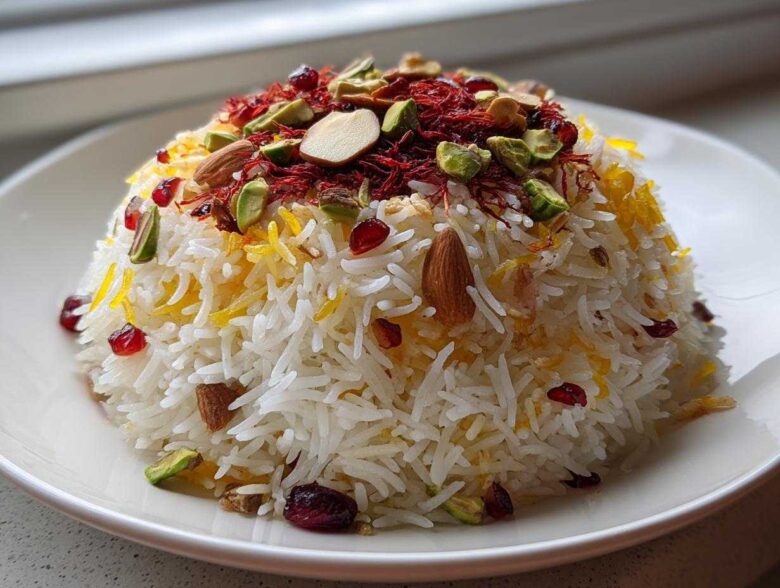
When you’re setting a table for a real celebration, forget those boring white rice mounds! We need drama, color, and flavor you can practically taste before you even take a bite. I’m talking about the crowning glory of any Iranian feast: Persian Jeweled Rice Shirin Polo Festive Purim Side Dish. This isn’t just rice, darling; it’s edible jewelry! Honestly, the moment I start blooming the saffron and hear the little sizzle when the barberries hit the butter, I know the holiday is officially here. Follow my steps, and I promise you’ll nail this showstopper. It’s easier than you think, and it makes everyone gasp when you bring it out.
Why This Persian Jeweled Rice Shirin Polo Festive Purim Side Dish Stands Out
When I make this dish, I’m not just making enough for dinner; I’m preparing for an event! You just can’t beat the visual impact. This isn’t your everyday pilaf. It’s impressive because:
- The vibrant colors look like actual gems scattered across creamy white and golden saffron rice.
- Saffron is used lavishly, giving the rice that unmistakable, luxurious floral perfume.
- It manages to be sweet, tart, and nutty all at once—a truly complex Iranian Celebration Rice Recipe.
If you want your guests asking for the recipe immediately, this jeweled rice holiday side is the answer. It screams special occasion!
Gathering Ingredients for Your Persian Jeweled Rice Shirin Polo Festive Purim Side Dish
Okay, the best part before the cooking actually starts is laying everything out, right? When you’re tackling this magnificent Shirin Polo with Barberries and Nuts, use the best Basmati you can find. Seriously, the quality matters for fluffy rice!
Here’s the full lineup you’ll need for this incredible Iranian side dish:
- 3 cups Basmati rice
- 6 cups water (we use this for soaking and boiling)
- 1 teaspoon salt (for that initial boil!)
- 1/2 teaspoon saffron threads (don’t skimp here!)
- 3 tablespoons hot water (to bloom the saffron)
- 4 tablespoons unsalted butter or oil (butter gives the best flavor)
- 1/4 cup granulated sugar
- 1/2 cup dried barberries (the beautiful, tart zereshk)
- 1/4 cup slivered almonds
- 1/4 cup shelled pistachios
- 1/4 cup dried orange peel strips (this is optional but lovely!)
- 1/4 cup water (for candy syrup)
- 1 tablespoon rose water (if you’re feeling fancy!)
Make sure those nuts are slivered and those barberries are ready to go. Seeing all these colorful ingredients laid out makes the process feel so much more manageable for a big holiday meal!
Essential Equipment for Cooking Fluffy Persian Rice Dish
You don’t need a dozen fancy gadgets for this, trust me, but having the right tools makes getting that perfect fluffy texture a million times easier. I always lay out my gear before I even start soaking the rice, just so I don’t scramble later!
First up, you absolutely need a very large pot. We’re boiling a lot of rice before we steam it, so give those grains room to move! You also need a good fine-mesh sieve for draining the rice perfectly after boiling—we want water out, not grains lost!
For the saffron, you simply cannot skip the mortar and pestle. Grinding those threads fine is what lets the color bloom properly. And of course, you’ll need a small, non-stick skillet handy for toasting those nuts and quickly candying your barberries. If you want that golden crust, make sure you have a heavy-bottomed pot ready for the tahdig layer!
Step-by-Step Instructions: How to Make Persian Jeweled Rice Shirin Polo Festive Purim Side Dish
Alright, here’s the game plan for transforming simple Basmati rice into this stunning Persian Jeweled Rice Shirin Polo Festive Purim Side Dish. Pay close attention to the timing during the boil and the steam, because that’s how we get those gorgeous, separate grains. I’ve made every mistake possible so you don’t have to!
Preparing the Rice Base and Blooming Saffron
First, you have to treat that rice right. Rinse it, rinse it, rinse it again! Keep going until the water that drains off runs perfectly clear—that gets rid of the surface starch that makes rice gluey. After rinsing, give it a good long soak in salted water for at least two hours; this is non-negotiable for long, fluffy grains. Now for the magic: Bloom your saffron. Grind those expensive little threads into a fine dust—I use my mortar and pestle—then mix it with just 3 tablespoons of hot water. Let it sit for ten minutes. That rich color needs time to release properly so you get that deep golden hue in your Persian Saffron Rice Dish.
Parboiling and Preparing the Jeweled Topping for Shirin Polo
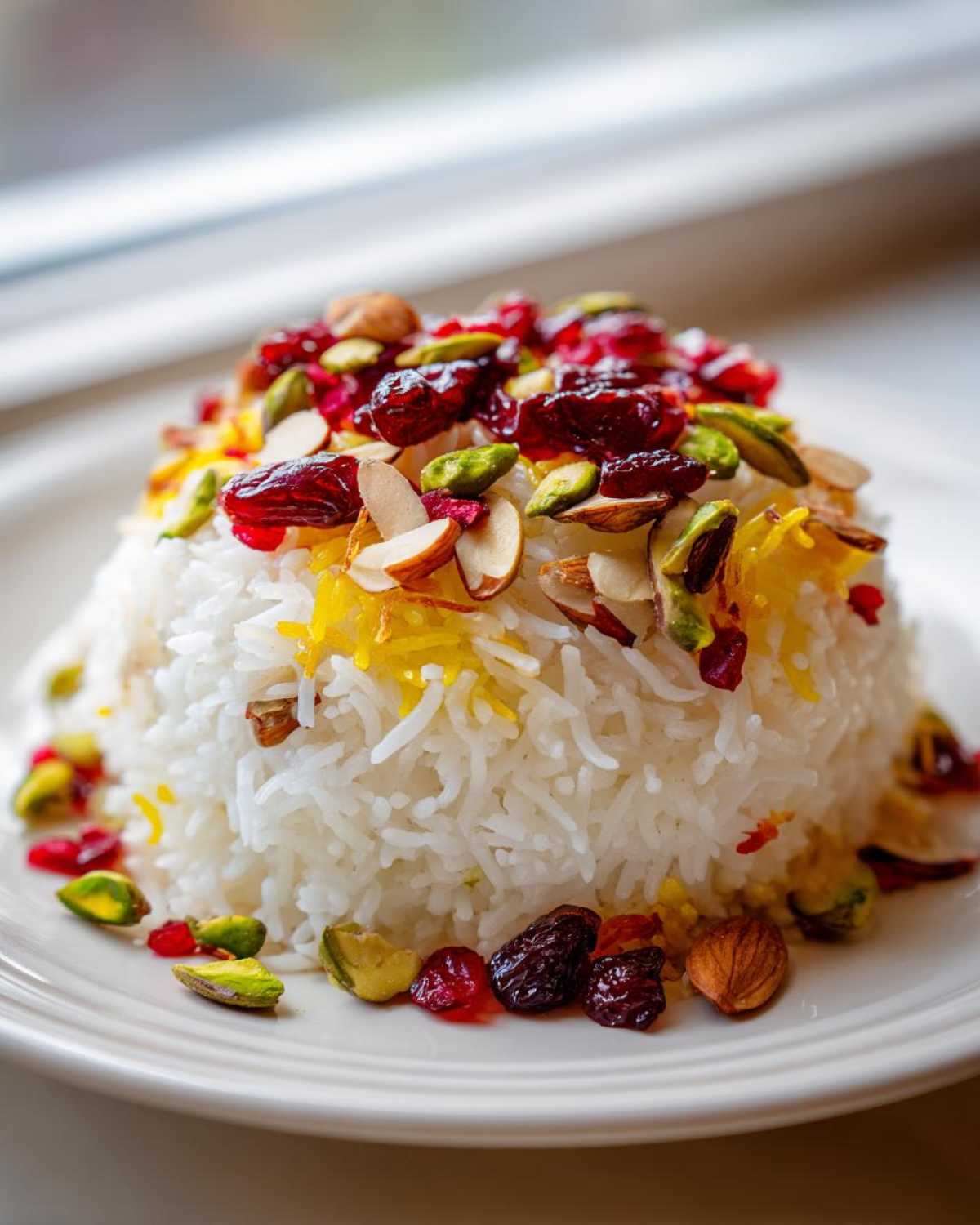
Get a large pot of water roaring—a rolling boil! Drain your soaked rice and drop it in. We’re boiling it for only about 7 to 10 minutes. Taste testing is key here; it should be soft outside but still have a little chew in the middle, or ‘al dente.’ Drain it immediately! While it cooks, quickly toast your almonds and pistachios in a tablespoon of butter until they barely start to turn gold. Then, be fast with the barberries! Toss them in that same pan for just 30 seconds. Add your water and sugar, let it simmer for two minutes until the berries plump up nicely, then mix in the nuts. Don’t cook them too long, or those precious zereshk will get hard!
Achieving Perfect Tahdig and Steaming the Persian Saffron Rice Dish
Time to build the base! Wipe your pot completely dry. Melt your remaining butter down there—maybe line it with a potato slice if you’re aiming for that spectacular tahdig crust. Gently mound all your plain white rice on top, creating that pretty cone shape. Now, drizzle the bloomed saffron water right over the top of the white mound. This is where you secure the lid with a clean kitchen towel underneath it to catch condensation—it keeps the steam focused downward. Cook on medium-low for five minutes, then drop the heat way down low and let it steam undisturbed for a solid 45 to 60 minutes until it’s cooked through and heavenly fluffy.
Tips for Success When Making Persian Jeweled Rice Shirin Polo
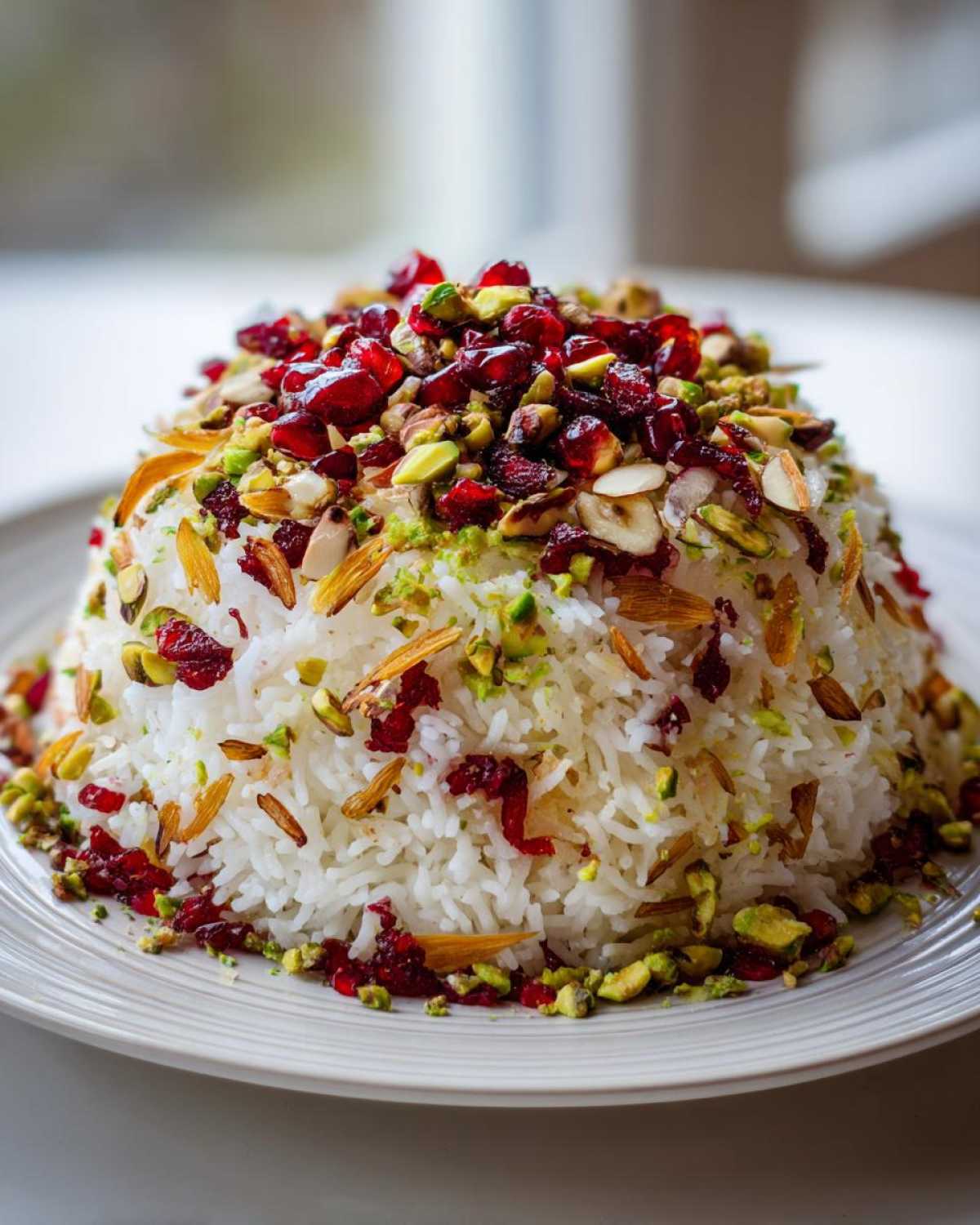
Listen, making this impressive Persian Jeweled Rice Shirin Polo Festive Purim Side Dish really comes down to technique, not luck. My biggest piece of advice for that fluffy result is to respect the soak time and don’t rush the boil! If you under-boil or over-soak, you end up with mush, and that’s a tragedy when you’re making such an elegant Middle Eastern Rice Side Dish.
Also, when melting the fat for your tahdig, make sure the bottom of the pot is bone dry. If there’s any water left, you’ll steam the bottom instead of frying it into that crispy perfection we all dream about. A little yogurt mixed into the butter gives the best flavor to that crust, by the way!
Variations for Your Festive Persian Rice for Parties
While the classic Shirin Polo is unbeatable, I always like to give my guests little surprises! For a truly next-level experience with your Persian Jeweled Rice Shirin Polo Festive Purim Side Dish, try adding some color to that jewel mixture. Finely diced, lightly sautéed carrots give a beautiful orange tint—just steam them briefly so they don’t bleed color everywhere.
You could also swap out some of the sliced almonds for chopped cashews, or mix in some golden raisins that have plumped up in a little orange juice first. These little tweaks really turn a beautiful dish into *your* signature Festive Persian Rice for Parties.
Serving Suggestions for Your Persian Jeweled Rice Shirin Polo Festive Purim Side Dish
This rice deserves a main course that can stand up to its powerful flavor and beauty! Since this is an absolute showstopper for a holiday like Purim, I usually serve it alongside something rich but simple. A slow-roasted leg of lamb or a perfectly seasoned whole chicken works beautifully because they don’t compete with the sweet/tart notes of the rice.
If you’re keeping it vegetarian, serve it next to big bowls of savory yogurt dips or maybe my cranberry orange bread on the side to balance the richness. It’s meant to be the centerpiece of the savory portion of the meal!
Storage and Reheating Instructions for Leftover Iranian Celebration Rice Recipe
If, by some miracle, you have any leftover Iranian Celebration Rice Recipe, don’t toss it! Rice stores best when it cools down relatively quickly. Transfer it to an airtight container and pop it in the fridge within two hours. It’ll keep beautifully for about three days.
When you reheat it, though, you need to be gentle—we don’t want dry rice! Sprinkle just a tablespoon or two of water over the rice, cover it tightly (maybe use foil under the lid for extra steam security), and heat it very low on the stovetop or in short bursts in the microwave. It rehydrates perfectly and stays fluffy!
Frequently Asked Questions About Shirin Polo with Barberries and Nuts
What is the difference between Shirin Polo and Zereshk Polo?
That’s a great question! They both use that essential saffron rice technique. The main difference is complexity. Zereshk Polo is truly focused on the tartness of barberries—it’s usually just barberries, maybe sprinkled over a plain rice. Shirin Polo, however, is the “sweet rice,” which gets its ‘jeweled’ status from a richer mix of nuts, dried fruit *and* the sweetness from sugar/rose water in the topping. It’s generally more dressed up than Zereshk Polo.
Can I make the jeweled topping ahead of time?
Absolutely, you can! I usually make the barberry and nut mixture the day before, especially when I’m cooking for a big party. Just sauté everything as directed, making sure to let it cool down completely outside the pan. Store it in a small, airtight container in the fridge. When you are ready to serve your Festive Persian Rice for Parties, gently reheat it for about 30 seconds on the stove just to soften it up before garnishing the rice.
How do I ensure my rice is fluffy and not sticky?
It all comes down to two main things: rinsing and boiling. You *must* rinse off all that surface starch until the water is totally clear; that’s crucial for separate grains. Second, when you boil it, you only boil it to the point where it’s firm in the center—that al dente cooking Fluffy Persian Rice stage. If you cook it fully in the water, it will get soft and mushy when you finally steam it!
Estimated Nutritional Data for This Elegant Middle Eastern Rice Side Dish
As a home cook, I always estimate nutritional information based on the general weights of what goes into the pot, but please take this as a rough guide for one serving of this Elegant Middle Eastern Rice Side Dish, which includes a good helping of the jeweled topping.
- Serving Size: 1 cup cooked rice with topping
- Calories: 450
- Sugar: 18
- Sodium: 350
- Fat: 15
- Saturated Fat: 8
- Unsaturated Fat: 7
- Trans Fat: 0
- Carbohydrates: 75
- Fiber: 3
- Protein: 8
- Cholesterol: 30
Remember, these figures change drastically if you use less butter or skip the sugar in the topping!
Share Your Experience Making This Persian Jeweled Rice Shirin Polo Festive Purim Side Dish
I truly hope this guides you to making the most stunning and delicious Persian Jeweled Rice Shirin Polo Festive Purim Side Dish you’ve ever tried! There is nothing more satisfying than seeing a platter of this glistening rice sitting proudly on your holiday table. If you followed along and it turned out perfectly, please hop down to the comments section and leave me a rating and tell me what you served with it!
If you ran into any snags or have a secret tip of your own for making this the best Iranian Celebration Rice Recipe, I’d love to hear it! Feel free to reach out via my contact page anytime—happy cooking!
Tips for Success When Making Persian Jeweled Rice Shirin Polo
Listen, making this impressive Persian Jeweled Rice Shirin Polo Festive Purim Side Dish really comes down to technique, not luck. My biggest piece of advice for that fluffy result is to respect the soak time and don’t rush the boil! If you under-boil or over-soak, you end up with mush, and that’s a tragedy when you’re making such an elegant Middle Eastern Rice Side Dish.
Also, when melting the fat for your tahdig, make sure the bottom of the pot is bone dry. If there’s any water left, you’ll steam the bottom instead of frying it into that crispy perfection we all dream about. A little yogurt mixed into the butter gives the best flavor to that crust, by the way!
Variations for Your Festive Persian Rice for Parties
While the classic Shirin Polo is unbeatable, I always like to give my guests little surprises! For a truly next-level experience with your Persian Jeweled Rice Shirin Polo Festive Purim Side Dish, try adding some color to that jewel mixture. Finely diced, lightly sautéed carrots give a beautiful orange tint—just steam them briefly so they don’t bleed color everywhere.
You could also swap out some of the sliced almonds for chopped cashews, or mix in some golden raisins that have plumped up in a little orange juice first. These little tweaks really turn a beautiful dish into *your* signature Festive Persian Rice for Parties.
Serving Suggestions for Your Persian Jeweled Rice Shirin Polo Festive Purim Side Dish
This rice deserves a main course that can stand up to its powerful flavor and beauty! Since this is an absolute showstopper for a holiday like Purim, I usually serve it alongside something rich but simple. A slow-roasted leg of lamb or a perfectly seasoned whole chicken works beautifully because they don’t compete with the sweet/tart notes of the rice.
If you’re keeping it vegetarian, serve it next to big bowls of savory yogurt dips or maybe my herb butter roasted turkey recipe on the side to balance the richness. It’s meant to be the centerpiece of the savory portion of the meal!
Storage and Reheating Instructions for Leftover Iranian Celebration Rice Recipe
If, by some wild miracle, you actually have leftovers of this gorgeous **Persian Jeweled Rice Shirin Polo Festive Purim Side Dish**, you need to treat it with the same respect you treated it when cooking!
First things first: you cannot leave cooked rice sitting on the counter for hours. Once it cools down a bit, get it into an airtight container right away and into the fridge. It stays beautiful for about three days. Don’t try to keep it longer than that, okay? Rice gets fussy sometimes!
Reheating is the tricky part, but you can definitely bring this back to life. Forget just microwaving it dry! You need to wake up those individual grains. Sprinkle just a tiny bit of water or maybe a touch of butter over the rice—just enough to create steam, not soak it. Cover the container tightly, and microwave it in short bursts, maybe 45 seconds at a time, checking between bursts. That trapped steam will loosen everything right up. If you’re reheating a big batch, use a double boiler or steam it gently on the stovetop. Nobody wants sad, dried-out Iranian Celebration Rice Recipe!
Frequently Asked Questions About Shirin Polo with Barberries and Nuts
Okay, I know you’re excited to get this **Persian Jeweled Rice Shirin Polo Festive Purim Side Dish** on the table, but sometimes little questions pop up when you’re trying to master a new technique. That’s totally fine! I’ve answered the ones I hear most often from folks trying to achieve that perfect Saffron Rice Tahdig.
What is the difference between Shirin Polo and Zereshk Polo?
This is the classic question when people start exploring Polish rice! Think of Zereshk Polo as the simple, elegant cousin. It’s generally Basmati rice topped primarily with vibrant, tart barberries (zereshk) and maybe a few nuts. Our **Shirin Polo** is the “sweet rice”—it’s much more complex. We load it up with more jewels: nuts, dried orange peel, usually a hint of rose water, and more sugar in the topping. Shirin Polo is grander, richer, and definitely the go-to for a big event like a **Jeweled Rice Holiday Side**.
Can I make the jeweled topping ahead of time?
Yes, please do! If you’re making this **Festive Persian Side Dish** for a party, mixing the jewels ahead of time is a huge time-saver. Just prepare your saffron rice base—the plain white and saffron rice—and steam it fresh. But for the barberries, nuts, and sugar mixture, sauté it all, let it cool completely, and store it in an airtight container in the fridge. When you’re ready to serve, just gently warm that topping on the stovetop for maybe 60 seconds to make sure it’s soft and glossy before spooning it over your gorgeous rice!
How do I ensure my rice is fluffy and not sticky?
This comes down to two non-negotiable steps for beautiful **Cooking Fluffy Persian Rice**. First: Rinse, rinse, rinse! You have to wash the starch away until the water is absolutely clear after you soak it. Second: Parboil, don’t cook all the way! We want that rice to be *al dente*—tender on the outside but still firm in the very center when you test it. If you cook it fully in the water, it can’t handle the final steaming process without getting gummy on you. Trust me, rinsing and testing that firmness is the secret weapon for perfect grains!
Estimated Nutritional Data for This Elegant Middle Eastern Rice Side Dish
You know, when you’re looking at an incredible dish like this **Persian Jeweled Rice Shirin Polo Festive Purim Side Dish**, you need to remember we’re talking about a rich layer of butter, sugar, and nuts on top of the rice. It’s going to taste like a treat because it has the ingredients of one!
For anyone keeping track of macros or just curious, I ran these numbers based on the full batch divided into 8 servings. Think of this as a helpful approximation for this **Elegant Middle Eastern Rice Side Dish** when planning out your holiday plates:
- Serving Size: 1 cup cooked rice with topping
- Calories: 450
- Sugar: 18
- Sodium: 350
- Fat: 15
- Saturated Fat: 8
- Unsaturated Fat: 7
- Trans Fat: 0
- Carbohydrates: 75
- Fiber: 3
- Protein: 8
- Cholesterol: 30
My general advice? If you’re watching the sugar, you can slightly reduce the sugar you use in the barberry topping, but honestly, that’s what makes it *Shirin* Polo! Just be mindful of the portion size on your plate!
Share Your Experience Making This Persian Jeweled Rice Shirin Polo Festive Purim Side Dish
I truly hope this guides you to making the most stunning and delicious Persian Jeweled Rice Shirin Polo Festive Purim Side Dish you’ve ever tried! There is nothing more satisfying than seeing a platter of this glistening rice sitting proudly on your holiday table. If you followed along and it turned out perfectly, please hop down to the comments section and leave me a rating and tell me what you served with it!
Did you get a spectacular tahdig? Did your barberries plump up just right? I want to hear all about it! If you ran into any snags or have a secret tip of your own for making this the best Iranian Celebration Rice Recipe, I’d love to hear it! Feel free to reach out via my contact page anytime—happy cooking!
PrintPersian Jeweled Rice (Shirin Polo) for Festive Occasions
A detailed recipe for traditional Persian Jeweled Rice, Shirin Polo, featuring saffron, candied barberries, pistachios, and almonds, perfect as an impressive side dish for celebrations like Purim.
- Prep Time: 120 min (includes soaking)
- Cook Time: 75 min
- Total Time: 195 min
- Yield: 8 servings
- Category: Side Dish
- Method: Steaming
- Cuisine: Persian
- Diet: Vegetarian
Ingredients
- 3 cups Basmati rice
- 6 cups water (for soaking and boiling)
- 1 teaspoon salt (for boiling water)
- 1/2 teaspoon saffron threads
- 3 tablespoons hot water (for blooming saffron)
- 4 tablespoons unsalted butter or oil
- 1/4 cup granulated sugar
- 1/2 cup dried barberries (zereshk)
- 1/4 cup slivered almonds
- 1/4 cup shelled pistachios
- 1/4 cup dried orange peel strips (optional)
- 1/4 cup water (for candying barberries)
- 1 tablespoon rose water (optional)
Instructions
- Rinse the Basmati rice thoroughly under cold water until the water runs clear. Soak the rice in 6 cups of water with 1 teaspoon of salt for at least 2 hours, or up to 8 hours.
- Bloom the saffron: Grind the saffron threads into a fine powder using a mortar and pestle. Mix the powder with 3 tablespoons of hot water and set aside for 10 minutes.
- Prepare the rice: Bring a large pot of water to a rolling boil. Drain the soaked rice and add it to the boiling water. Boil for 7 to 10 minutes until the grains are slightly soft on the outside but still firm in the center (al dente). Drain the rice immediately in a fine-mesh sieve.
- Prepare the topping: In a small skillet, melt 1 tablespoon of butter. Add the slivered almonds and pistachios and toast over medium heat until lightly golden. Remove the nuts and set aside.
- In the same skillet, melt 1 more tablespoon of butter. Add the barberries and sauté briefly (about 30 seconds). Add the 1/4 cup of water, sugar, and optional rose water. Simmer gently until the sugar dissolves and the barberries plump slightly, about 2 minutes. Do not overcook, or they will become hard. Stir in the toasted nuts. Set aside.
- Color the saffron rice: Gently fold half of the bloomed saffron water into about 1 cup of the drained, cooked rice. Mix well to achieve an even yellow color.
- Steam the rice (Tahdig): Wipe the bottom of the pot clean. Melt the remaining 2 tablespoons of butter or oil in the pot. You may add a thin layer of yogurt or a few slices of potato/bread for a crisp tahdig (bottom crust). Gently mound the plain white rice into the pot, creating a small cone shape. Drizzle the remaining saffron water over the top of the white rice.
- Cover the lid with a clean kitchen towel (to absorb steam) and place it securely on the pot. Cook over medium-low heat for 5 minutes, then reduce heat to low and steam for 45 to 60 minutes until the rice is fluffy.
- Assemble: Gently fluff the white rice with a fork. On a large serving platter, layer the white rice, then sprinkle the saffron rice mixture over the top. Finally, spoon the jeweled topping (barberries and nuts) decoratively over the rice. Serve warm.
Notes
- For a richer flavor, you can add 1/4 cup of finely julienned, lightly sautéed carrots or orange zest to the jeweled topping mixture.
- If you prefer a crispier tahdig, ensure the bottom of the pot is completely dry before adding the fat.
- Use high-quality, aged Basmati rice for the best texture and aroma.
Nutrition
- Serving Size: 1 cup cooked rice with topping
- Calories: 450
- Sugar: 18
- Sodium: 350
- Fat: 15
- Saturated Fat: 8
- Unsaturated Fat: 7
- Trans Fat: 0
- Carbohydrates: 75
- Fiber: 3
- Protein: 8
- Cholesterol: 30
