

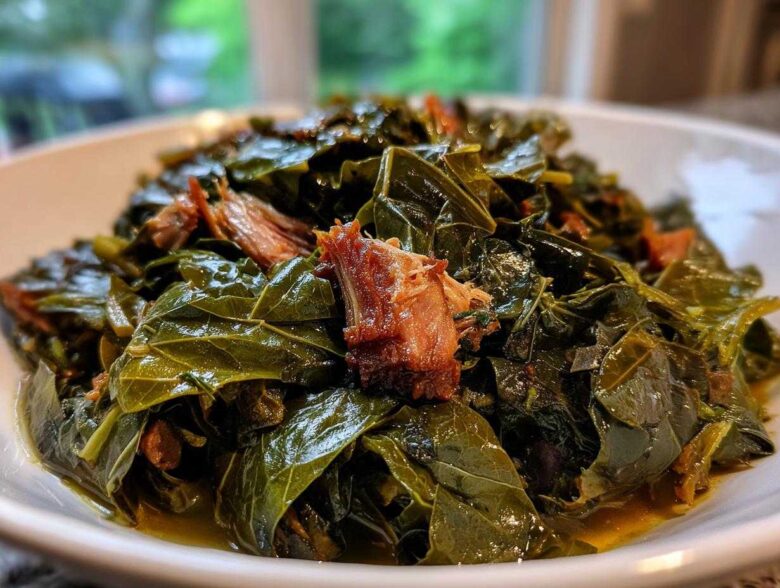
If you want to taste the South instantly, you have to master a pot of slow-simmered greens. Forget those bitter, tough leaves you might have had growing up! My absolute favorite part about making cornbread is always what I serve alongside it, and that’s where these amazing **collard greens** come into play. This recipe is my tried-and-true way to get greens that are silky, beautifully tender, and swimming in the most savory, smoky potlikker you’ll ever want to sop up with a spoon.
We’re talking about true soul food staples here. I learned early on that the secret to making them perfect isn’t speed; it’s patience. We’re going to gently bubble these greens until the broth is pure liquid gold. Trust me, once you taste greens cooked this way, you’re never going back!
Why You Will Love This Classic Collard Greens Recipe
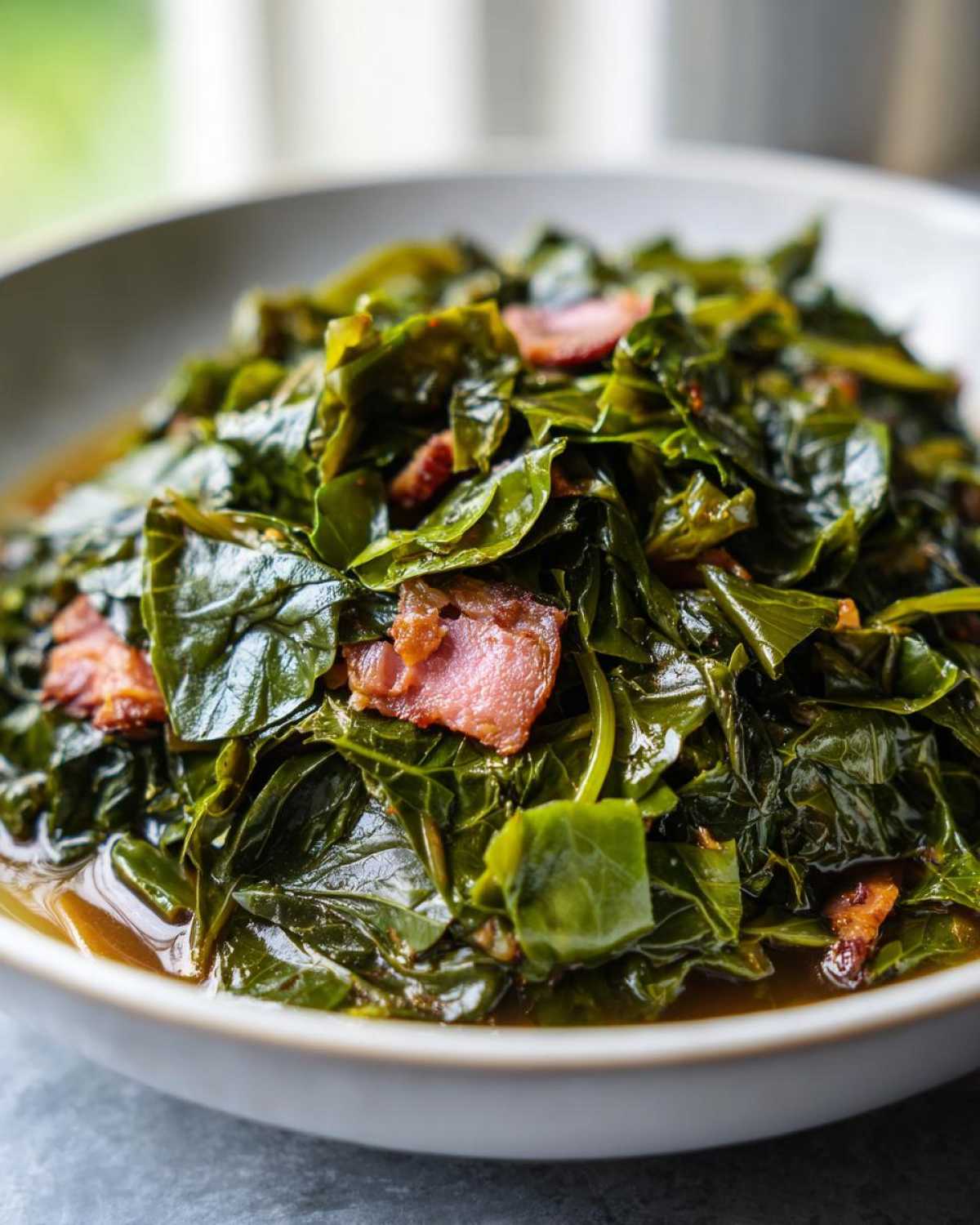
There are so many ways to mess up greens, but this method is foolproof. When you follow this recipe, you are guaranteed fantastic results every single time. Here’s what makes these Southern braised greens the best side dish on the table:
- Perfect Texture: We simmer long enough to get them melt-in-your-mouth tender without turning them into complete mush. They’ll be silky, I promise!
- Deep Smoky Flavor: That ham hock does all the heavy lifting, infusing every single leaf with savory goodness that just screams comfort food.
- The Potlikker: This rich broth is the star! It’s so perfectly seasoned that it begs for your cornbread to come diving in.
- Balanced Bitterness: I’ve nailed the ratio so that the subtle vinegar and optional sugar cut through any natural bitterness perfectly. No sour face required!
Ingredients for Flavorful Southern Braised Greens
Okay, let’s talk about what goes into this magic pot! The quality of your ingredients really shines through in a simple dish like this, so pay attention to the meat choice—it’s everything. I always use a smoked ham hock because I love that deep, smoky foundation it creates. If you wanted to use just bacon, you can totally do that too!
Here’s what you need for about six generous servings of collard greens recipe goodness:
- 2 lbs collard greens, tough stems removed and leaves chopped (Be generous with the chopping, they shrink!)
- 1 smoked ham hock (or 4 slices bacon, or 1 big turkey leg if you have one handy)
- 6 cups chicken broth or plain water (Broth is richer, obviously!)
- 1 medium yellow onion, chopped
- 2 cloves garlic, minced (Don’t skimp on the garlic, seriously)
- 1 teaspoon salt (We always taste before adding more, the ham hock adds salt!)
- 1/2 teaspoon black pepper
- 1 tablespoon apple cider vinegar
- 1 teaspoon brown sugar (This is optional, only if you want to tame any harsh bitterness a little bit. I usually put it in!)
When chopping your onions, make sure they’re small enough to disappear into the background while they flavor the broth. If you want some extra guidance on sweetening up savory dishes, you might want to check out my tips on caramelized onions—it’s all about balancing those deep flavors!
Equipment Needed for Perfect Collard Greens
You don’t need a million fancy gadgets for this, thankfully! What you really need is something big enough that can handle a giant pile of greens and then simmer for hours without scorching. A heavy bottom is your best friend here because we’re cooking low and slow.
Make sure you have these things ready:
- A very large pot or, ideally, a Dutch oven.
- A sharp knife for chopping those greens (don’t forget to remove those tough center ribs!).
- A slotted spoon for stirring and taking things out later.
Step-by-Step Instructions for Tender Collard Greens Recipe
This is where the magic happens, but you have to trust the process! It takes time, honey, but those two or three hours of gentle simmering are what transform tough leaves into the tender, perfect collard greens you dream about. Don’t rush this part, or you’ll end up with chewy greens, and nobody wants that!
Preparing the Greens and Building the Base Flavor
First things first: those greens need a bath! Rinse them really well under cold water until the water runs clear. We’re essentially washing away any grit they might have picked up. After that, toss those chopped leaves right into your big pot or Dutch oven. Don’t panic when they look like they won’t fit—I promise they cook down to nothing! Toss in your ham hock (or bacon/turkey), the onion, the garlic, the broth, salt, and pepper. Now, you’re going to turn the heat up to medium-high and bring that whole pot to a rolling boil. This initial blast of heat helps soften things up before we settle in for the long haul.
The Slow Simmer for Silky Collard Greens
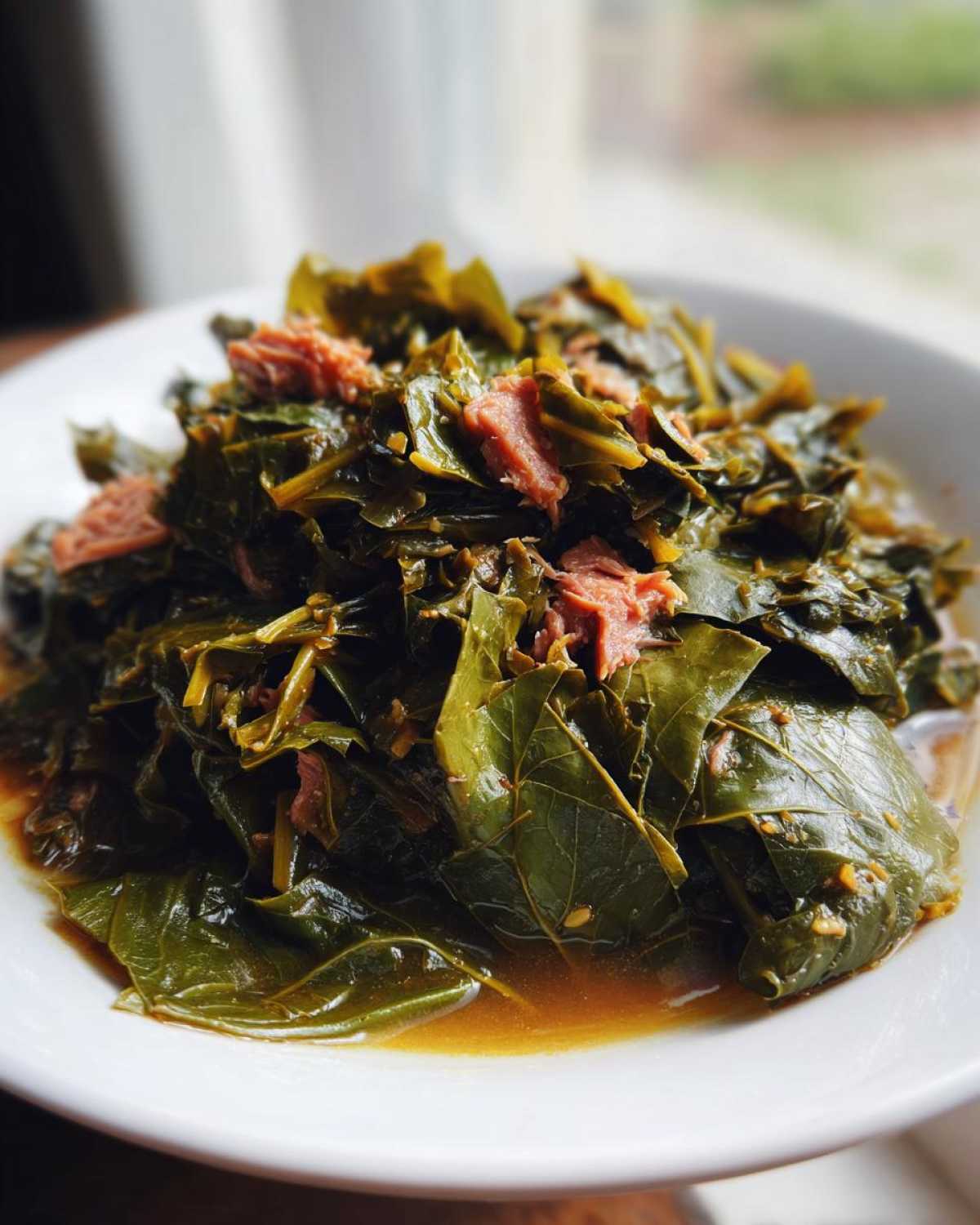
Once it’s boiling away, it’s time to back off the heat! Reduce that temperature way down to low. We want the barest bubble, just a gentle, relaxing simmer. Cover the pot tightly and just let it hang out for a solid two to three hours. Seriously, two is the minimum if your greens are young, but if they look sturdy, go for three! Stir them every 30 minutes or so just to make sure nothing is sticking to the bottom and that all those lovely leaves are submerged in that flavorful liquid. This long, slow braise is the secret to unbelievably tender collard greens.
Finishing Touches and Potlikker Reduction
When they’re fork-tender, carefully lift out that ham hock—watch for hot grease! Once it’s cool enough to handle, pick off all that wonderful salty, smoky meat and shred it up. Toss the shredded meat right back into the pot. Now you stir in your apple cider vinegar and that optional teaspoon of brown sugar. Taste it! That acid is going to brighten everything up. Don’t cover the pot, and let it simmer uncovered for about 15 more minutes. This lets the steam evaporate slowly, concentrating your potlikker so it’s rich and thick enough to eat with a spoon. You can have some creamy grits ready for soaking it up!
Tips for Perfect Southern Braised Greens Every Time
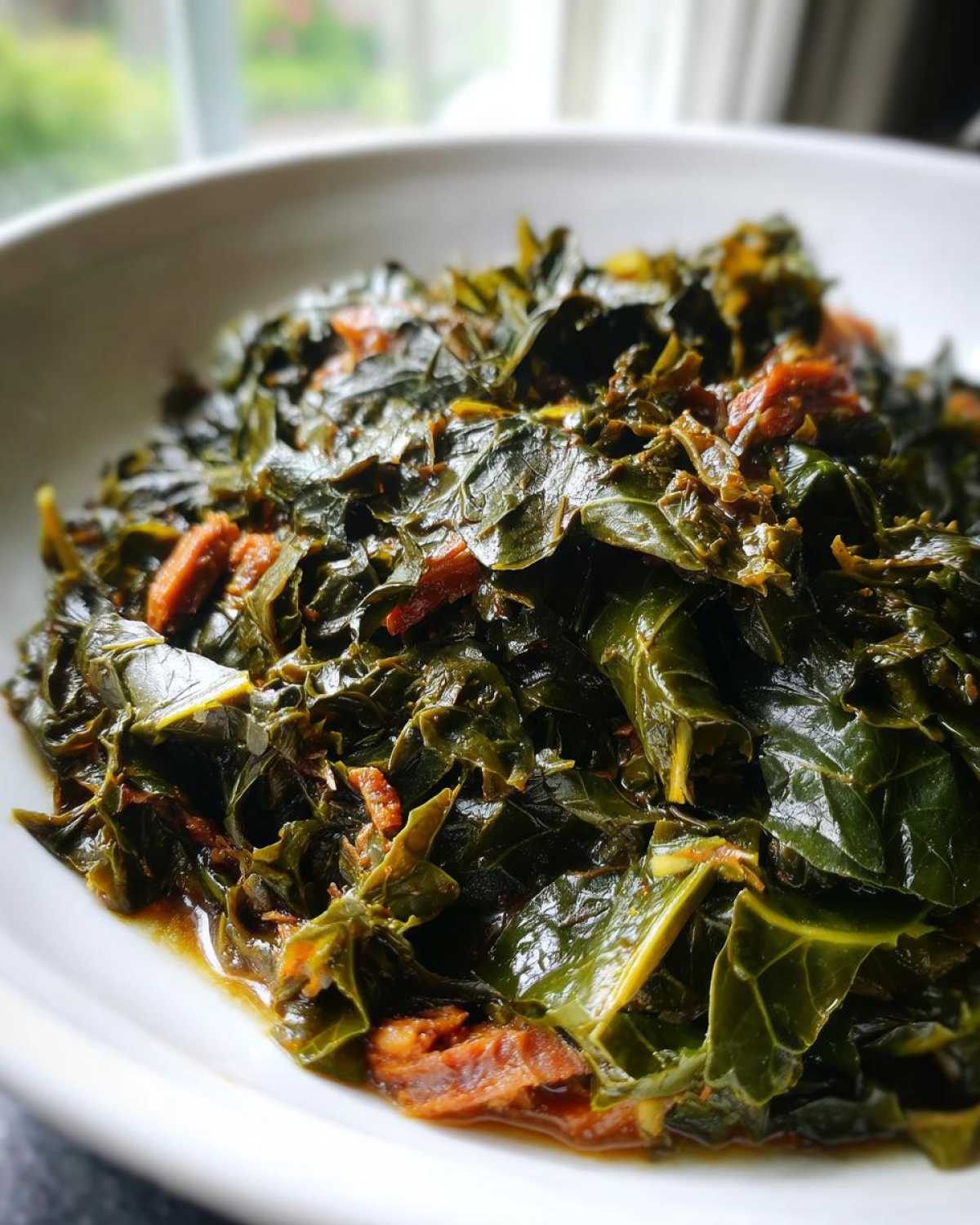
Listen, making really great soul food collards isn’t just about following the steps; it’s about using your senses! My best advice comes from years of standing over that pot. First, when you buy your greens, try to grab leaves that are vibrant and pliable, not thick and tough; that helps them get tender faster.
When you are fiddling with the seasoning at the end, remember the smoke from the ham hock carries a ton of salt. If you’re sensitive to savory dishes, try rinsing that ham hock under cold water before you put it in the pot—it washes off that excess surface salt. You can always add more later! And don’t skip that final taste test.
When you decide to add your vinegar and sugar, taste the liquid *before* you add them, then add a splash of vinegar, taste again, then add a tiny pinch of sugar if needed. It usually takes more vinegar than you think to cut that earthy flavor! If you’re looking for a sweet finish to a big meal, you’ve gotta check out my recipe for buttermilk pie!
Ingredient Notes and Substitutions for Collard Greens Recipe
You asked what happens if you don’t have a ham hock sitting around? Don’t sweat it! That’s why we have substitutions, right? If I’m short on hocks, I usually grab four slices of thick-cut bacon or even a smoked turkey wing or leg—that still gives those deep, smoky notes we need for great Southern braised greens.
Just remember that bacon is usually saltier than a hock, so go lighter on the initial salt measurement. The key flavor player besides smoke is that acid! That tablespoon of apple cider vinegar is non-negotiable for me. It wakes up the earthiness of the greens and balances everything out beautifully. If you want to see where I talk about another essential Southern sweet flavor, check out my caramel cake recipe!
Serving Suggestions for Your Flavorful Collard Greens
When you cook up a batch of these amazing greens with ham hock, you’ve created the perfect savory counterpoint for just about any rich Southern meal. The best part, truthfully, is that delicious, salty, vinegary potlikker left in the bottom of the pot!
You absolutely have to have some good, crusty cornbread on hand. I mean it—you can’t let that flavorful liquid go to waste! These greens pair perfectly with classics like fried chicken or maybe a big, cheesy helping of mac and cheese. If you’re planning on making that cornbread, make sure you check out my recipe for the best skillet cornbread; it’s ready in minutes!
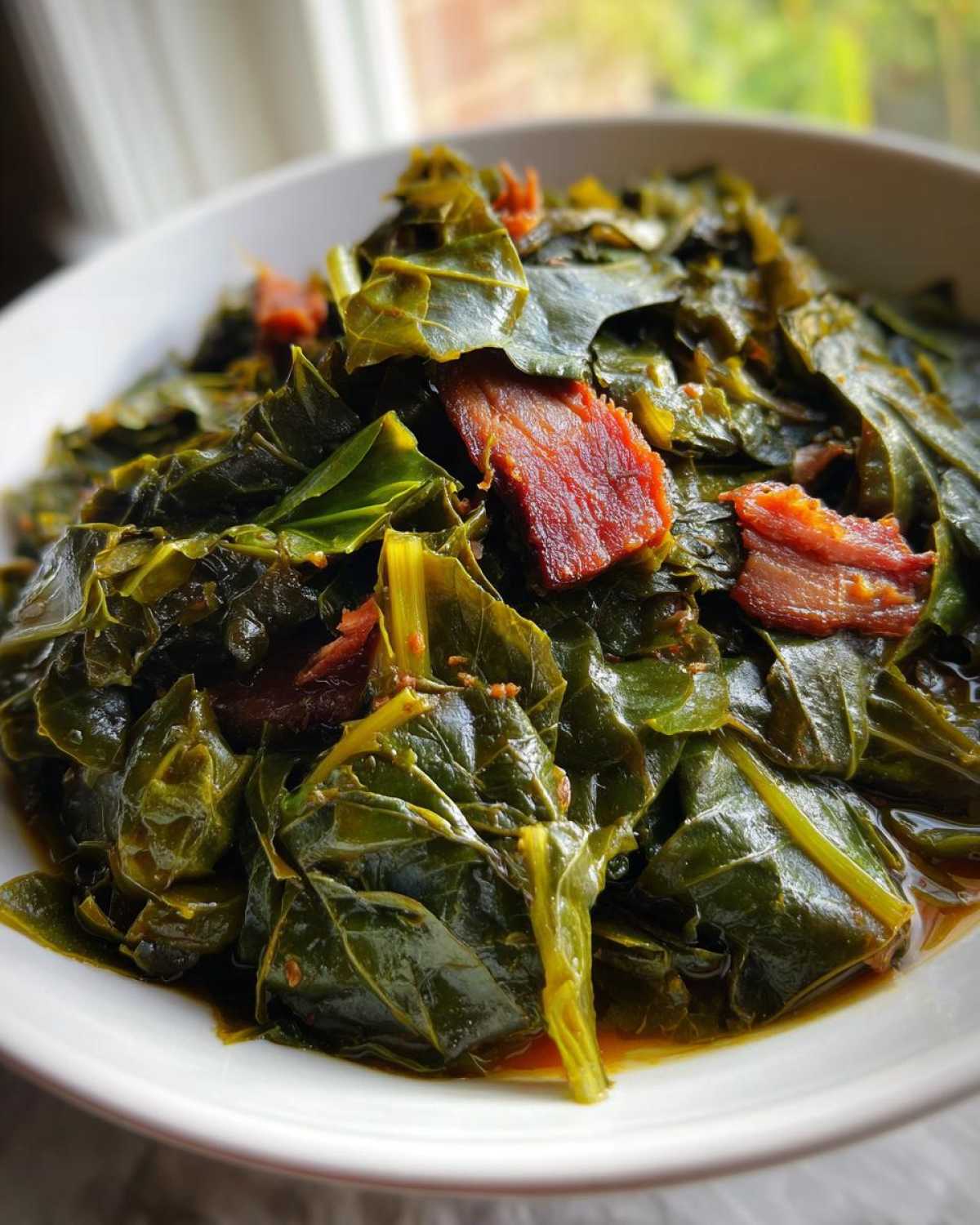
Storage and Reheating Instructions for Leftover Collard Greens
Oh, the leftovers! I always say that collard greens recipe tastes even better the next day. Once everything has had a night to marry in the fridge, the flavors deepen up so much. You can keep these delicious greens tucked away in an airtight container in the refrigerator for up to four days. Don’t worry about freezing them, either; they freeze beautifully for up to three months!
When you’re ready to eat them again, please, please heat them on the stovetop in a pot over medium-low heat. You want them to gently bubble back up so you preserve that amazing potlikker. If you microwave them, the liquid can separate weirdly. For some other great comfort food ideas, check out my recipe for Salisbury steak!
Frequently Asked Questions About Making Collard Greens
I get so many questions about greens because everyone wants that perfect texture! Look, achieving silky but not mushy collard greens is totally doable if you give them the time they require. Here are a few things folks ask me all the time.
Can I make this collard greens recipe vegetarian?
You sure can, but you have to compensate for that delicious smoky flavor we lose with the ham hock! To get that depth for your soul food collards, add about a teaspoon of good quality liquid smoke right when you add your broth. Or, better yet, use a robust vegetable broth, and stir in a sneaky teaspoon of smoked paprika along with your garlic. That’ll trick your taste buds!
Why are my collard greens still tough after 2 hours?
That usually just means you’ve got older, stronger greens, and that’s okay! The greens tell you when they are ready, not the clock. If you hit the two-hour mark and they still feel chewy when you press them, just keep them simmering on low, covered, maybe for another 30 to 45 minutes. Your goal for tenderness is when they give way easily, almost like butter.
If you are looking for other comfort food solutions, especially when you’re feeling under the weather, you might want to check out this recipe for Italian comfort soup!
PrintClassic Southern Collard Greens
Slow-simmered collard greens cooked with smoked meat until tender and flavorful, creating a rich potlikker.
- Prep Time: 20 min
- Cook Time: 3 hr
- Total Time: 3 hr 20 min
- Yield: 6 servings
- Category: Side Dish
- Method: Braising
- Cuisine: Southern American
- Diet: Low Fat
Ingredients
- 2 lbs collard greens, tough stems removed and leaves chopped
- 1 smoked ham hock (or 4 slices bacon, or 1 turkey leg)
- 6 cups chicken broth or water
- 1 medium yellow onion, chopped
- 2 cloves garlic, minced
- 1 teaspoon salt (or to taste)
- 1/2 teaspoon black pepper
- 1 tablespoon apple cider vinegar
- 1 teaspoon brown sugar (optional, to balance bitterness)
Instructions
- Rinse the chopped collard greens thoroughly under cold water.
- In a large pot or Dutch oven, combine the ham hock, onion, garlic, chicken broth, salt, and pepper.
- Bring the liquid to a boil over medium-high heat.
- Add the chopped collard greens to the pot. They will seem like too much, but they will cook down. Push them under the liquid.
- Reduce the heat to low, cover the pot, and simmer gently for 2 to 3 hours, or until the greens are very tender. Stir occasionally.
- Remove the ham hock. Shred the meat from the bone and return the meat to the pot. Discard the bone.
- Stir in the apple cider vinegar and brown sugar (if using). Taste and adjust salt and pepper as needed.
- Simmer uncovered for 15 more minutes to allow the potlikker to reduce slightly.
- Serve hot, spooning plenty of the cooking liquid over the greens.
Notes
- For a richer flavor, use smoked turkey wings instead of ham hock.
- If you prefer less smoky flavor, rinse the ham hock before adding it to the pot.
- The cooking time depends on the age of the greens; older greens require longer simmering.
Nutrition
- Serving Size: 1 cup
- Calories: 150
- Sugar: 3
- Sodium: 450
- Fat: 7
- Saturated Fat: 2
- Unsaturated Fat: 5
- Trans Fat: 0
- Carbohydrates: 15
- Fiber: 5
- Protein: 10
- Cholesterol: 25
